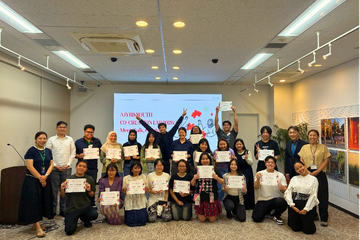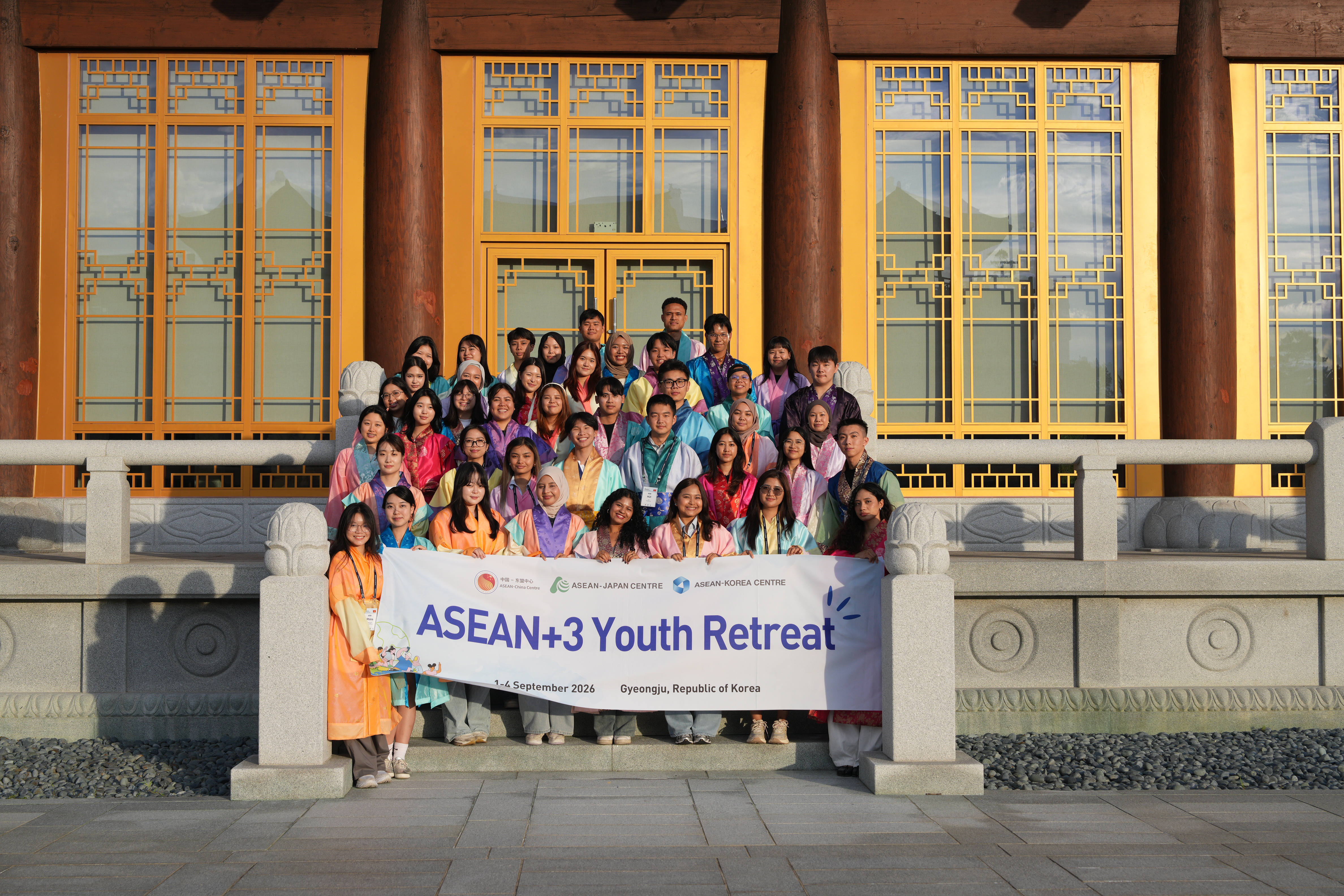
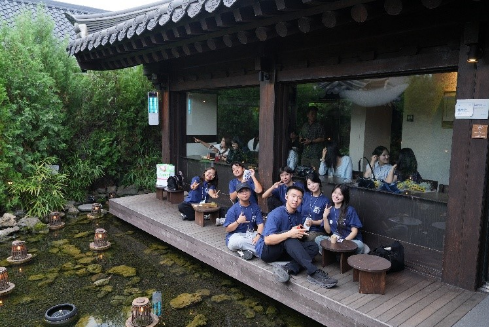
From 1 to 4 September 2026, the ASEAN Plus Three Youth Retreat 2026 was held in Gyeongju, Republic of Korea. A total of 42 students from ASEAN Member States, Japan, China and the Republic of Korea came together for four days of exchange and collaboration, working in teams to develop new youth programmes aimed at further strengthening ASEAN Plus Three connections.
The ASEAN-Japan Centre (AJC) supported the participation of three university students from Japan. Through team discussions, casual conversations during travel, and cultural exchange, they discovered both differences and common ground with their peers from across the region.
This report introduces the programme through the reflections of the three students, highlighting what they discovered about ASEAN Plus Three connections and the potential of youth exchange.
Programme Overview
The programme was held in conjunction with the 22nd Meeting of the Secretaries-General of the three ASEAN Centres—the ASEAN-Korea Centre, ASEAN-China Centre and ASEAN-Japan Centre. Hosted by the ASEAN-Korea Centre, the Youth Retreat was jointly organized by the three Centres.
A total of 42 students participated, including students from ASEAN Member States and the Republic of Korea studying at universities and graduate schools in Korea, as well as participants from Japan and China. They were divided into seven multinational teams of six and tasked with developing new youth programme ideas aligned with the objectives of the three Centres.
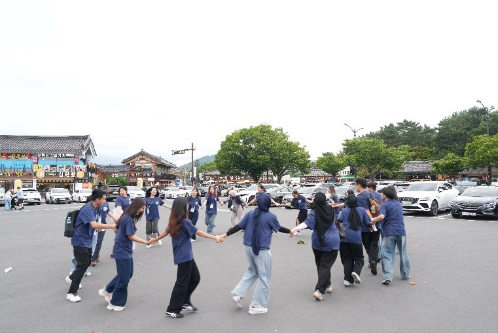
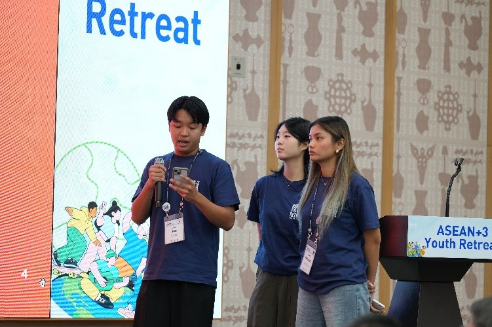
Over the four days, participants worked together on their proposals while also visiting Gyeongju’s historic sites, including Bulguksa Temple and Seokguram Grotto, and taking part in a talent show showcasing the cultures of their respective countries and regions. On the final day, each team presented its proposal to representatives of the three Centres. Selected teams will have the opportunity to participate in study trips to Indonesia, home to the ASEAN Secretariat, as well as Japan and China.
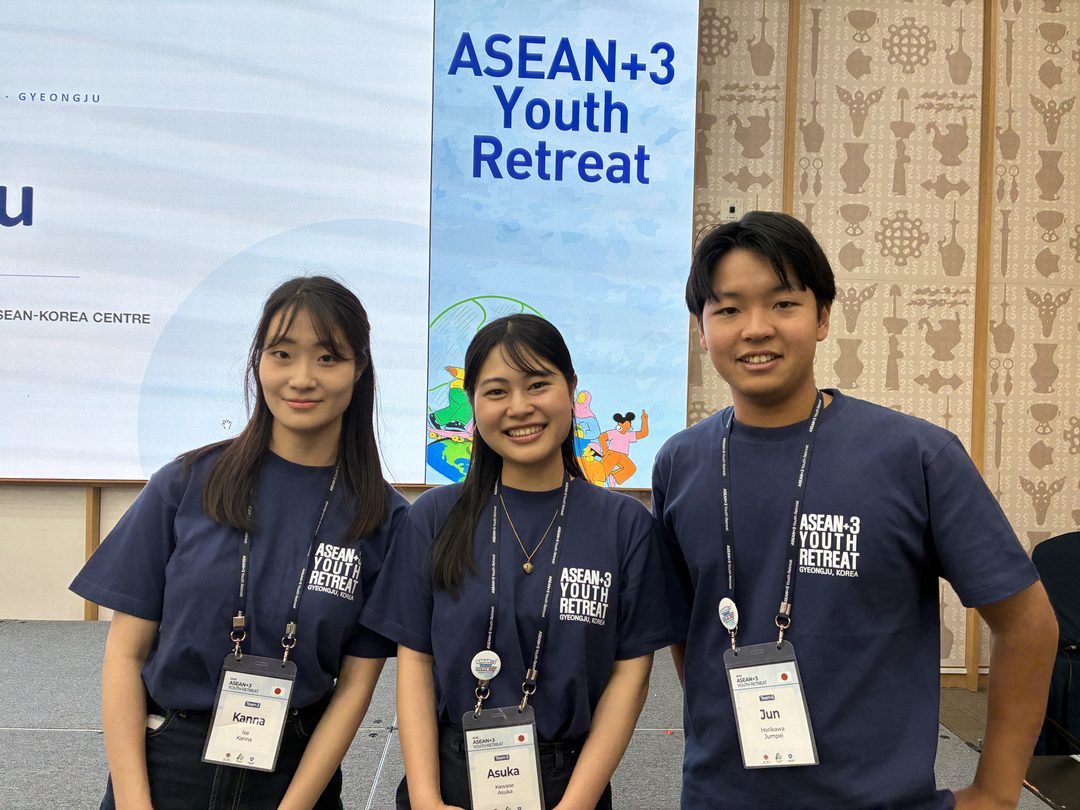
Voices of the Japanese Participants
A Casual Conversation That Became a Team Proposal — Kanna Ise, Ritsumeikan Asia Pacific University, 4th Year
For Kanna Ise, one of the most memorable moments was seeing an experience she had casually shared with her teammates develop into their team’s final proposal.
She told the group about a friend from Myanmar who had visited Kumamoto following an earthquake and connected with people in the local community—an experience that had provided meaningful support to them. Kanna suggested that similar people-to-people connections could be fostered across ASEAN Plus Three. One of her teammates agreed, noting the importance of creating opportunities for people to visit not only well-known tourist destinations but also places like Kumamoto that have received less international attention. Through further team discussions, the idea eventually took shape as their final proposal.
“I was very happy that something I personally cared about could be shared with the whole team and developed into a concrete proposal. It was one of the most memorable parts of the programme.”
During the talent show, Kanna was also struck by how many participants brought their national flags or wore traditional clothing and expressed pride in their cultures—something she felt was different from her own experience.
Before joining the programme, she had wondered how ASEAN’s 11 Member States, each with their own cultures and interests, could find common ground when Japan, China and the Republic of Korea were added to the mix. Yet through conversations about the concerns and uncertainties they shared as young people, she came to realize that, despite their diversity, they also had experiences and feelings they could relate to.
When asked what young people can do, Kanna points to something simple: ask others for help when you need it, and help others when they ask. She believes that such small actions can gradually create connections between people.
How she sums up the experience: “Circle” — reflecting the expanding circle of connection and empathy she experienced during the programme.
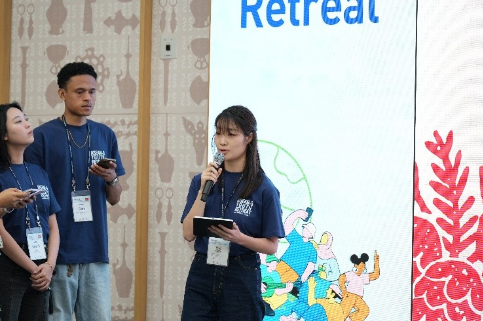
National Borders May Not Be as Big as We Think — Asuka Kawase, Keio University, 4th Year
One of the moments that stayed with Asuka Kawase was a conversation on the bus with students from Malaysia, Singapore, Lao PDR and the Republic of Korea. Away from the formal programme activities, they talked about their futures—what kind of careers they wanted, when they might leave home, how they thought about marriage, and the uncertainties they shared about what lay ahead.
“Although we come from different countries and grew up in different environments, as people of the same generation we share many of the same concerns and uncertainties about the future. It made me feel that the national boundaries we are usually so conscious of may not be as big as we think.”
Through the exchange, Asuka came to see ASEAN countries as both highly diverse and closely connected. She also discovered more cultural and social similarities than she had expected between ASEAN and Japan, China and the Republic of Korea. For her, the experience highlighted the importance of recognizing the differences among individual ASEAN countries while also finding common ground.
Looking ahead, she hopes to see more opportunities for Japan, China and the Republic of Korea to work together with ASEAN, rather than engaging with ASEAN separately. She also believes that international exchange should not be limited to university students, but could begin at the elementary, junior high and high school levels. Getting to know someone as a peer rather than simply as “a foreigner,” before stereotypes take root, can help build a foundation for future cooperation.
How she sums up the experience: “Four days in which the more I learned about our differences, the more I realized how close we are.”
Dialogue Among Students Can Build a Foundation for Cooperation — Jumpei Horikawa, Waseda University, 4th Year
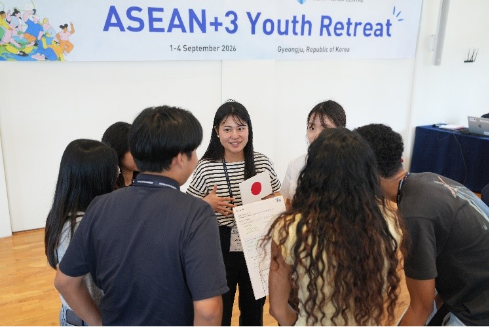
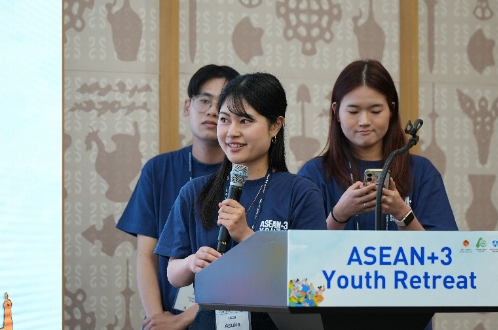
For Jumpei Horikawa, one of the most memorable aspects of the programme was the depth of discussion among students from different countries. He was particularly impressed by the depth of thinking and level of engagement demonstrated by the ASEAN students representing their respective countries.
Despite the busy schedule, participants used travel time and free time to talk about everything from casual topics to deeper questions about values—conversations they could have precisely because they had grown up in different countries.
After spending four days together, Jumpei became more aware of differences in communication styles and ways of interacting among participants from different countries. He came to believe that building sustainable ASEAN Plus Three relations requires “respecting and making the most of each country’s distinctiveness.”
Before the programme, Jumpei had questioned how effective ASEAN, as a relatively flexible regional framework, could be in strengthening regional cooperation. His experience at the Retreat changed his perspective. He now believes that continuing to create opportunities for students to discuss issues together and turn their ideas into concrete initiatives can provide a foundation for stronger regional cooperation over the medium to long term.
When considering what young people can do to strengthen ASEAN Plus Three connections and cooperation, Jumpei emphasizes using their time and energy to travel and experience different places firsthand.
“Experiencing the reality of a place through all five senses is the first step towards overcoming preconceptions and negative biases.”
How he sums up the experience: “The youth have huge potential.”
Looking Ahead
Students from different countries and cultures spent four days together—talking, thinking and turning their ideas into concrete proposals. The reflections of the three Japanese participants show that learning about differences does not necessarily create distance. Instead, it can help people discover how much they have in common and how close they may actually be. That realization can also become a starting point for taking the next step and doing something together.
The three students will continue to engage in AJC’s youth activities as members of the ASEAN-Japan Young Bridge Builders (AJYBB) and share what they learned through this experience.
AJC will continue to promote people-to-people exchange and mutual understanding among younger generations in ASEAN and Japan, as well as across ASEAN Plus Three.