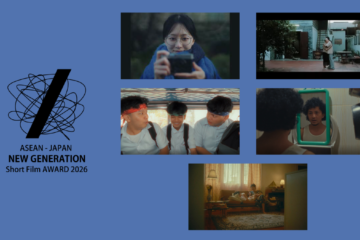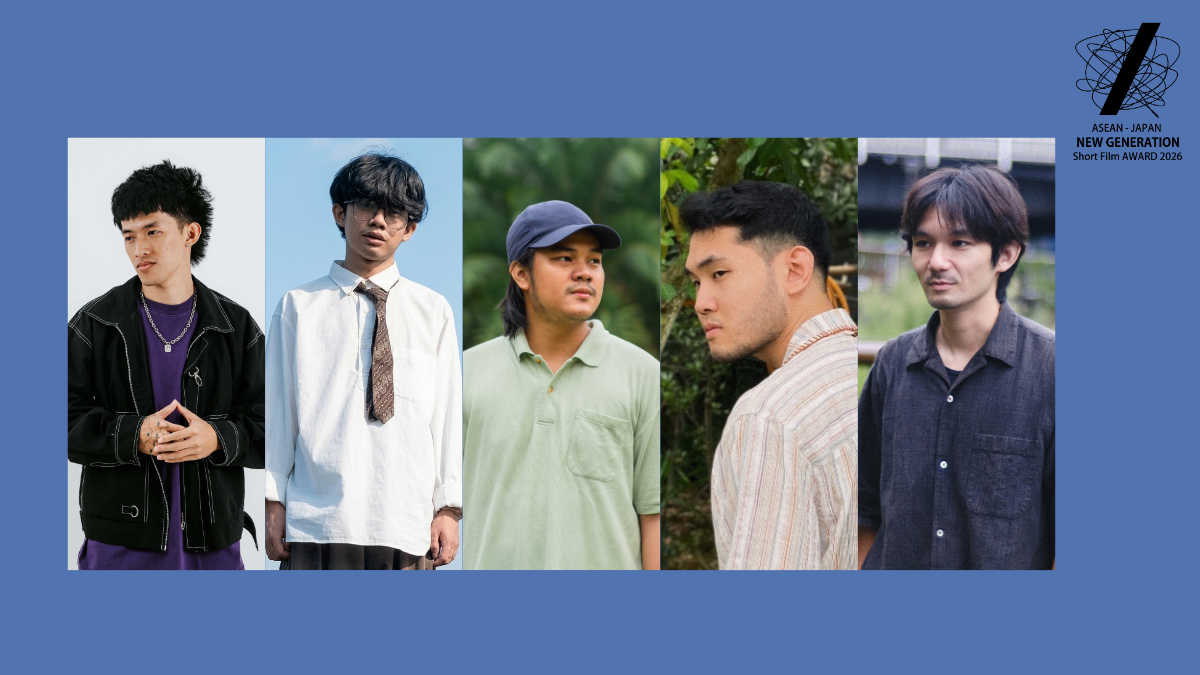
What does it mean to take the next step? For the filmmakers selected for the ASEAN-Japan NEW GENERATION Short Film Award 2026, the answer takes many forms. It can mean choosing to truly live, living with memories of those we love, finding courage in the people around us, or learning to trust our own way of seeing the world.
For this third edition, five winning films were selected from over 200 entries under the theme “Our Next Waypoint.” The filmmakers spoke with the ASEAN-Japan Centre about the experiences behind their films, the people who helped bring them to life, and where they hope to go next.

Andrew Retanubun | Indonesia
Berani Mati Takut Hidup (Brave Enough to Die, Afraid to Live): Choosing to truly live
At its core, Andrew Retanubun’s film asks a simple question: if death comes to everyone, have we truly lived? It explores the ways we can lose ourselves while still alive, such as seeking validation from others, living in fear, or existing without purpose. Through a looping structure, the protagonist goes through a series of symbolic “deaths.”
The film grew out of a song by Andrew’s friend, Indonesian musician Tuan Tigabelas, with the story brought to life on screen through Andrew’s filmmaking. As Andrew developed it, the story became his own. During production, health problems sent him to the emergency room twice, and the moments when the protagonist struggles to breathe and collapses draw partly on that experience. It left him with a simple realisation: being able to breathe and be present is worth appreciating.
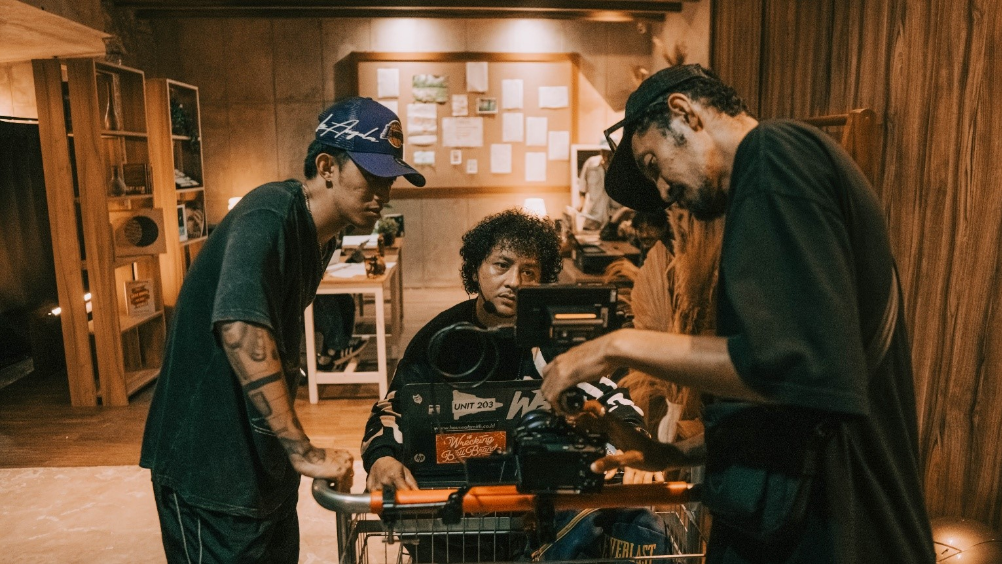
If viewers watch only once, Andrew hopes they will pay attention to the water, which represents both life and death and shifts in meaning depending on where it appears.
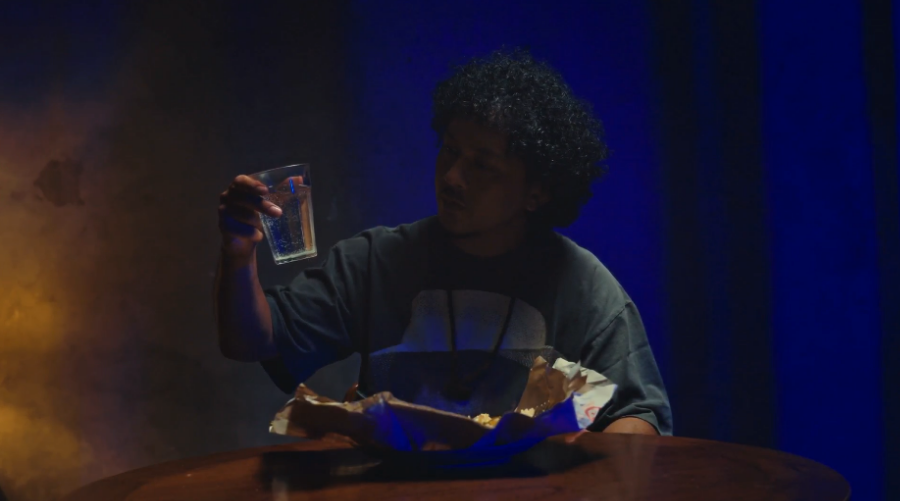
For Andrew, “Our Next Waypoint” can be a new stage in life, a decision, or simply the moment we choose to see life differently. Rather than explaining Indonesian culture directly, he wanted to share a perspective he sees as part of being an Indonesian filmmaker: finding meaning, spirituality and gratitude in everyday life.
“Death is something we all have in common, but truly living is something we have to choose.”
Andrew is a freelance filmmaker and hip-hop artist who runs NODAYSOFF, a production house he founded with friends. He first picked up a camera in sixth grade, using his father’s handycam. His dream is to make a feature film that reaches audiences far beyond where it was made.
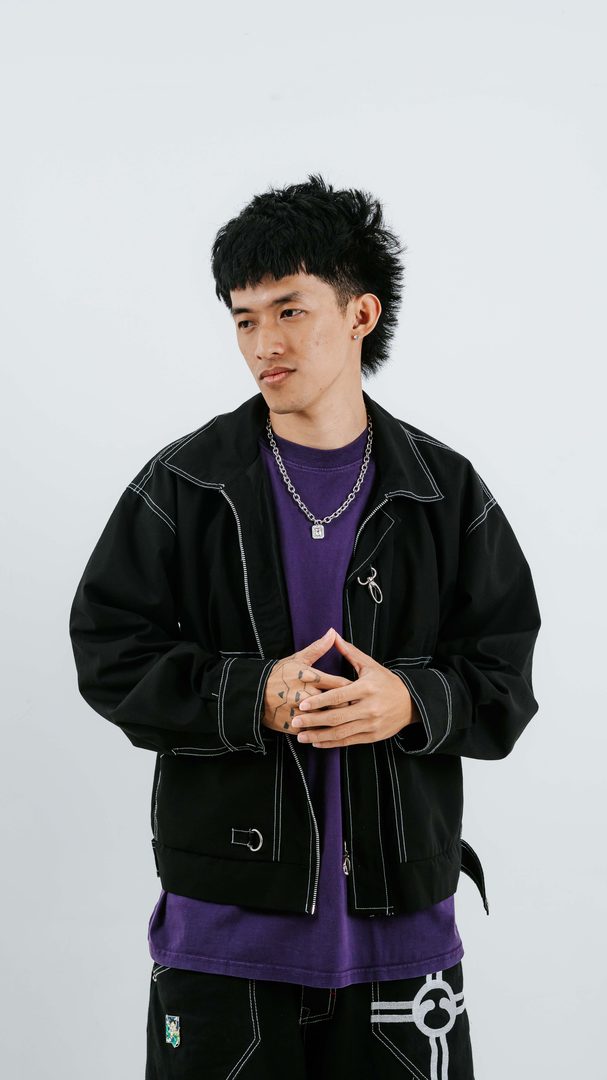
Andrew Retanubun
An Indonesian filmmaker and hip-hop artist, Andrew runs NODAYSOFF, a production house he founded with friends.
Photo: SEVENFREAK
Watch the film on Youtube: 『Berani Mati Takut Hidup (Brave Enough to Die, Afraid to Live)』

Bank Thanasouth | Lao PDR
Golden MEM: Learning to move forward with memories
Bank Thanasouth has been making films for only about two years. His passion took hold in August 2024, when he joined a short film camp with senior filmmakers and realised he wanted to tell stories from his own perspective. “I also started without knowing much about filmmaking,” he says. “We learn by doing, making mistakes, and trying again.”
He is drawn to quiet drama, and counts Happy Old Year by Thai director Nawapol Thamrongrattanarit among his biggest influences. He likes stories in which characters do not become different people, but come to understand themselves and learn to live with their feelings. Golden MEM follows Tham in just that way, as she confronts memories she cannot change.
One quiet moment holds particular meaning for Bank: Tham walks to a photograph of her grandmother and puts her hands together, expressing regret, love and respect without a word. In Lao PDR, people make this gesture when visiting a temple, greeting elders, or welcoming guests into their home. Bank often makes it himself when meeting new people.
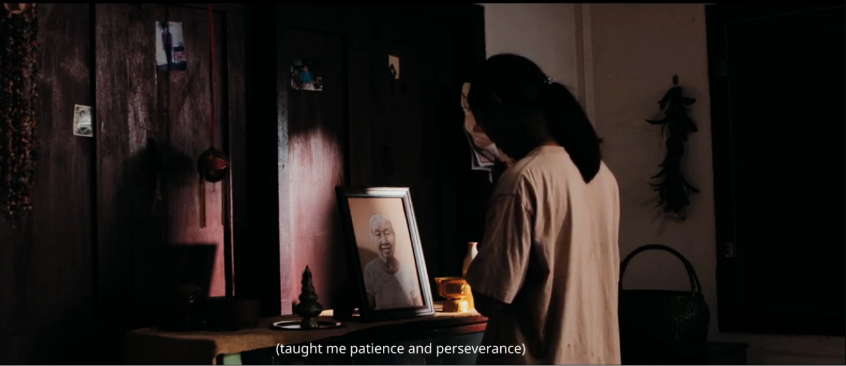
Golden MEM began as a course project. Finishing it alongside his other work was hard, and at times Bank was not sure he could complete it. His assistant director and co-writer pulled him out of his overthinking, and his team told him they believed in him. More broadly, he credits his “brothers” in the Lao film community, who keep pushing him to show Lao stories to the world.
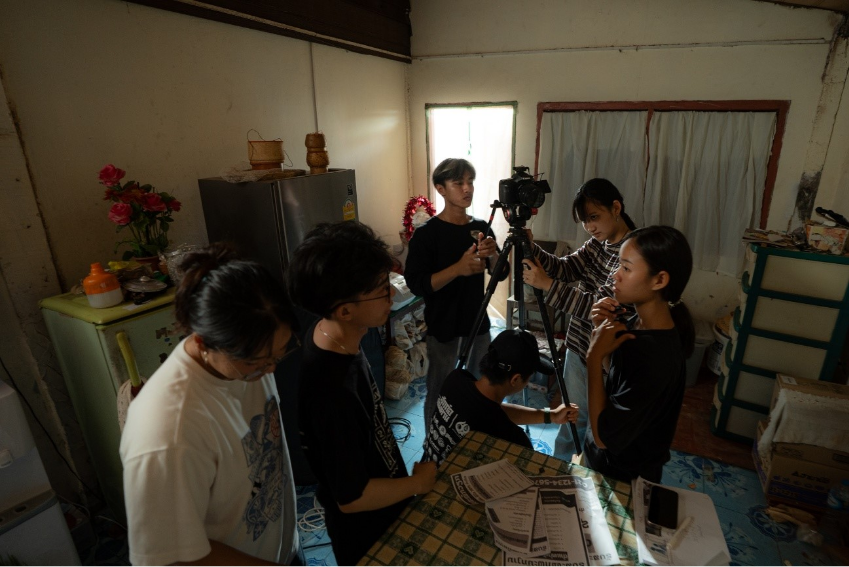
“Sometimes our next step is not about success, but about accepting the past and finding the courage to keep going.”
Bank studies communication arts in Lao PDR and also produces music. Opportunities for young filmmakers in Lao PDR are growing, he says, but resources are still limited.
Though Golden MEM is a story from Lao PDR, he hopes viewers everywhere will find something in Tham’s feelings they can relate to.
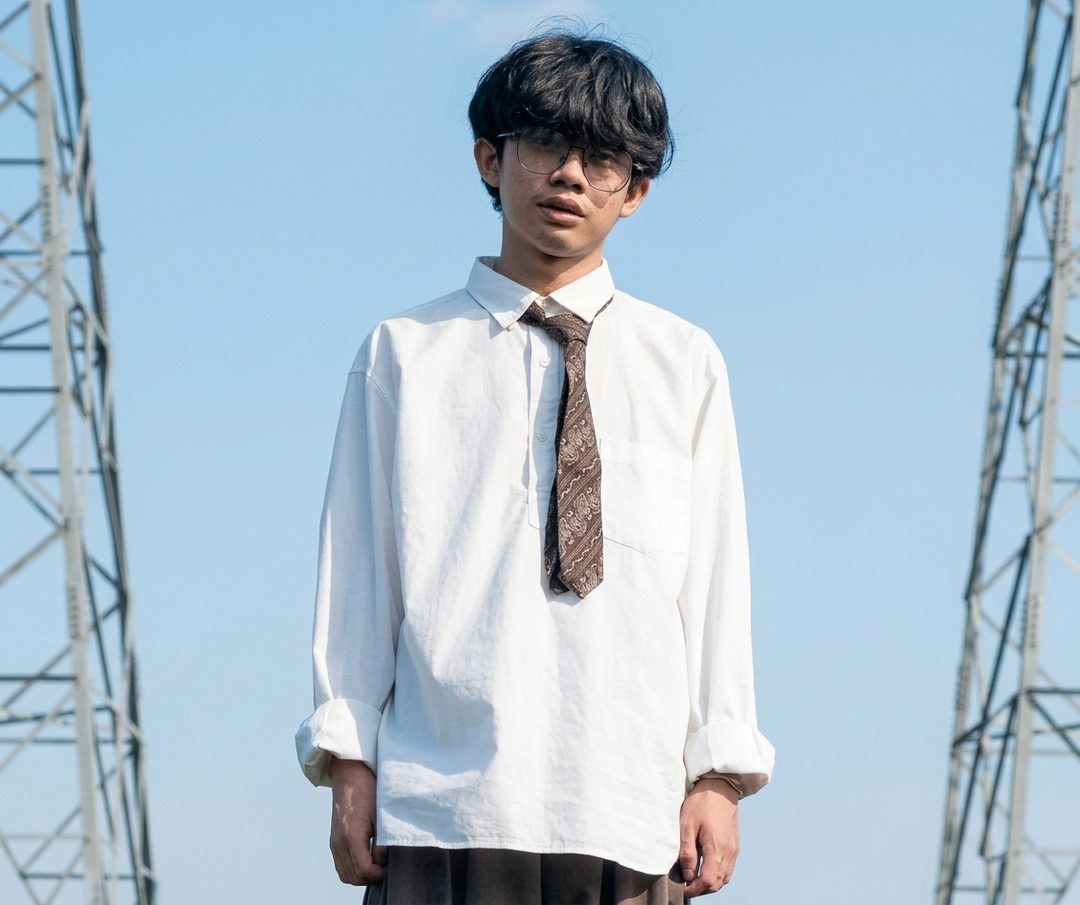
Bank Thanasouth
A Communication Arts student at Soutsaka Institute of Technology in Lao PDR, Bank is also a filmmaker and Music producer.
Photo: Konevilom Phachoumphonh
Watch the film on Youtube: 『Golden MEM』

Prince Jairo Paglinawan | Philippines
Jeepney Kronikels: Sharing a journey with strangers
The jeepney is the Philippines’ most iconic form of public transport. Originally built from U.S. military jeeps left after World War II, these colourfully decorated vehicles follow fixed routes, with passengers sitting face to face on two long benches.
As a high school student riding the jeepney to school, Prince Jairo Paglinawan used to wonder about the lives of the passengers beside him. They might see one another again and again without ever learning each other’s names. That curiosity became the starting point for Jeepney Kronikels.
Jairo made the film specifically for this year’s award, drawing on a story he had wanted to tell for years. He put his own savings into the production and brought together relatives and friends as cast members. The jeepney belongs to a friend’s father, who drives it for a living. With only one full day to shoot, the team rehearsed the scenes in Jairo’s small apartment before filming inside the vehicle.
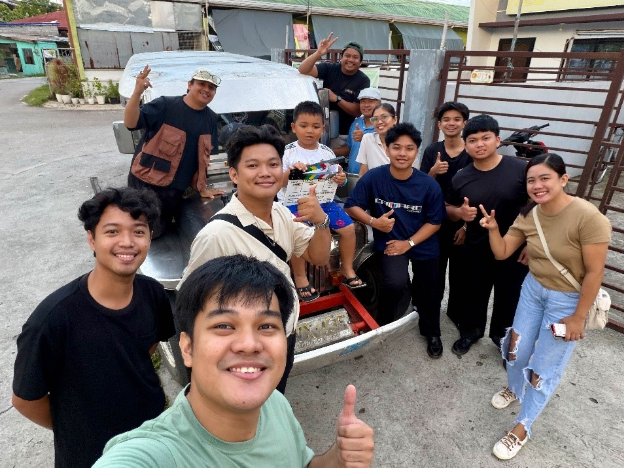
He positioned the camera so that viewers feel as though they, too, are passengers. For Jairo, the jeepney is more than transport. It is a moving community where people’s separate journeys briefly meet, and “a silent witness to our dreams, heartbreaks, aspirations, pains, and wins.”
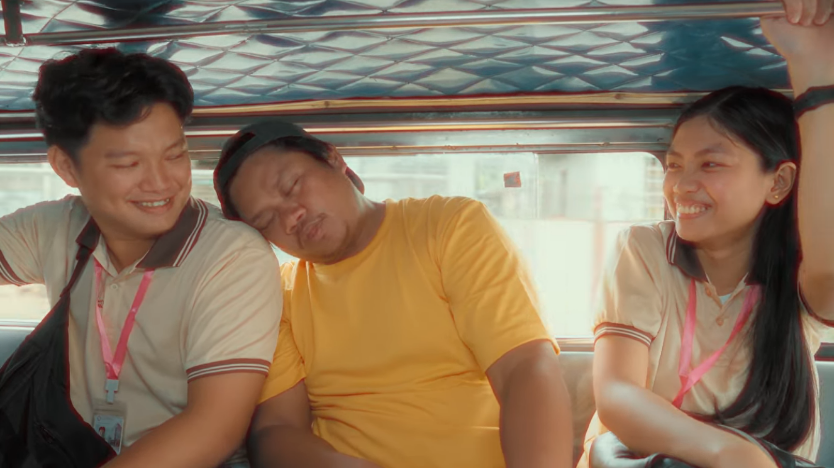
For Jairo, the theme is a reminder that we are never alone on our journeys. The people we meet along the way play different roles at different times in our lives.
“We may be uncertain about what’s ahead, but we take courage to continue because of the people around us.”
Jairo is a multimedia studies student who also works in video production for events. He hopes to build a career in film. He also wants to develop a documentary series about the people and traditions connected to jeepneys, including drivers and artists who make their signs.

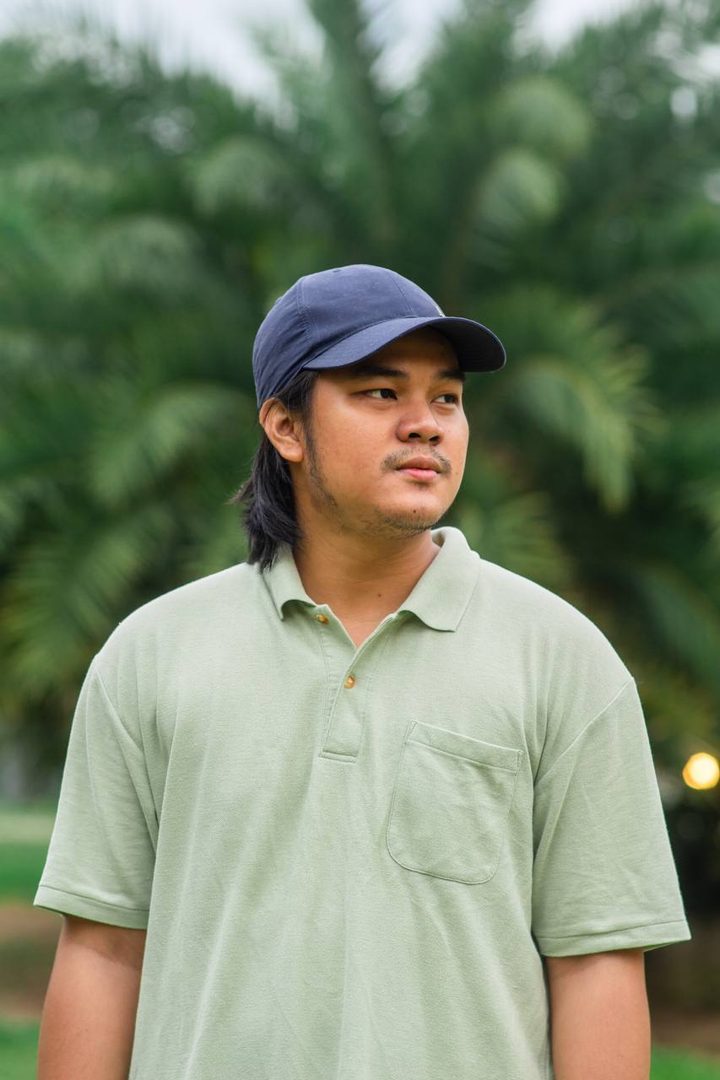
Prince Jairo Paglinawan
Jairo is a Multimedia Studies student at the University of the Philippines Open University, having shifted from engineering in 2022. He also works as a freelance creative in event and video production.
Watch the film on Youtube: 『Jeepney Kronikels』
Chan Teik Quan | Malaysia
Kopi ‘O’ Kosong (情中的苦): A memory held in a cup of coffee
In coffee shops across Malaysia, Singapore and neighbouring countries, “kopi ‘O’ kosong” is how you order black coffee with no sugar and no milk.
For Chan Teik Quan, the taste of plain black coffee brings back one of his earliest memories of his mother: the smile on her face as she took her first sip each morning. She was also the one who introduced him to coffee when he was young. After her passing, that shared love of coffee became the heart of Kopi ‘O’ Kosong. He made the film for Mother’s Day, for others spending the day without their mothers.
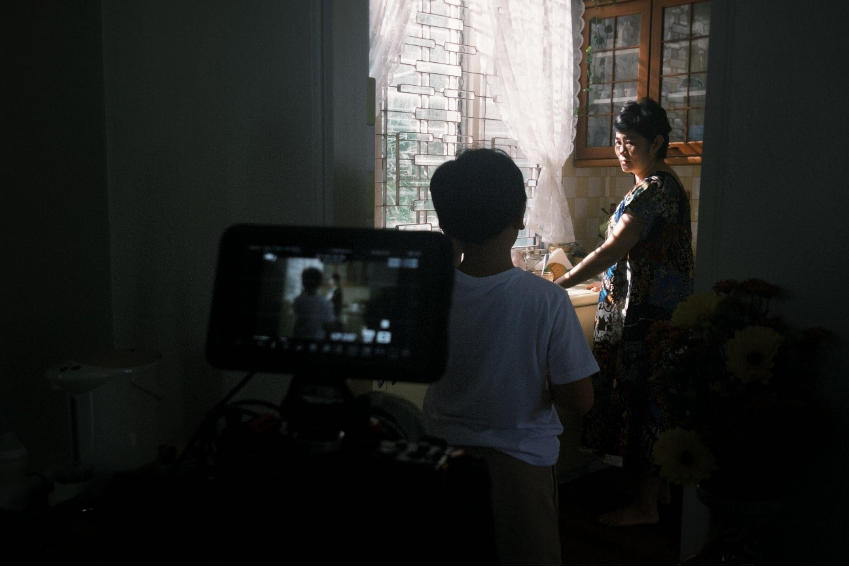
Teik Quan and his friends completed the film in less than a week. Although Kopi ‘O’ Kosong is mainly in Chinese, its crew came from different ethnic and cultural backgrounds. For Teik Quan, that is one of the beautiful things about multiracial Malaysia: “despite our different cultures, we can still share a strong bond.” Details from his family home also appear on screen, including photographs and objects his family collected over the years, helping connect the film’s past and present.
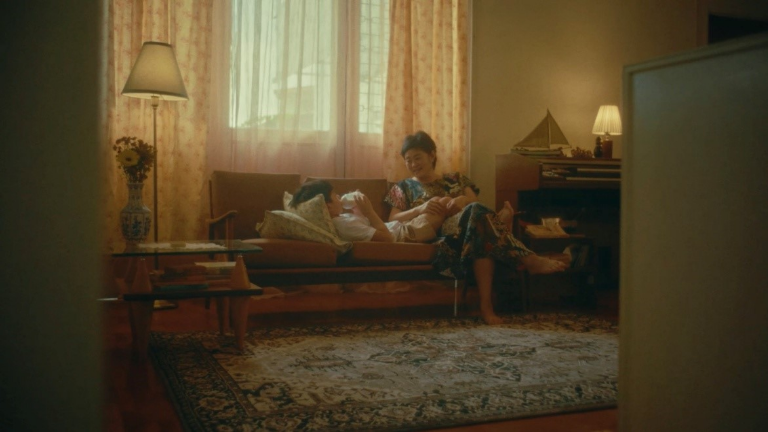
For Teik Quan, “Our Next Waypoint” speaks to the ways family continues to guide us as life changes. The film remembers his mother while asking how we carry the people we love into the future.
“Making films is my way of writing love letters to the people I love.”
Teik Quan is an assistant lecturer in cinematic arts at a university in Malaysia. He sees filmmaking as a way to bring together his interests in writing, photography and music. He is currently developing his next short film under Regional Reels, an international multicultural storytelling initiative supported by Griffith University, the ASEAN-Australia Council and the Asia Pacific Screen Academy.
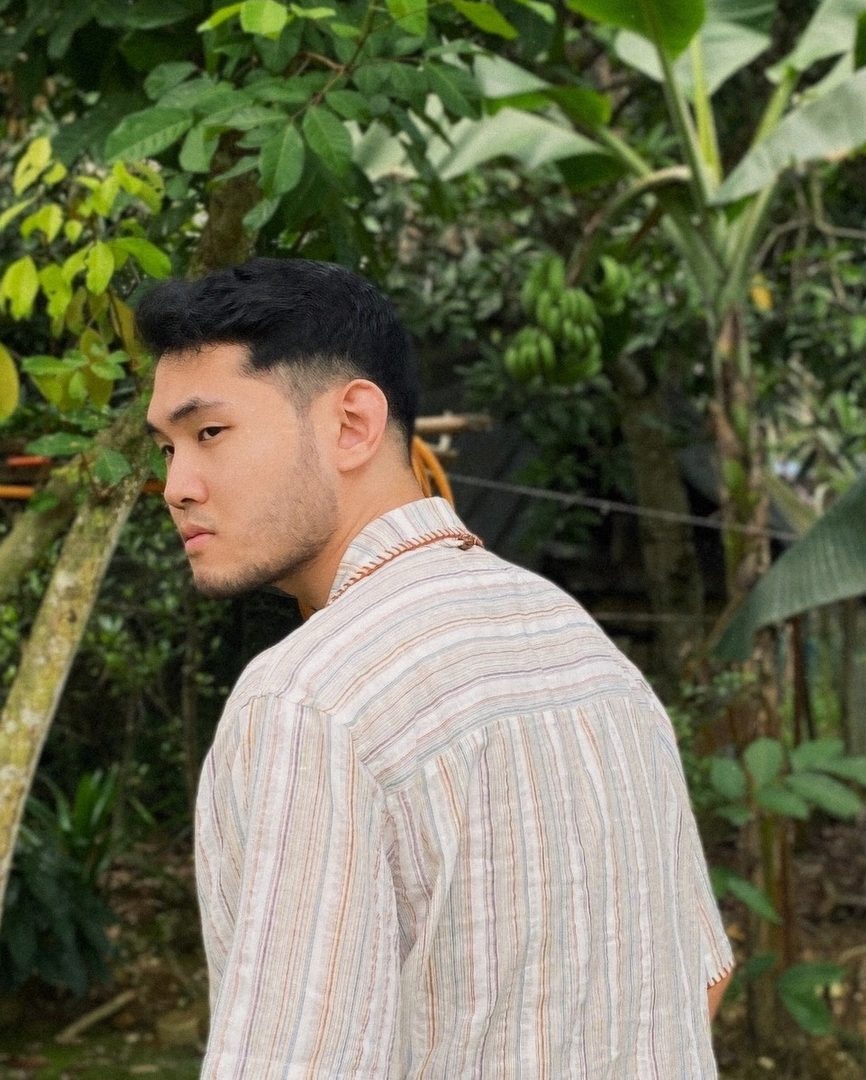
Chan Teik Quan
An assistant lecturer in the Faculty of Cinematic Arts at Multimedia University, Malaysia. Making films since 2015, Teik Quan often draws on family stories to explore grief and impermanence.
Photo: Samantha Chan
Watch the film on Youtube: 『Kopi ‘O’ Kosong(情中的苦)』

Taiki Hakari | Japan
No Reason to Love It (その花を綺麗とは思わなかった): Trusting what you genuinely like
Before making No Reason to Love It, Taiki Hakari approached every short film idea by asking what other people would value. The stories he came up with that way lacked originality, and he could not find them interesting himself. He felt stuck.
Then, by chance, he came across a situation much like the one shown in the film. To an onlooker it might have seemed trivial. To Taiki, it felt strangely interesting, a moment that stayed with him. He decided to follow that feeling and turn it into a film.
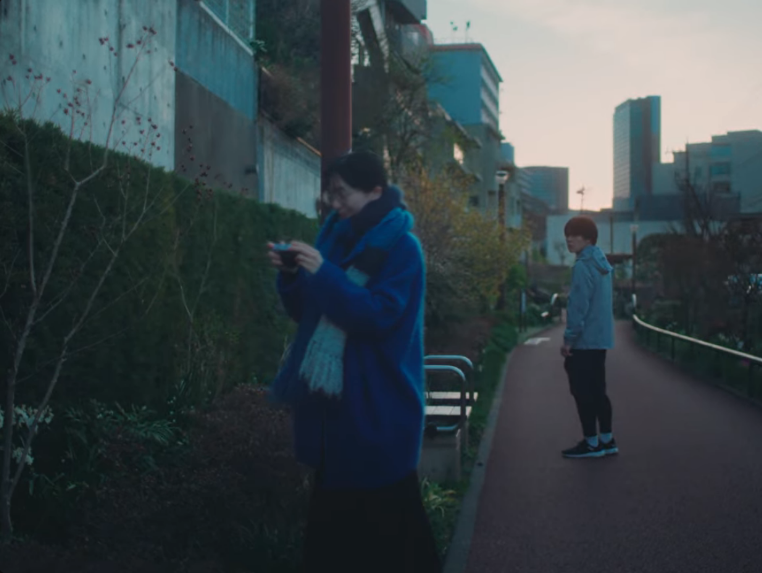
Apart from the ending, when Taiki never actually spoke to the woman, everything in the film happened in real life. Knowing that the flower he did not find beautiful would soon change shape, he began filming just two or three days after having the idea, in the brief window of quiet early mornings. It was the first time he had turned his own feelings into a film almost exactly as they were.
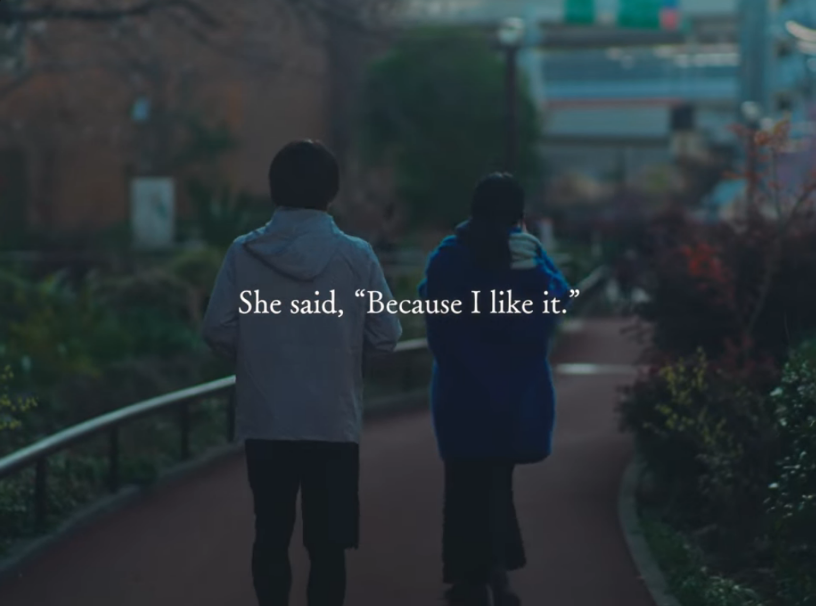
“Since making this film, I’ve learned to start from what I honestly think is good.”
For Taiki, the film’s connection to “Our Next Waypoint” lies in stepping away from other people’s judgments and trusting his own values. He also feels that differences in values become even greater across borders. That is why he hopes the film can show the importance of making what you honestly believe is good.
Taiki joined a video production company after university and, inspired by the directors he worked alongside, went freelance as a video director and editor. After ten years in video production, he now hopes to direct a film from his own screenplay: a story about a woman working on a silkworm farm.
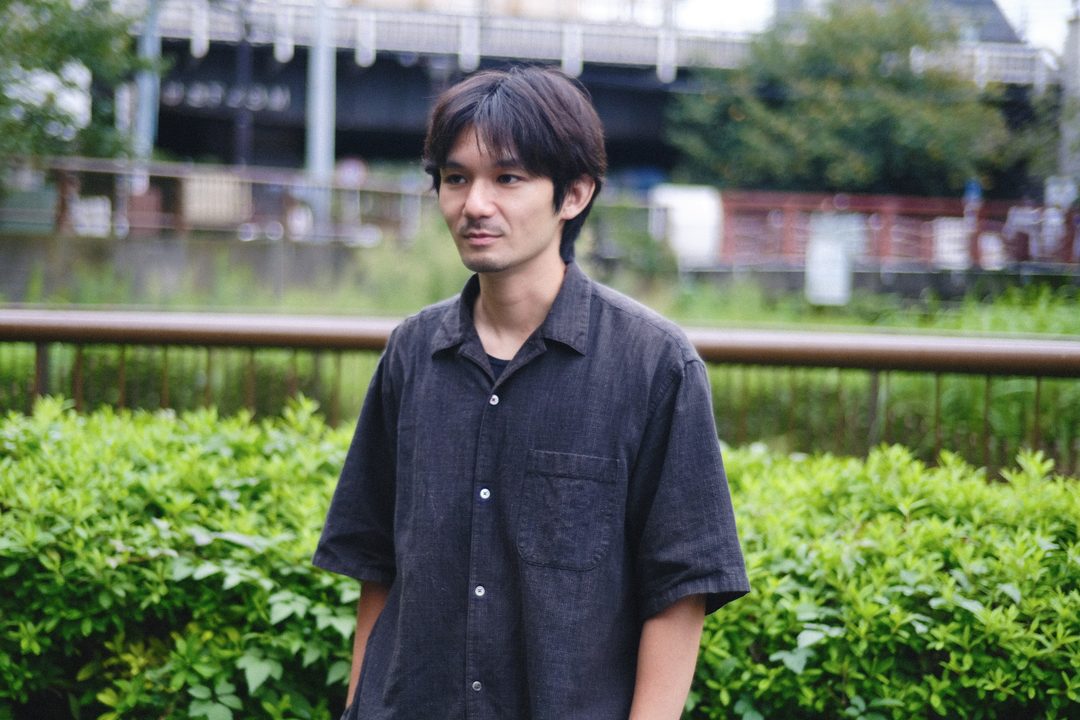
Taiki Hakari
Taiki is a freelance video director and editor. After starting his career at a production company, he now works mainly on commercials while independently developing films and dramas.
Photo: Eigoro Akai
Watch the film on Youtube: 『その花を綺麗とは思わなかった(No Reason to Love It)』
The journeys ahead
These five filmmakers came to their winning films by different routes. Each drew on something close to them: a friend’s song and his own struggles, a gesture of respect, a familiar commute, a morning cup of coffee, or a moment that unexpectedly caught the eye. Their films offer different ways to think about taking the next step.
The award’s planned Tokyo programme in November will bring the winning filmmakers together to share their work and perspectives. The filmmakers will also join the ASEAN-Japan Centre for a talk event at WOMAN EXPO 2026 Winter on November 28th in Tokyo (Organized by Nikkei Shimbun and Nikkei BP). Details will be announced on the Centre’s social media.