

EXECUTIVE SUMMARY
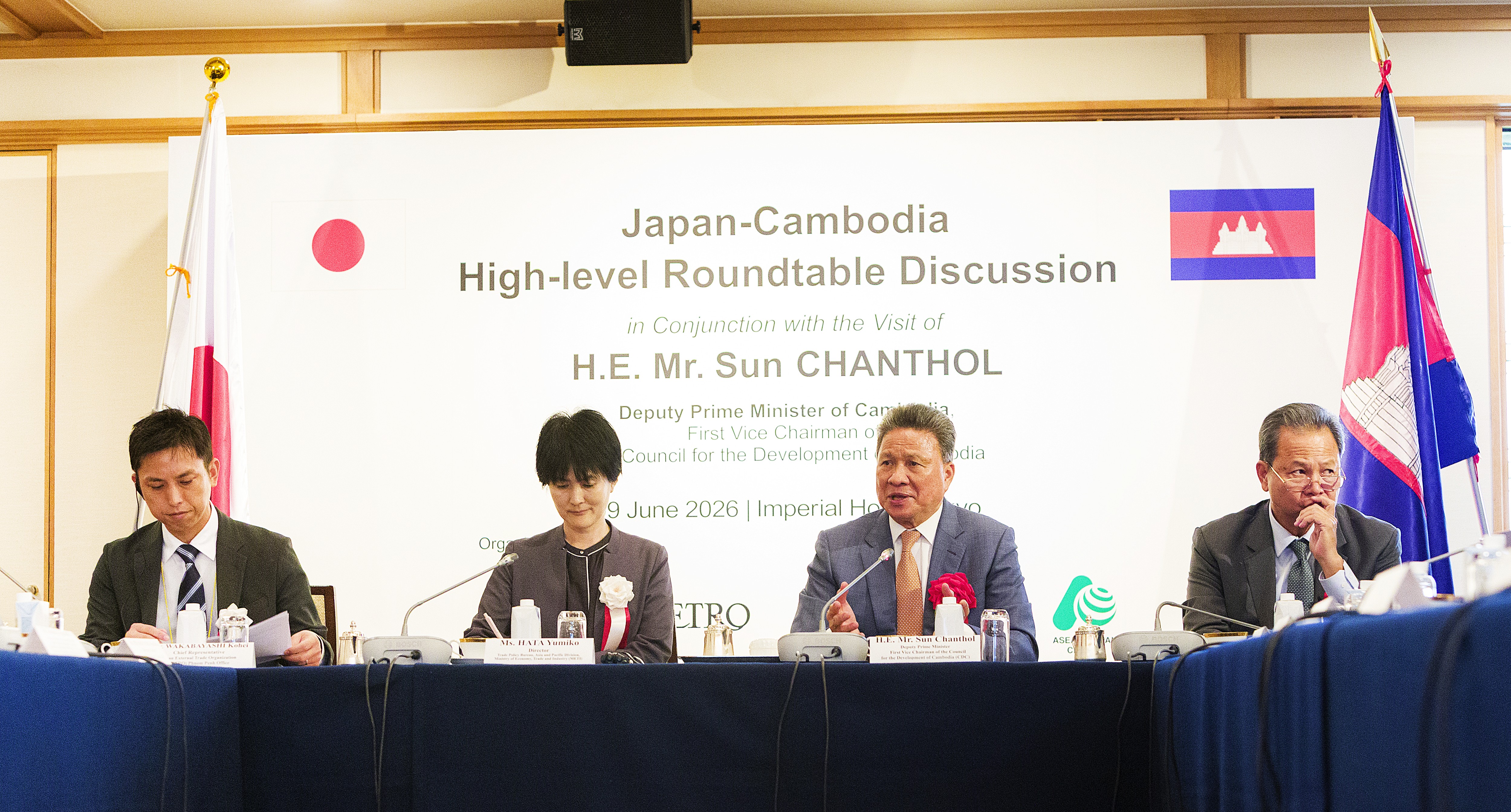
A high-level Cambodian delegation led by Deputy Prime Minister H.E. Sun Chanthol visited Tokyo and Osaka from 9 to 12 June 2026, with the investment roadshow timed alongside the Deputy Prime Minister’s participation in the Nikkei Asia Forum 2026. The roadshow engaged over 100 participants across both cities through two flagship events and a series of high-level bilateral meetings.
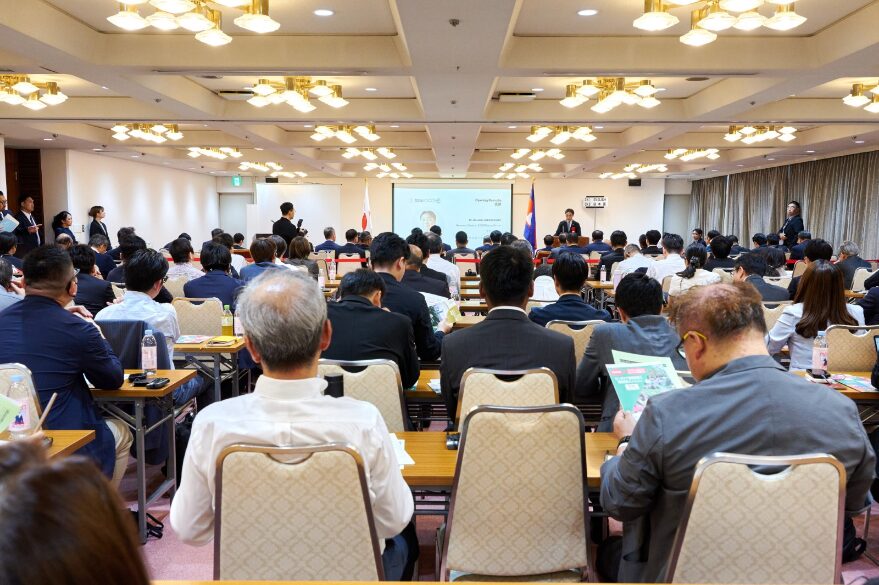
In Tokyo, a closed-door high-level roundtable convened eleven Japanese companies with CDC leadership. In Osaka, the Cambodia Investment Forum opened the dialogue to approximately 100 Kansai business participants. The visit also included a welcome breakfast hosted by the International Friendship Exchange Council, a meeting with Keidanren’s Committee on Asia and Oceania, and a courtesy call on the Chairman of the Kansai Economic Federation. The roadshow was co-organised by the ASEAN-Japan Centre (AJC), CDC, JETRO, Japan-Mekong Regional Economic Committee and the Osaka Chamber of Commerce and Industry (OCCI), with support from Mizuho Bank.
Tokyo — 9 June 2026
Format: Closed-door high-level roundtable
Venue: Imperial Hotel Tokyo
Participants: 62 participants, including representatives from 11 Japanese companies (by invitation)
Osaka — 12 June 2026
Format: Open investment forum
Venue: Osaka Chamber of Commerce and Industry
Participants: Approximately 80
WHAT CAMBODIA OFFERS
H.E. DPM Sun Chanthol presented Cambodia’s investment proposition across six pillars, addressing each factor Japanese investors typically evaluate.
| Stability Peace and political continuity since 1998. Average GDP growth of 7% for two decades pre-COVID; life expectancy rose from 56 to 70 years in the same period. Low public debt (~30% of GDP), inflation at 2.5%, and a dollarised exchange rate stable at 4,000 riel per USD for 20 years. | Pro-Business Government The World Bank ranks Cambodia as holding the most liberal investment regime in ASEAN. 100% foreign ownership, no local partner requirement, free profit repatriation, no price controls, and up to 9 years of corporate income tax exemption under the Qualified Investment Project regime. |
| Location At the heart of the Greater Mekong Subregion (250 million consumers) and within ASEAN and RCEP (2.3 billion consumers). EU Everything But Arms preferences apply until LDC graduation in December 2029. A bilateral trade agreement with the United States fixes tariffs at 19%. | Labour Youngest population in ASEAN, with 60% under age 30. A national TVET programme has trained over 100,000 youth since November 2023, with stipends provided. A 150% super-deduction is available on qualifying in-house training costs. |
| Land & Infrastructure 50-year leaseholds available with trust-based foreign title structures. JICA-funded Sihanoukville port expansion (Phase 1: Q1 2027), the Funan Techo Canal (due 2028), and a National Logistics Master Plan covering US$36.6 billion across 174 projects reduce operational costs across the supply chain. | Public-Private Dialogue Cambodia operates structured, institutional channels for investor engagement: a biannual Public-Private Dialogue (31 sessions completed; 32nd scheduled for 2 September 2026), 16 technical working groups co-chaired by private sector and government, a Government-Private Sector Forum chaired by the Prime Minister (19 sessions; 20th planned late 2026), and rotating breakfast briefings with major chambers including JBAC. |
Learn more on the Special Briefing on the Cambodia Investment Law (JP only): https://www.asean.or.jp/main-site/wp-content/uploads/2026/06/Cambodia-Investment-Briefing-202606.pdf
Activities and Highlights
[Tokyo] Cambodia–Japan High-Level Roundtable Discussion: Strategic Investment and Partnership
9 June 2026 · Imperial Hotel Tokyo
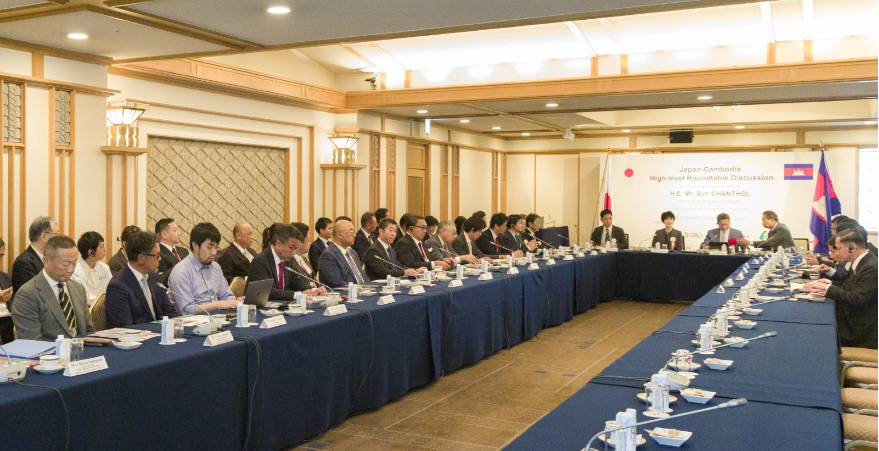
Eleven Japanese companies spanning agri-processing, clean energy, manufacturing, technology, automotive, and environmental services met with H.E. DPM Sun Chanthol and senior CDC officials in a closed-door session facilitated by AJC. METI’s Ms. Hata Yumiko opened by noting that nearly 400 Japanese companies already operate in Cambodia, and that the METI-CDC Business Co-Creation Team (BCT), established in October 2025, now functions as a live one-stop support mechanism for Japanese investors.
Company discussions ranged across sectors: agri-processing interests in rice, mango, and cashew value chains; a clean fuel model producing high-purity biodiesel from agricultural biomass; plans to expand local manufacturing under a “Made in Cambodia” model; and drone and AI applications for agricultural monitoring and water management. A survey by the Japan-Mekong Regional Economic Committee confirmed the direction of travel: 90% of Japanese companies already in Cambodia are positive about maintaining or expanding their presence.
The session also surfaced investment gaps that are opportunities in themselves. One Japanese industrial services company described a decade of waiting for a reliable domestic heat treatment and surface plating provider:
“We want to take the technology and know-how that we have nurtured in Japan to help Cambodia become more beautiful and more prosperous. Instead of just asking them to do some tasks, we want to actively recruit young, talented people and transfer to them technology and skills.”
— Japanese Company, Tokyo Roundtable
Throughout the session, H.E. DPM Sun Chanthol answered investor questions directly, inviting companies to raise concerns on SPS approvals, tax administration, and QIP conditions, and committing to specific follow-up. His framing of the government’s relationship with the private sector was unambiguous:
“We consider private sector is a must, is the most important partner for the government of Cambodia. You are the engine of our economic growth. Without you, we cannot build our economy.”
— H.E. Sun Chanthol, Deputy Prime Minister of Cambodia
Closing remarks by JETRO Chief Representative Mr. Kohei Wakabayashi identified agricultural advancement, clean energy, and Japanese technology transfer as the session’s three clearest investment themes, while noting that transparency in tax administration remains an area requiring continued progress. The roundtable concluded with a networking session connecting Japanese participants with Cambodia’s accompanying business delegation.
[Osaka] Cambodia Investment Forum: Opportunities in Sustainable and Strategic Sectors
12 June 2026 · Osaka Chamber of Commerce and Industry
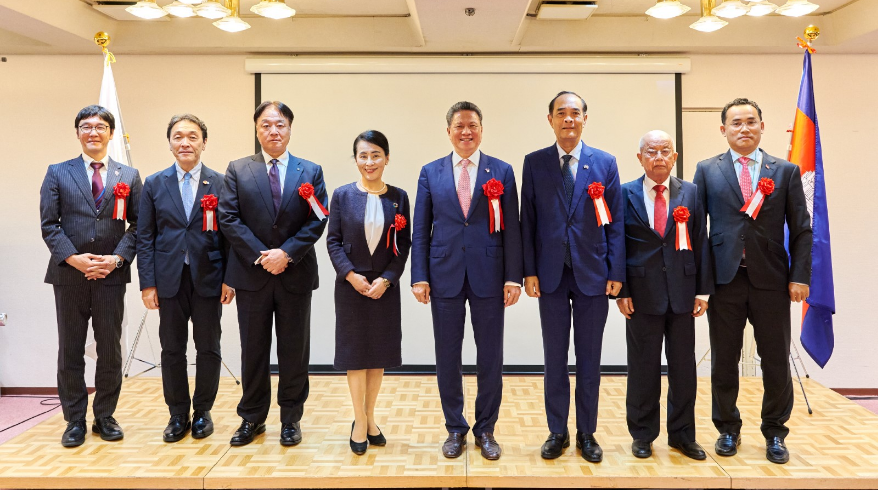
The Cambodia Investment Forum built directly on the Cambodia Business Mission in Kansai 2025, a two-day engagement co-organised by AJC and CDC in July 2025. It opened the investment dialogue to a broader audience of roughly 100 Kansai-region businesses, co-organised by AJC, CDC, JETRO, and OCCI with Mizuho Bank as a supporting partner.
AJC Secretary General Dr. Kunihiko Hirabayashi and JETRO Osaka Director-General Mr. Yasushi Ninomiya opened the forum, with Hirabayashi framing the partnership around shared values and co-creation. H.E. DPM Sun Chanthol’s keynote reinforced Cambodia’s commitment to doubling the number of Japanese companies operating there and offered investors direct access to his office via QR code. Mr. Ninomiya and OCCI Chairman Mr. Hiromitsu Morishima echoed that framing, with OCCI arguing that ASEAN — and Cambodia in particular — should be seen as an integrated regional supply chain rather than an isolated investment destination.
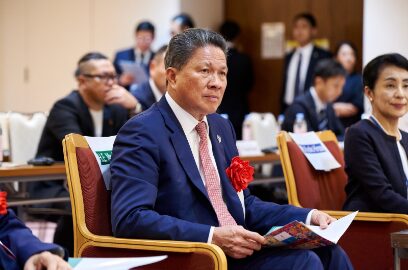
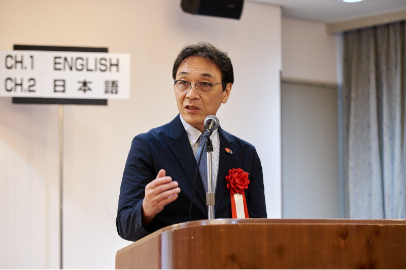
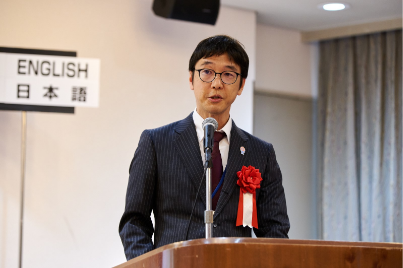
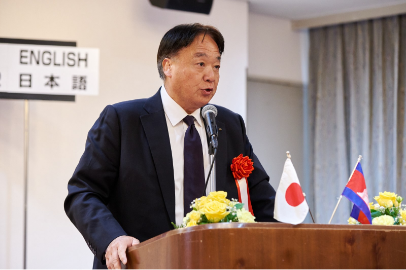
“This is not a conversation about Cambodia as a destination of Japanese capital or investment. It is a conversation about co-creation, building shared value between two economies at a complementary stage of development.”
— Dr. Kunihiko Hirabayashi, Secretary General, ASEAN-Japan Centre
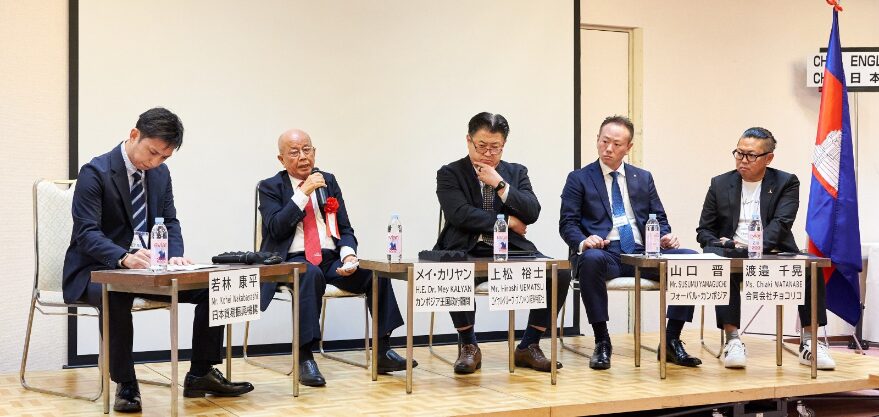
The panel on food and agri-processing built a complete investment thesis from four perspectives: policy (H.E. Dr. Mey Kalyan, Advisor to the Royal Government), a working SEZ model (Mr. Hiroshi Uematsu, CEO, Royal Group Phnom Penh SEZ), SME entry support (Mr. Shin Yamaguchi, Director, FORVAL Cambodia), and a live proof of concept (Ms. Chiaki Watanabe, whose farm-to-chocolate model runs from Battambang to Nagoya). Dr. Mey Kalyan captured the co-creation logic at the sectoral level:
“We want to help “made with Japan” rather than made in Japan or made by Japan.”
— H.E. Dr. Mey Kalyan, Advisor to the Royal Government of Cambodia
Agriculture accounts for 18% of Cambodia’s GDP and employs one in three Cambodians, yet only 10% of produce is processed domestically. Mr. Uematsu’s Phnom Penh SEZ demonstrated the model in practice: 30 Japanese manufacturers are established there, with Mizuno the most recent entrant, having found the Cambodian workforce capable of meeting Japanese professional baseball’s exacting quality standards. A dedicated session on the Kampong Thom Agro-Processing SEZ introduced a 600-ha Industrial Park and 300-ha Agro-Processing SEZ backed by over 500,000 available workers and major outputs in cashew, rice, cassava, and mango.
Key Takeaways
01 Cambodia is listening — and answering on the record.
The roundtable format was chosen precisely so Japanese companies could put real concerns on the table. On SPS approvals, tax administration, QIP conditions, and industrial supply gaps, the government responded specifically and committed to follow-up. The DPM put the invitation to investors plainly:
“Let me know some of the issues. Please speak frankly, tell me exactly what’s on your mind — why you have not been to Cambodia yet, or if you’re in Cambodia, what are your problems that you want us to solve.”
— H.E. Sun Chanthol, Deputy Prime Minister of Cambodia
02 The agri-processing gap is structural and matched to Japanese strengths.
Only 10% of Cambodia’s agricultural produce is processed domestically. Japan’s advantages in processing technology, quality control, traceability, and access to high-standards markets are a precise fit. This is not a promotional claim — it is a supply-demand gap with named sectors, named volumes, and a named SEZ ready to receive investors.
“Japanese companies are very strong in these technologies, and the high-quality food markets in Japan and Europe will benefit from building processing capability in Cambodia.”
— Mr. Shin Yamaguchi, Director, FORVAL (Cambodia) Co., Ltd.
03 Companies on the ground are the most credible voice.
Mizuno chose Cambodia for workforce quality, not cost. A biodiesel company is building a sustainable fuel supply chain from Cambodian agricultural biomass. J-Core registered in Cambodia not to extract cheap labour, but to transfer Japanese environmental expertise and help make Cambodia more prosperous. A panelist with 12 years in Cambodia put it plainly:
“I’ve been in Cambodia for 12 years, but I never had a single negative experience. If we can work together, I think we can create bigger business opportunities for both countries. I am strongly convinced on this.”
— Ms. Chiaki Watanabe, Founder, Choco Rico / COO, Cacao Visionary Co., Ltd.
04 The gaps investors identified are first-mover opportunities.
The absence of domestic heat treatment and surface plating providers, cold chain deficits causing 16-40% post-harvest food loss, underdeveloped waste-to-energy infrastructure, and a nascent wastewater treatment, digital and agroprocessing sector are not deterrents. They are entry points. One company has waited a decade for a heat treatment provider to arrive. The first mover gets the market.
“We have been waiting 10 years for such a company to enter into business in Cambodia. And right now, there is no such company that does this kind of business in Cambodia.”
— A Japanese manufacturing company, Tokyo Roundtable
Conclusion
The Cambodia-Japan Investment Roadshow 2026 reaffirmed the depth and momentum of the bilateral economic relationship. By bringing together senior government leadership and Japanese business across two cities, the roadshow moved beyond promotion to substantive dialogue — addressing real investor concerns, surfacing sector-specific opportunities, and opening direct channels between decision-makers on both sides. As Cambodia advances toward its vision of high middle-income status by 2030, and as Japanese companies seek trusted partners in a diversifying regional supply chain, this roadshow stands as a concrete step toward a partnership built on shared strengths and mutual benefit.
For more information or to join future events:
Country Strategic Support Team
info_cs@asean.or.jp


