

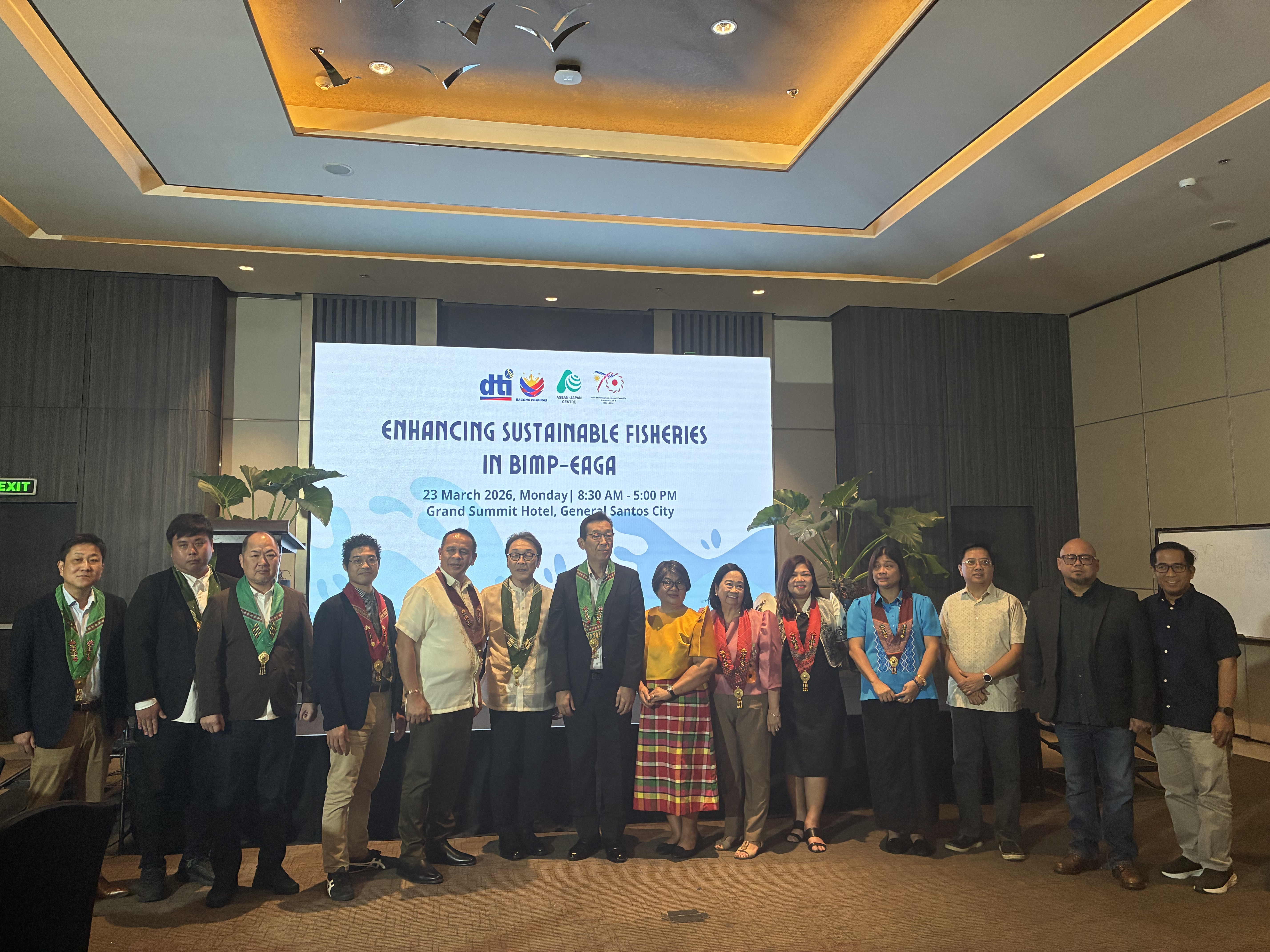
23 March 2026 | General Santos, Mindanao, Philippines
The ASEAN-Japan Centre hosted the Forum on Enhancing Sustainable Fisheries in BIMP-EAGA on 23 March 2026 in General Santos City, Mindanao, Philippines, in cooperation with the Department of Trade and Industry (DTI). The forum was held as part of the 70th Anniversary of Philippines-Japan Normalization of Diplomatic Relations, highlighting the longstanding partnership between the two countries. The forum brought together government officials, industry leaders, and experts from Japan and the Philippines to exchange perspectives on sustainable fisheries, marine eco-labeling, export readiness, and opportunities for business collaboration.
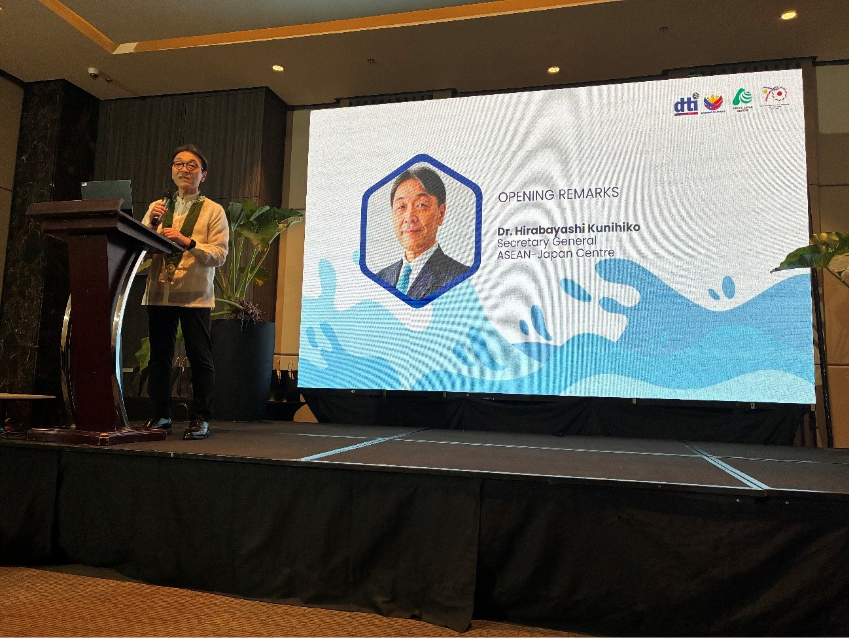
In the opening session, Dr. HIRABAYASHI Kunihiko, Secretary General of the ASEAN-Japan Centre, emphasized that sustainability is not a constraint but a foundation for long-term business. He highlighted the importance of people-to-people connections and a unified regional approach to managing shared marine resources.
Mr. ONO Hirotaka, Consul General of Japan in Davao, underscored the strong maritime ties between Japan and the Philippines, noting that sustainable fisheries are critical to national development, with Japan continuing to serve as a steady partner in the region.
Moreover, Dr. Ceferino Rodolfo, Undersecretary of the Department of Trade and Industry (DTI), highlighted the importance of the blue economy for livelihoods, economic growth, and resilience. He stressed the need for fisheries enterprises to meet global standards and strengthen competitiveness.
A message from Hon. Lorelie Pacquiao, Mayor of General Santos City, delivered by Joseph Alvin Veneracion (Executive Assistant III), further emphasized the city’s leadership in the fisheries sector and the shared responsibility to promote sustainability, innovation, and regional cooperation for future generations.
Key Takeaways
- Shift to Toll Packing for Stability: Companies are increasingly turning to toll packing as a practical strategy to manage rising logistics costs and fluctuating export demand. Instead of relying solely on direct exports, processors can utilize their facilities to serve other traders—maximizing capacity, reducing idle time, and creating more stable and predictable revenue streams.
- Sustainability as a Business Necessity: Sustainability is no longer optional but essential for market access. Buyers, particularly in premium markets, expect proof of responsible sourcing. Achievements such as certification from the Marine Stewardship Council (MSC) demonstrate that even small-scale fisheries can meet international standards and strengthen credibility with global buyers.
- Innovation in Quality and Traceability: Technological advancements are improving both quality and transparency. Enhanced freezing methods allow seafood to retain near-fresh quality, while digital traceability systems enable companies to track products throughout the supply chain and provide verifiable information to buyers.
- High Standards for Global Markets: Markets such as Japan maintain strict expectations for seafood in terms of freshness, safety, and presentation. To remain competitive, companies are prioritizing quality over quantity, maintaining strict temperature control, and complying with food safety requirements.
- Shared Responsibility for the Ocean: The ocean is a shared resource that connects countries, and fisheries depend on interconnected ecosystems. Sustainable management therefore requires collective action to protect marine resources and ensure long-term food security and industry growth.
The forum featured key presentations from:
- Dr. ATAKA Mugiho (Japan Overseas Agro-Fisheries Consultants Co. Ltd.) explained the “Sustainable Blue Economy” as a framework integrating environmental, economic, and social dimensions. He emphasized that eco-labels such as MSC are essential for improving traceability, adding value, and meeting the procurement requirements of the Japanese market.
- Mr. Olie Dagala (Mindanao Development Authority), representing Secretary Leo Tereso Magno, described the sea as a shared resource connecting nations. He shared updates on BIMP-EAGA initiatives, including AI-powered mangrove conservation and solar kits for remote fishing communities.
- Mr. ODAIRA Momoo (Tangonero Co., Ltd.) highlighted opportunities in the Japanese seafood market, noting its exceptionally high standards for quality and presentation. He emphasized that Philippine companies meeting these benchmarks can strengthen their global competitiveness.
- Ms. Rosanna Bernadette Contreras (SFFAII) described sustainability as a “survival strategy” for the tuna industry. She cited the first MSC certification for small-scale handline fishers and outlined Fisheries Improvement Projects (FIPs) aimed at strengthening traceability and harmonizing practices.
- Mr. SASAHARA Toshiaki (Sasabo Co., Ltd.) outlined detailed quality requirements for Japanese seafood, including uniform sizing, bone removal, and strict temperature control. He emphasized the importance of a skilled and stable workforce for precision processing.
- Mr. Neil G. Del Rosario (Rell & Renn Seafood Sphere Inc.) presented his company’s integrated business model, producing tuna loins for Europe and katsuobushi for Japan, while converting by-products into fish meal and fish oil.
- Mr. WAKIGUCHI Kotaro (Yamasa Wakiguchi Co., Ltd.) shared his company’s 130-year history and commitment to environmentally responsible fishing. He highlighted a patented freezing technology that preserves cellular integrity and maintains near-fresh quality after thawing.
- Ms. Annie M. Cabreros (Philbest Canning Corporation) described Philbest’s large-scale integrated operations and diverse product range, including canned, pouched, and pet food products for global markets.
- Ms. Cecilia N. Loquias (ECA Resources, Inc. / Cold Store Plus) explained her company’s shift to toll packing as a resilient model that maximizes facility use and reduces exposure to market volatility. She also highlighted modernization efforts, including blockchain-enabled shrimp traceability and the RAISE program.
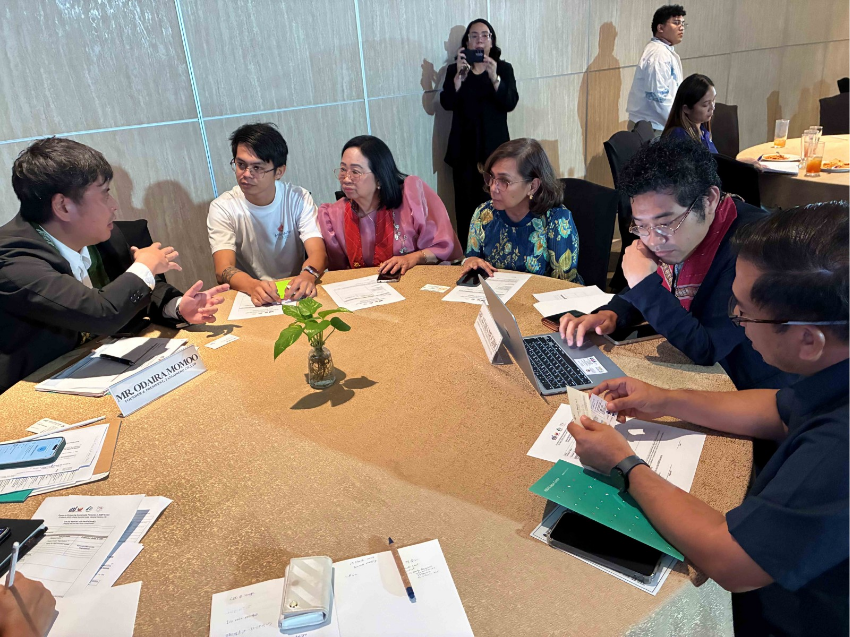
The presentations were followed by an interactive Q&A session and a business matching segment, enabling participating Japanese and Philippine companies to exchange insights and explore concrete partnership opportunities.
Conclusion
The forum underscored the importance of aligning sustainability, innovation, and market requirements to strengthen the fisheries sector in the region. Moving forward, the Centre will follow up on the results and key takeaways from the discussions to support continued ASEAN–Japan collaboration and promote meaningful, science-based impact.


