

On 10-11 November 2026, the ASEAN-Japan Centre (AJC) supported the 2nd ASEAN Women Economic Summit (AWES2026) in Manila as a Supporting Partner.
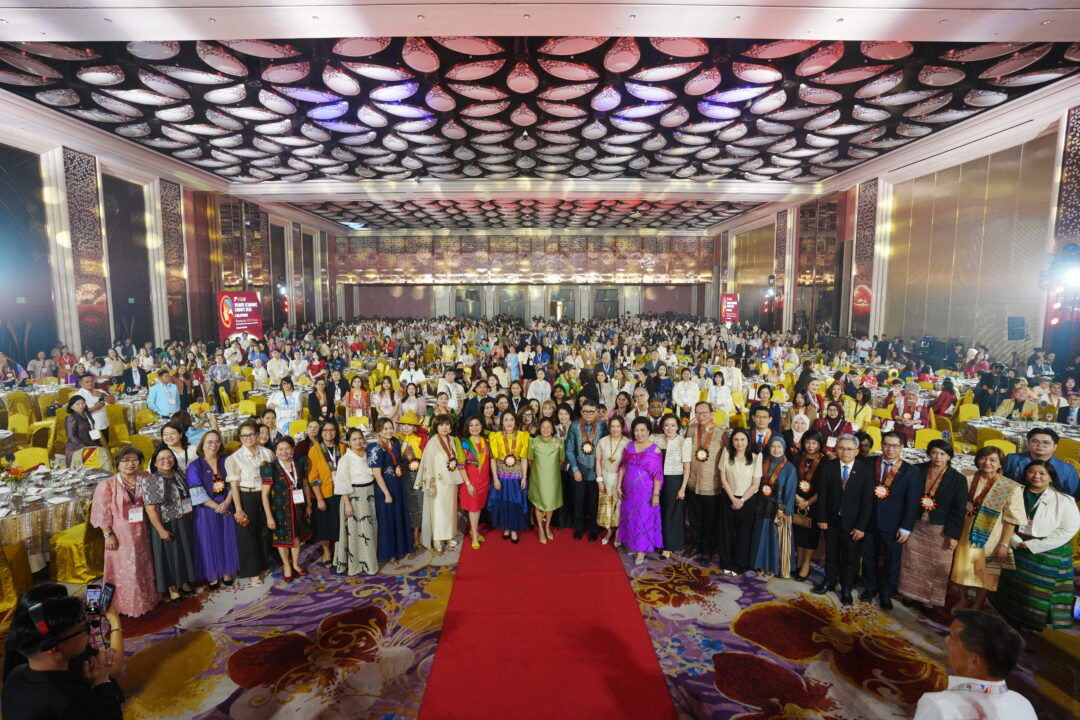
AWES2026 was organized by the Women’s Business Council Philippines (WomenBizPH) with ASEAN Business Advisory Council Philippines (ASEANBAC Philippines), as the official regional forum on women’s economic leadership during the Philippines’ 2026 ASEAN Chairmanship. It followed the inaugural summit in Kuala Lumpur in 2025 and took place at Okada Manila under the theme “Weaving the ASEAN Future: Women Driving Innovation, Integration and Inclusion.” More than 1,000 delegates from across Southeast Asia joined the Summit. Philippines First Lady Louise Araneta-Marcos graced the event as Guest of Honor, together with ASEANBAC Philippines Chairperson, Mr. Jose “Joey” Ma. Concepcion.
Four plenary sessions brought key business and government leaders to discuss inclusive and women-supporting perspectives on the region’s Digital Economy Framework Agreement (DEFA), the green transition, inclusive innovation and productivity, and ASEAN’s role in a changing global economy. Secretary General Hirabayashi, as well as ARUN Seed CEO Ms. Satoko Kono from Japan provided Japan and ASEAN perspectives on how to promote inclusive innovation and productivity growth, and to advance green transition, respectively.
AJC Secretary General Hirabayashi on Inclusion as a Strategy for Growth and Peace
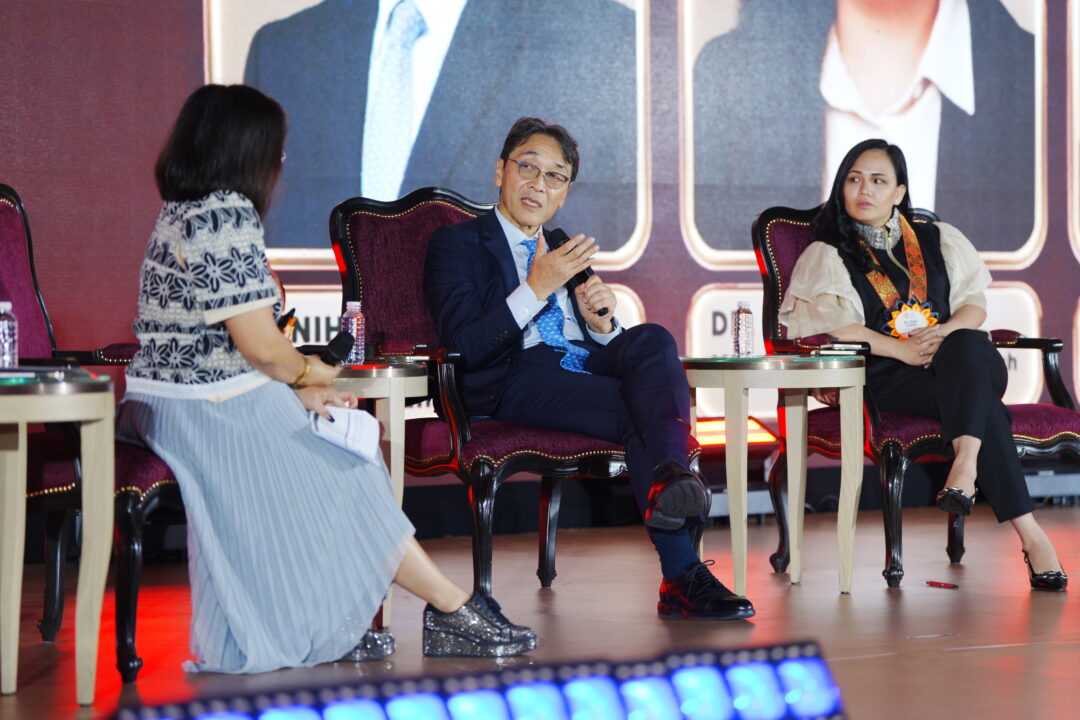
In Panel Session 3, Inclusive Innovation and Productivity Growth, Secretary-General Kunihiko Hirabayashi spoke alongside two ASEAN female business and government leaders, drawing on his background as a cardiac surgeon and 20 years at UNICEF. His main points:
- Inclusion works best when it serves a concrete goal. In his surgical teams, saving the patient left no room for rank: even first-year residents spoke up, and surgeons, nurses and clinical engineers worked as one. Inclusion built around a shared purpose takes root faster and lasts longer than inclusion pursued as an ideology alone.
- The biggest opportunity lies in the overlap. Women, MSMEs and the informal sector overlap heavily in ASEAN, and that overlap is underpriced today.
- Ageing is closer than it looks. The Philippines has the youngest median age among ASEAN-6 group, but Singapore, Thailand and Brunei Darussalam are ageing or nearing it, and Viet Nam’s population growth is slowing. Urbanisation and rising living costs are a major driver. He pointed to Japan’s municipal collateral-free lending for women, youth and retirees, as a possible ASEAN reference.
- AI must come with cybersecurity. AI and IT adoption will advance inclusion, he agreed, but cybersecurity capability is a precondition for taking part in digital global value chains.
He closed with an inclusive elementary school he visited in Cotabato City, Mindanao, where Christian and Muslim children study together and the “peace” sign is shown with one finger, not two: peace comes through unity, not victory. Inclusion’s value, he said, reaches beyond economic gain to peace among people and nations, noting that decades of trade, diplomacy and cooperation have harmonized relations between Japan and the Philippines.
ARUN Seed CEO Satoko Kono on building green resilience amidst future disruptions
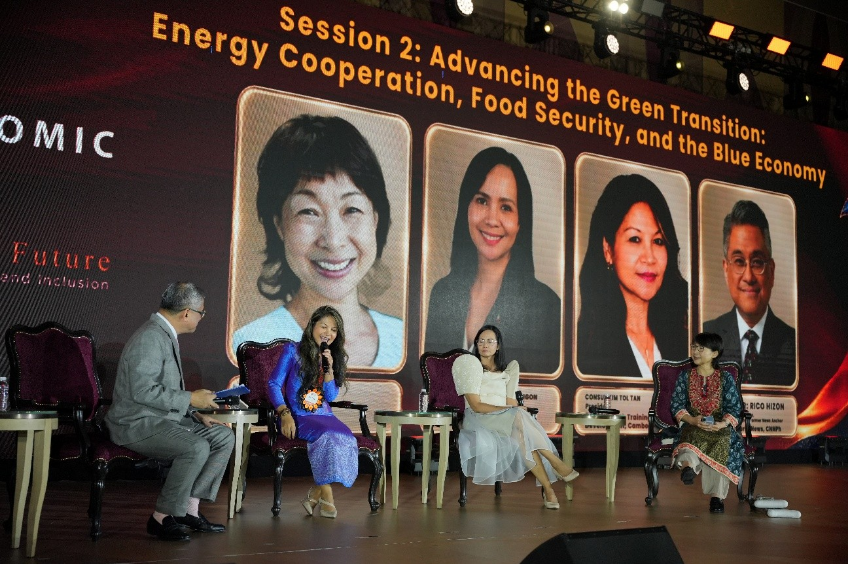
Panel Session 2, Advancing the Green Transition on Energy Cooperation, Food Security, and the Blue Economy, brought Ms. Kono’s perspective as CEO of ARUN Seed, a Japan-based social investment platform, to a discussion of the sustainability risks facing ASEAN economies. She also spoke about the particular difficulties women face in leadership in Japan, and the commonalities with the experience of women across ASEAN, adding a Japanese voice that shaped the session’s discussion of a shared regional challenge.
Ms. Kono and the other speakers identified food security, climate change, population ageing and energy disruption as the challenges most likely to disrupt economies and societies over the next five years. To build resilience against future shocks, the panel pointed to five next steps:
- Supporting young entrepreneurs’ innovations
- Forming investor partnerships to fund green infrastructure and business practices
- Setting regional policies on sustainability compliance
- Building supply chain resilience
- Measuring green metrics
These themes align closely with the Centre’s work with young leaders and startup founders in the region.
The 2nd ASEAN Women Economic Summit (AWES2026) Recommendations
The Summit closed with Recommendations on Advancing Women’s Leadership in Driving Economic Innovation, Integration and Inclusion, led by the Women Business Council Philippines and supported by the Philippine Commission on Women. The recommendations have been presented to the ASEAN Women Entrepreneurs Network (AWEN), the regional network of women entrepreneurs in ASEAN, to support its implementation in their respective member states.
Looking Ahead: Empowering Women Entrepreneurs through ImpactLink
The Centre will continue to support the women economic empowerment agenda in ASEAN and Japan through #ImpactLink. Its 2026 edition, Strengthening Impact and Readiness to Access New Markets for Women-led Social Enterprises in ASEAN, began with 27 women social entrepreneurs in online workshops on market selection, impact storytelling, pitch deck building and navigating the Japan market. Since October 2026, ten enterprises selected on their pitch decks have moved into Phase 2: four one-on-one coaching sessions, running through January 2027, on customer segmentation and market positioning, impact narrative, pitch decks and pitch practice. The ten come from eight ASEAN Member States and work in sectors from sustainable food and agriculture to ethical fashion and wellness. The program culminates in the ImpactLink 2026 Capstone Pitching Showcase in February 2027, where founders will pitch to Japanese and ASEAN buyers, distributors, investors and ecosystem stakeholders.


