Indonesia Convention Exhibition (ICE), BSD City, Tangerang, Indonesia | 15 October 2026
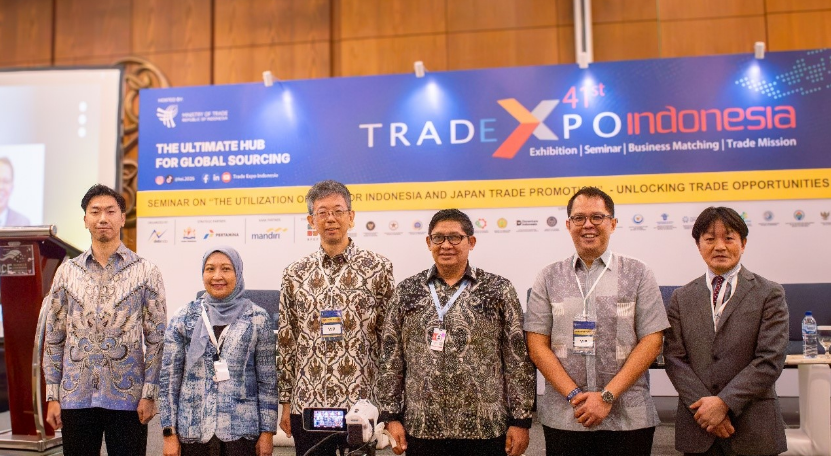
The ASEAN-Japan Centre (AJC), in collaboration with the Ministry of Trade of the Republic of Indonesia and the Japan External Trade Organization (JETRO) Jakarta, organized the seminar “The Utilization of FTAs for Indonesia and Japan Trade Promotion: Unlocking Trade Opportunities for Manufacturing through FTAs” on 15 October 2026, as part of Trade Expo Indonesia (TEI) 2026.
Held in a hybrid format at the Indonesia Convention Exhibition (ICE), BSD City, Tangerang, the seminar brought together government representatives, trade experts, and businesses to discuss opportunities under the Indonesia–Japan Economic Partnership Agreement (IJEPA), ASEAN–Japan Comprehensive Economic Partnership (AJCEP), and Regional Comprehensive Economic Partnership (RCEP). The discussions focused on improving FTA utilization, addressing challenges faced by Indonesian businesses, particularly small and medium-sized enterprises (SMEs), and strengthening access to the Japanese market.
Opening Remarks
The seminar was opened by Mr. Sugih Rahmansyah, S.E., M.M., Secretary of the Directorate General of National Export Development, Ministry of Trade of the Republic of Indonesia, representing Mrs. Fajarini Puntodewi, Director General of National Export Development. He emphasized that the true value of FTAs lies in their effective utilization, highlighting the need to strengthen awareness, technical assistance, and capacity-building to help Indonesian SMEs overcome challenges related to preferential tariffs, Rules of Origin, and certification procedures.
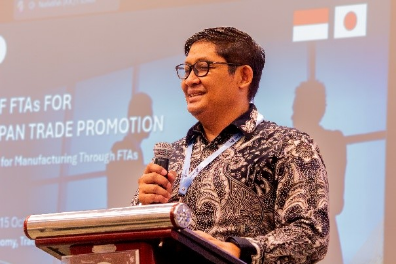
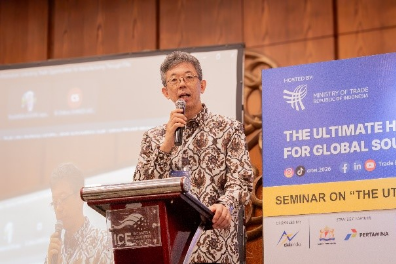
Figure 1 Mr. Sugih Rahmansyah, S.E., M.M. (left) and Mr. Yoshiyasu Iseki (right) delivering their remarks
This was followed by remarks from Mr. Yoshiyasu Iseki, Minister, Deputy Head of the Mission of Japan to ASEAN, who underscored Japan’s commitment to promoting FTA utilization through economic and technical cooperation. He highlighted the importance of helping SMEs overcome practical barriers and ensuring that the benefits of regional economic integration are accessible to businesses of all sizes.
Session I: Maximizing FTA Benefits for Indonesia–Japan Trade
The first session highlighted the opportunities offered by existing trade agreements and the importance of translating their benefits into practical business outcomes.

Figure 2 Mr. Taufiq Arif Wargadalam delivering his speech on current utilization of FTAs
Mr. Taufiq Arif Wargadalam of the ASEAN Secretariat outlined three key advantages of RCEP: preferential tariffs, harmonized Rules of Origin (RoO), and flexible origin certification procedures. He emphasized that RCEP’s cumulation provisions facilitate regional sourcing and production across participating economies, enabling businesses to strengthen their supply chains while potentially benefiting from preferential tariffs. He also highlighted the upcoming RCEP general review in 2027 as an opportunity to address emerging priorities, including digitalization, sustainability, and supply chain resilience.
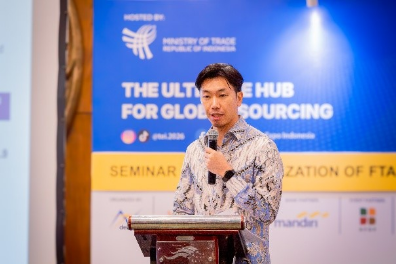
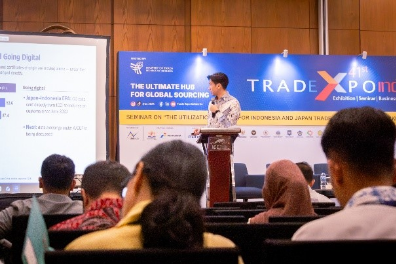
Figure 3 Mr. Yasufumi Otaki delivering his speech on the evolution of Japan-Indonesia trade
Mr. Yasufumi Otaki, Senior Director of JETRO Jakarta, discussed Indonesia–Japan trade relations and the gap between FTA awareness and actual utilization. Citing regional survey findings, he noted that while 61.9% of respondents were aware of RCEP, only 14.4% were utilizing it. He identified limited understanding of Rules of Origin, complicated certification procedures, and insufficient internal expertise as major obstacles. Using Indonesia’s apparel exports to Japan as an example, he demonstrated how RCEP’s more flexible origin requirements have contributed to increased utilization, illustrating that understanding applicable trade rules can be as important as tariff reductions.
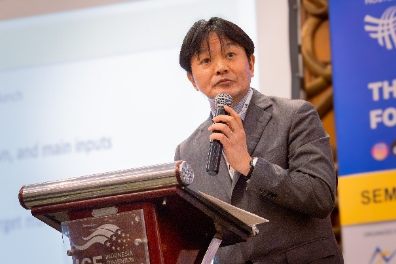
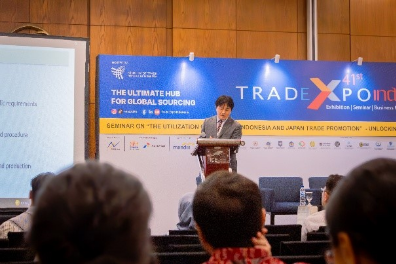
Figure 4 Mr. Yasushi Ishida concluding Session 1 and setting the stage for Session 2
Building on these discussions, Mr. Yasushi Ishida, Deputy to the Directors of Programme Operations of AJC, highlighted three interconnected barriers to FTA utilization: knowledge gaps, procedural complexity, and insufficient internal coordination. He stressed that companies need to understand not only the available agreements but also how to apply them to specific products and transactions.
To address these challenges, he introduced a practical five-step approach: identifying the product and its HS code, comparing applicable tariff preferences, reviewing product-specific Rules of Origin, preparing supporting documentation, and aligning FTA utilization with buyer requirements. He emphasized the importance of coordination among procurement, production, sales, and logistics departments to ensure that businesses can effectively benefit from preferential trade arrangements.
Session II: Practical FTA Utilization and Accessing the Japanese Market
The afternoon session provided practical guidance on FTA procedures and opportunities for Indonesian businesses seeking to enter or expand into the Japanese market.
Mr. Bayu Wicaksono Putro from the Ministry of Trade of the Republic of Indonesia discussed the application of Rules of Origin, Certificates of Origin (CoO/SKA), and preferential tariff arrangements under IJEPA, AJCEP, and RCEP. The discussion emphasized the importance of selecting the most advantageous agreement based on product classification, origin requirements, and importer preferences. Indonesia’s ongoing digitalization of origin certification procedures was also highlighted as an important step toward simplifying administrative processes for exporters.
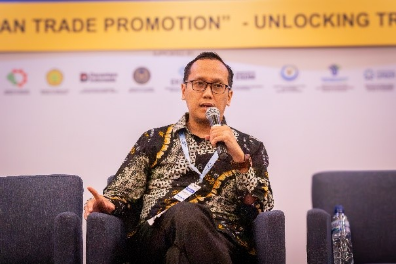
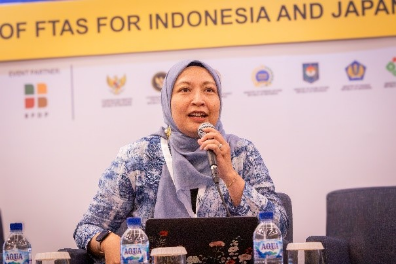
Figure 5 Panel discussion on Japanese market trends, buyer expectation, standard requirement, and certification and training on CoO, RoO, and Tariff Schedules by Mr. Bayu Wicaksono Putro (left) and Ms. Merry Astri Indrisari (right)
Ms. Merry Astri Indrisari, Trade Attaché at the Embassy of Indonesia in Japan, discussed opportunities and challenges in the Japanese market, particularly for Indonesian SMEs. Potential sectors included textiles and apparel, footwear, fisheries, processed food, metal products, and biomass materials.
The discussion emphasized that preferential tariffs alone are insufficient to secure market access. Indonesian businesses must also meet Japan’s stringent product quality, labeling, safety, and regulatory requirements, while understanding local consumer preferences and distribution channels.
For textiles and apparel, Original Equipment Manufacturing (OEM) and private-label partnerships were highlighted as practical pathways for entering the Japanese market. For food products, businesses were encouraged to work closely with Japan-based importers or distributors to navigate food safety requirements and import procedures. Similarly, biomass exporters were advised to consider relevant sustainability certification and buyer-specific standards.
During the interactive discussion, participants raised practical concerns regarding export documentation, product compliance, identifying suitable Japanese buyers, and navigating market-entry procedures. Speakers encouraged SMEs to make use of government advisory services, market intelligence platforms such as InaExport, and targeted business-matching opportunities. Cooperation with Japanese trading companies, distributors, and established industry partners was also emphasized as a way to strengthen export readiness and build long-term business relationships.
Overall, the seminar underscored that effective FTA utilization requires an integrated approach combining trade knowledge, administrative readiness, product competitiveness, regulatory compliance, and business partnerships.
Trade Expo Indonesia 2026: Strengthening Broader Trade Partnerships
This FTA seminar was held in conjunction with the 41st Trade Expo Indonesia, organized on 14–18 October 2026 under the theme “The Ultimate Hub for Global Sourcing.” The exhibition featured 1,873 exhibitors and attracted international buyer registrations from 134 countries, with a targeted transaction value of US$17.5 billion.
During the opening ceremony on 14 October, Minister of Trade of the Republic of Indonesia, H.E. Budi Santoso, emphasized the government’s commitment to expanding export markets and supporting Indonesian SMEs in accessing global opportunities. H.E. Zulkifli Hasan, Coordinating Minister for Food Affairs, highlighted the importance of strengthening domestic productivity, while H.E. Bahlil Lahadalia, Coordinating Minister for Downstreaming and Energy Transition, stressed the need to enhance value-added production and translate trade partnerships into tangible economic outcomes.
A major highlight of the opening day was the signing of 168 Memoranda of Understanding (MoUs), representing potential transactions worth US$13.2 billion, between Indonesian businesses and international buyers from 22 countries. Japan was among the countries with the highest potential transaction values, reflecting the significance of continued Indonesia–Japan trade cooperation.
Against this broader backdrop, AJC’s FTA seminar reinforced the importance of ensuring that businesses, particularly SMEs, can effectively utilize existing trade agreements to access new markets and strengthen their competitiveness.
Through continued collaboration with government agencies, trade organizations, and industry stakeholders, AJC remains committed to promoting practical FTA utilization, strengthening business connectivity, and supporting sustainable trade and investment partnerships between ASEAN and Japan.