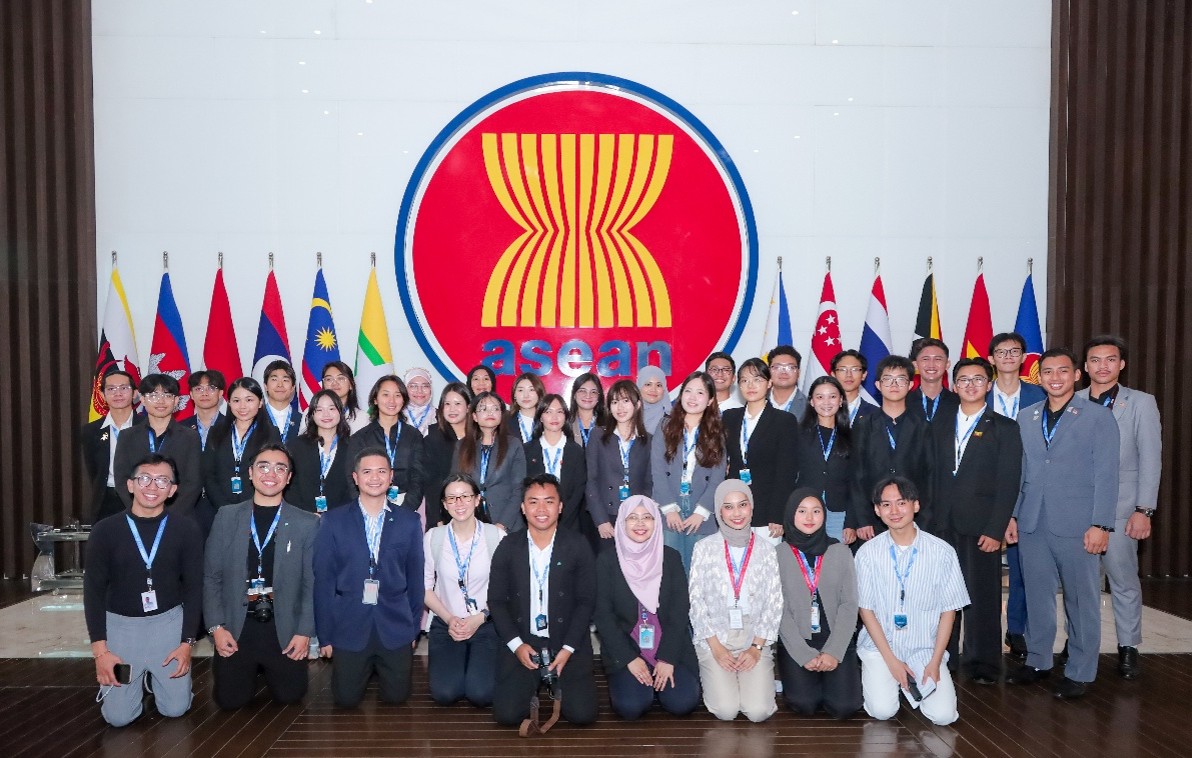
From 11 to 13 August 2026, the ASEAN-Japan Centre (AJC) held the AJYELN 2.0 Environmental Leadership and Project Management Training in Jakarta, Indonesia, bringing together 29 young environmental leaders from ASEAN Member States and Japan.
The three-day programme provided fellows with opportunities to connect regional environmental policy with practical action. Through institutional dialogues, field exposure, technical sessions and hands-on workshops, fellows explored approaches to plastic pollution, behavioural change, circular economy, project management, creative communication and cross-border collaboration.
More importantly, the training gave fellows space to revisit and strengthen the environmental projects that they will implement in their respective communities as part of AJYELN 2.0.
Key Takeaways
- From awareness to practical behaviour change: Fellows learned that environmental projects need to go beyond simply communicating a problem. By understanding people’s motivations and barriers, initiatives can be designed to make sustainable behaviour easier, more relevant and more achievable.
- Connecting policy, community and business perspectives: Exposure to the ASEAN Secretariat, Rekosistem and ERIA RKC-MPD enabled fellows to see environmental action from different levels—from ASEAN cooperation and policymaking to community implementation and commercially sustainable circular-economy solutions.
- Refining projects through real feedback: Peer, mentor and expert discussions encouraged fellows to critically revisit their original proposals. Several teams identified opportunities to simplify activities, reconsider target groups, strengthen stakeholder engagement and develop clearer approaches to long-term impact.
- Fostering AJYELN alumni as mentors strengthens continuity across cohorts: Two former fellows from Brunei Darussalam and the Philippines (2025 cohort) joined the program this year as mentors. Drawing on their own experience of implementing community projects, they provided practical, constructive, and relatable feedback to current fellows. Their involvement demonstrated the value of creating an alumni-to-mentor pathway that retains knowledge within the network, strengthens peer-to-peer and intergenerational learning, and helps build a more connected and self-sustaining AJYELN community.
- Creating an ASEAN-Japan network beyond individual projects: Through the “Beyond Borders” Action Lab, peer learning and cultural exchange, fellows explored ways to continue collaborating across countries. The programme reinforced the idea that while environmental challenges are experienced locally, many require shared learning and collective action across ASEAN and Japan.
Main Highlights
Day 1 – Connecting ASEAN Environmental Cooperation with Action on the Ground
- Opening of the ASEAN-Japan Centre Exhibition
The programme began at the ASEAN Headquarters/ASEAN Secretariat in Jakarta, where AJYELN fellows joined the opening ceremony of the ASEAN-Japan Centre Exhibition.
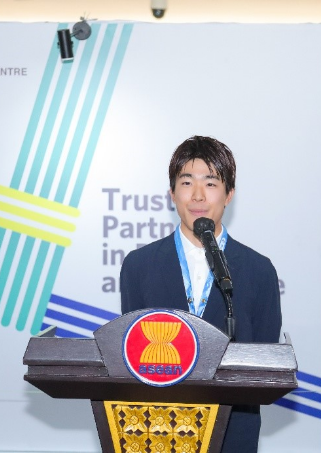
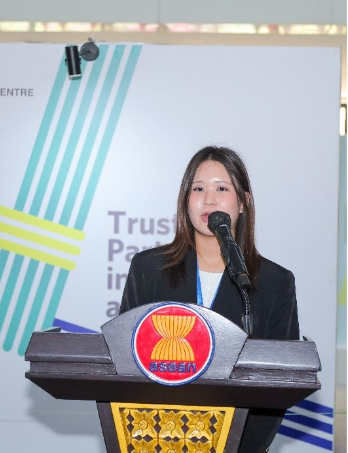
Taketo Kunugita from Japan and Pawarisa Bhurinuntakul from Thailand delivering their hopes on the AJYELN Program
Following the remarks by H.E. Dr. Kao Kim Hourn, Secretary-General of ASEAN, Dr. Kunihiko Hirabayashi, Secretary General of the AJC, and H.E. Yonetani, Ambassador of Japan to ASEAN, two AJYELN fellows—Taketo Kunugita from Japan and Pawarisa Bhurinuntakul from Thailand—also shared their aspirations for the programme. Taketo reflected on his goal of deepening his understanding of marine plastic issues and growing as an environmental leader, while Pawarisa expressed her hope that the fellows would leave the programme not simply as individual participants, but as one connected network working together against plastic pollution.
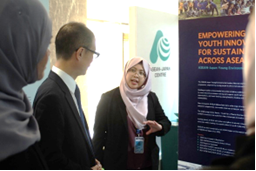
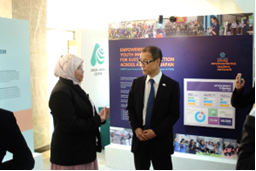
Nurlatifah (left), Programme Associate of ASEAN-Japan Centre, explaining on AJYELN program as part of the tour and Brunei Fellows (right) explaining about their project to Ambassador H.E. YONETANI Koji
After the ceremony, Fellows explored the exhibition and had the opportunity to interact with ambassadors, Permanent Representatives, ASEAN officials, AJC representatives and other participants.
- Dialogue on “The Missing Voice in Environmental Policy: Are Youth Being Heard?
Following the opening ceremony, fellows joined a dialogue with Dr. Vong Sok, Head of the Environment Division and Assistant Director of the Sustainable Development Directorate at the ASEAN Secretariat, on Youth Voices on ASEAN Cooperation on Environment.
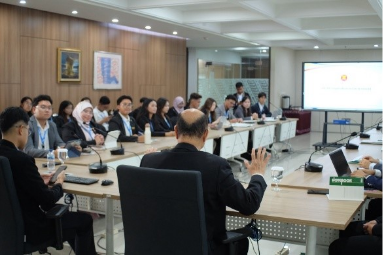
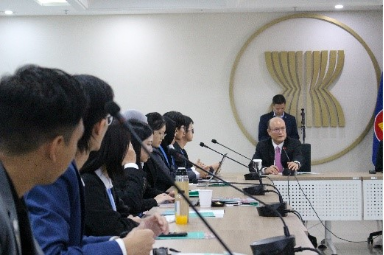
Discussion with Dr. Vong Sok
The session introduced ASEAN’s regional environmental cooperation mechanisms and demonstrated how issues including biodiversity, marine environments, water resources, climate change, chemicals and waste, sustainable cities and environmental education are addressed through cooperation among ASEAN Member States and partners.
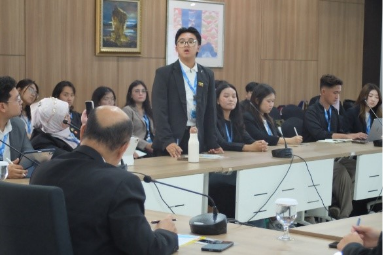
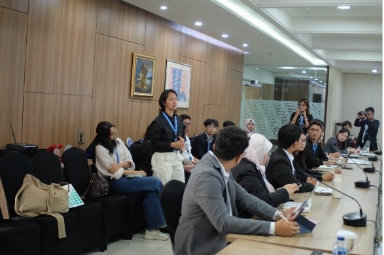
Fellows asking questions to Dr. Vong Sok
Fellows also learned about ASEAN’s approach to youth engagement in environmental issues. The presentation highlighted platforms such as ASEANyouCAN, launched during Brunei Darussalam’s ASEAN Chairmanship in 2021, as well as environmental education and youth eco-champion initiatives.
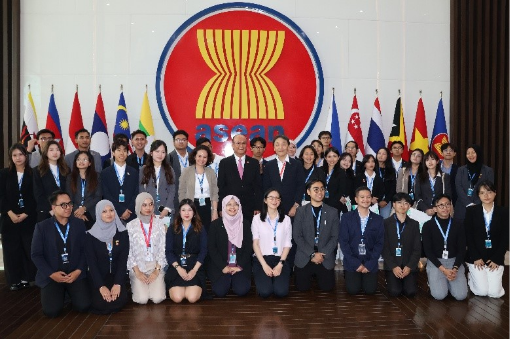
Group photo
The discussion also highlighted the role of young people as partners in implementing ASEAN’s environmental commitments. During the Q&A session, fellows explored how their own community projects could connect with wider ASEAN priorities and regional initiatives.
- Site Visit to Rekosistem Hub, Ciawi, Bogor
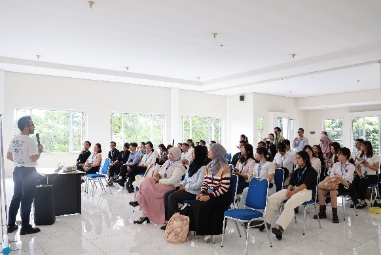
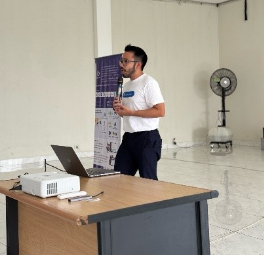
Presentation by Ernest Christian Layman, CEO and Co-Founder of Rekosistem
In the afternoon, fellows travelled to Rekosistem in Bogor, where Ernest Christian Layman, CEO and Co-Founder of Rekosistem, introduced the company’s circular-economy and waste-management model.
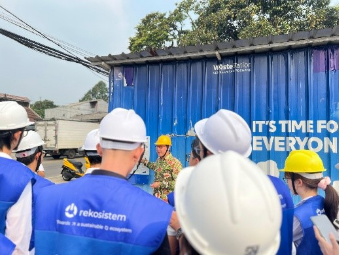
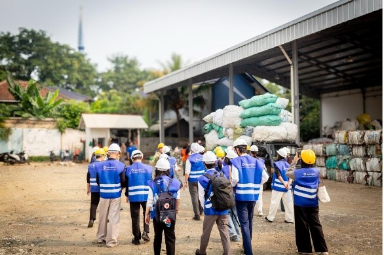
Guided tour to Rekosistem Hub facility
Fellows observed how waste is collected, segregated, recovered and directed towards recycling through an operating material recovery system. The visit also encouraged them to consider another important question: How can an environmental initiative create value while remaining financially and operationally sustainable?
Discussions on partnerships, income models and environmental entrepreneurship helped fellows connect their environmental objectives with the practical realities of maintaining projects over the long term.
Day 2 – From Behaviour Change to Circular-Economy Business Solutions
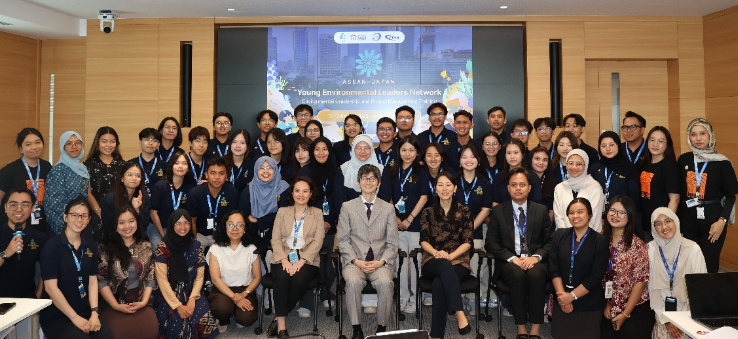
Group photo at ERIA-RKCMPD
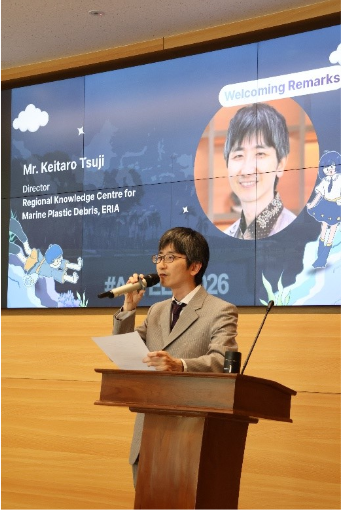
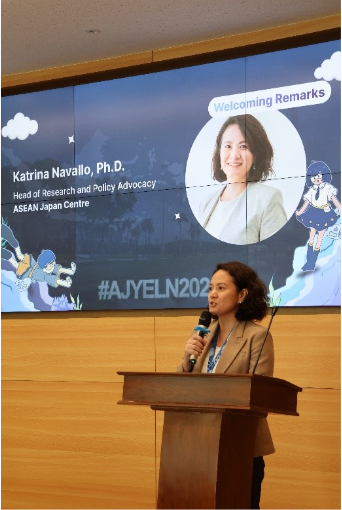
Remarks from Mr. Keitaro Tsuji, Director of Regional Knowledge Centre for Marine Plastic Debris, ERIA (left) and Ms. Katrina Navallo, Head of Research and Policy Advocacy, ASEAN-Japan Centre
The second day was held at the ERIA Regional Knowledge Centre for Marine Plastic Debris (RKC-MPD) under the theme “Training on Plastic Circular Economy: From Behavior Change to Business Innovation.”
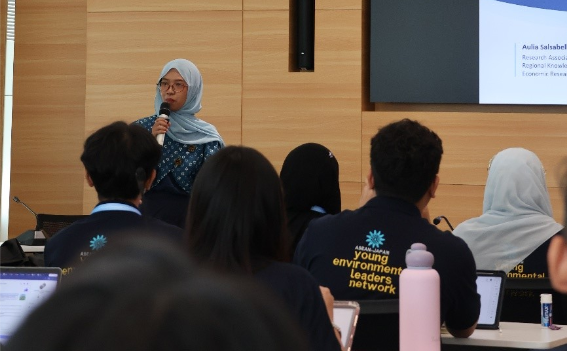
Lecture by Aulia Salsabella Suwarno, Research Associate at ERIA RKC-MPD
In the first session, Aulia Salsabella Suwarno, Research Associate at ERIA RKC-MPD, introduced behavioural approaches that can be used to influence plastic consumption and waste-management practices. Through case studies and discussions, fellows examined how different behavioural levers could be applied to the challenges faced in their own projects.
The conversation encouraged participants to look beyond awareness-raising and consider what actually motivates—or prevents—people from adopting more sustainable behaviour.
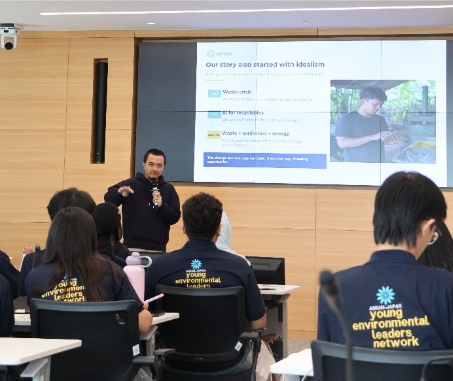
Lecture by Febriadi Pratama, CEO and Co-Founder of Gringgo Indonesia
The programme then connected environmental action with business thinking through a sharing session by Febriadi Pratama, CEO and Co-Founder of Gringgo Indonesia. Fellows were encouraged to identify genuine community or stakeholder pain points, recognize underused resources and understand people’s willingness to change.
The session highlighted that a sustainable environmental solution should not only deliver environmental value, but also respond to practical needs if it is to remain relevant over time.
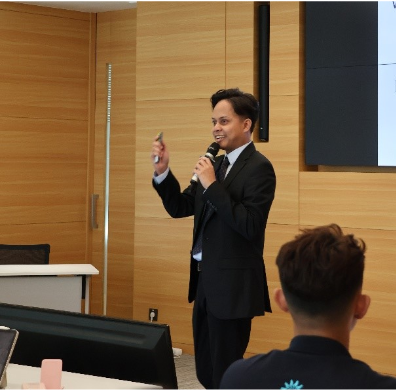
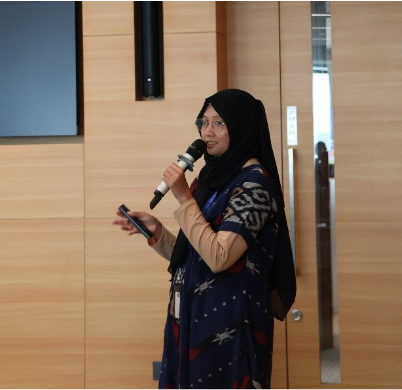
Lecture by Indradhi Faisal Ibrahim (left) and Aulia Ulfatunnisa (right)
The afternoon sessions further explored how circular-economy principles can be translated into viable models for plastic waste management. Indradhi Faisal Ibrahim introduced circular-economy fundamentals and their application to business models, while Aulia Ulfatunnisa discussed challenges associated with implementing the 3Rs—Reduce, Reuse and Recycle. Fellows then worked together to apply these ideas through a group exercise facilitated by Celine Kusnadi.
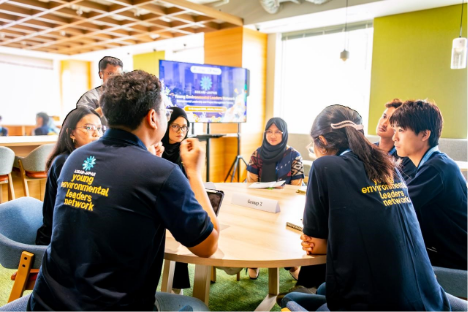
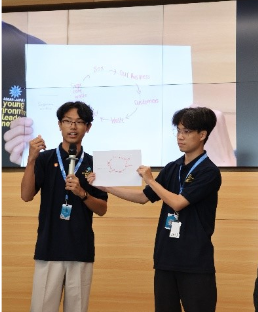
Group discussion and presentation
By the end of the day, participants had examined plastic pollution not only as an environmental issue, but also through the lenses of behaviour, systems, stakeholder value and business sustainability.
Day 3 – Turning Learning into Stronger Community Projects
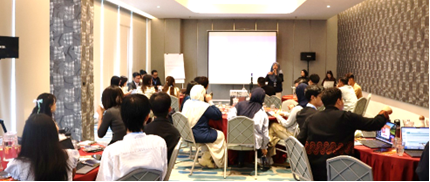
Lecture by Nurlatifah, Programme Associate, ASEAN-Japan Centre
The final day shifted the focus directly to implementation. The programme began with an AJYELN Code of Conduct and Financial Reporting session led by Nurlatifah, Programme Associate, ASEAN-Japan Centre, preparing fellows for the operational responsibilities that accompany their community projects. Participants reviewed budget management, acceptable documentation and financial-reporting requirements, while practising with examples based on previous AJYELN projects.
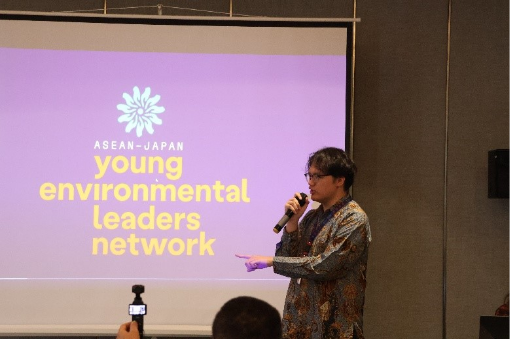
Lecture by Abraham Hino Samuel Jose on Project Management 101
During Project Management 101, fellows explored practical approaches for creating projects that respond to actual community needs. The session introduced the ABC Formula—Assets, Basic Needs and Coaching—and emphasized social mapping and the importance of avoiding assumptions or “development biases” when designing community interventions.
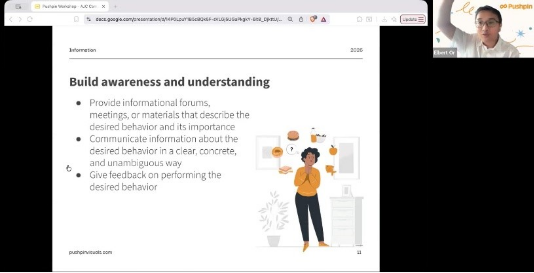
Lecture by Elbert Or on Creative Campaign 101
The Creative Campaign 101 workshop then brought communication and behavioural insights into project outreach. Fellows discussed how tools such as prompts, social influence, incentives and emotional appeals can shape behaviour, as well as how different forms of messaging can influence the way communities respond to environmental campaigns.
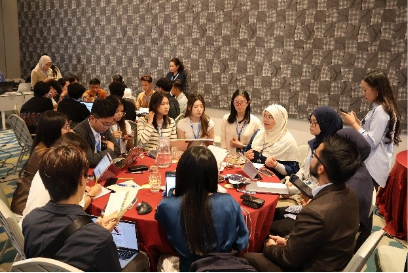
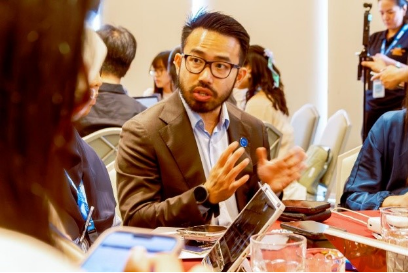
Project Refinement Workshop and Feedback from expert
These lessons were immediately put into practice during the Project Refinement Workshop. Fellows presented their projects to peers, mentors and experts and received direct feedback on areas that could be strengthened. The discussions encouraged teams to reconsider assumptions made in their original proposals and identify improvements based on the knowledge and field exposure gained during the previous two days.
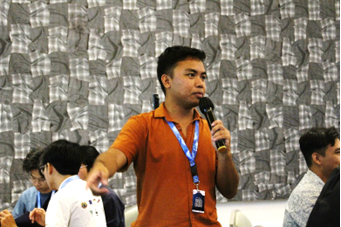
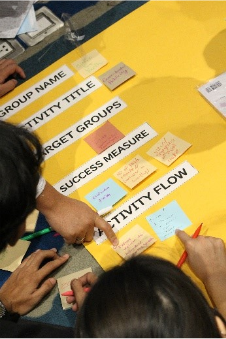
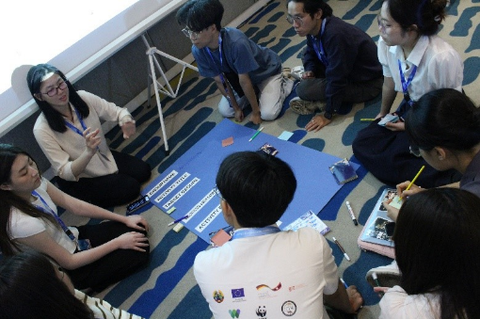
Regional project: “Beyond Borders” lead by Jick L. Acupan (AJYELN mentor)
The programme then looked beyond individual country projects through the ASEAN-Japan Action Lab: Co-designing Regional Project (“Beyond Borders”). Working across teams, fellows developed ideas for shared activities and explored how local environmental initiatives could be connected through a wider ASEAN-Japan network.
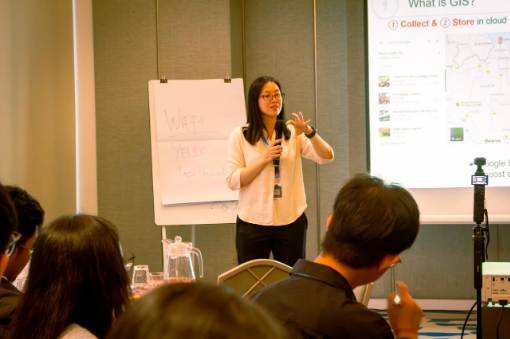
Lecture by Khew Ee Hung (AJYELN Mentor) on ArcGIS Utilization
A session on ArcGIS Utilization to Maximize Project Impact also introduced fellows to geospatial tools that can support data collection, impact mapping and the development of environmental databases.
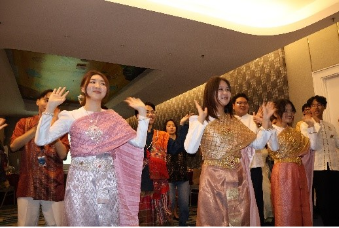
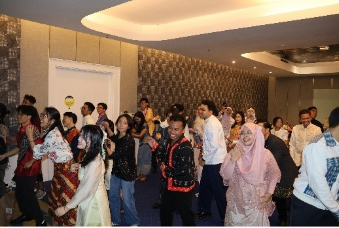
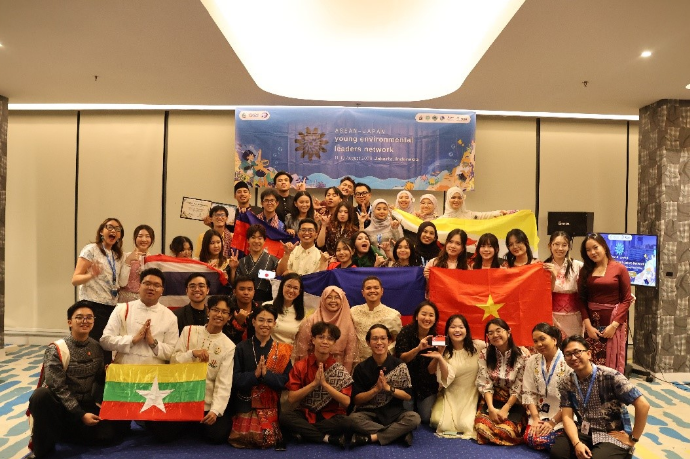
Fellows performing their culture during Cultural Night
The three-day training concluded with a Cultural Night, where fellows shared traditional attire, music, dances and stories from across ASEAN and Japan. Beyond celebrating diversity, the evening reflected one of AJYELN’s wider objectives: building relationships and trust among young environmental leaders who may continue working together long after the programme ends.
Growing the AJYELN Community Across Generations
AJYELN’s learning network is also beginning to extend across programme cohorts.
Two of the five mentors supporting the 2026 fellows were themselves AJYELN fellows themselves from the previous year’s cohort. Having experienced the programme and subsequently implemented their own environmental projects, they brought a particularly practical perspective to mentoring.
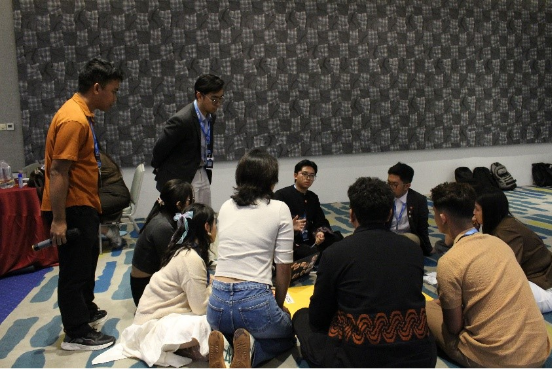
Two AJYELN 2.0 (2025 Batch) Alumni giving feedbacks as mentors
Their familiarity with the challenges faced by fellows allowed them to provide constructive and experience-based feedback—from managing project limitations to engaging communities and adapting plans when implementation does not proceed as expected.
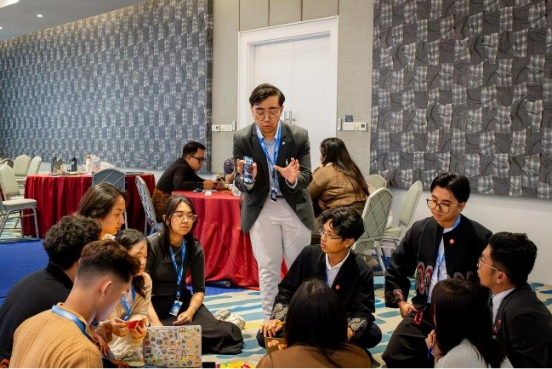
Izzuddin Hisham (AJYELN 2025 alumni, currently AJYELN 2026 mentor) giving feedback to current fellows for their regional project
This alumni-to-mentor pathway demonstrates how AJYELN can continue developing beyond a single fellowship cycle: young leaders first participate, apply their learning in their own communities, and then return to support the next generation.
By nurturing these connections across cohorts, AJYELN aims to build not only stronger environmental projects, but a growing community of young leaders who continue learning from—and contributing to—one another across ASEAN and Japan.
From Fellows to Action: What Will They Take Home?
Feedback from fellows showed a clear shift from broad environmental awareness toward more practical, community-focused action. Many participants highlighted the value of the six behavioural levers, social mapping, stakeholder engagement, project management, financial reporting, and impact measurement, and reflected on how these tools could strengthen the design and implementation of their projects.
For several teams, the training led to immediate refinements, including revising target groups, simplifying project components, strengthening calls to action, and better aligning activities with community needs. Fellows also emphasized the value of peer and mentor feedback in helping them critically assess their ideas and consider long-term sustainability.
Beyond project design, the programme strengthened cross-cultural communication, regional collaboration, and a shared sense of ASEAN identity. Many fellows expressed interest in maintaining the connections built through AJYELN and exploring future opportunities for cross-border collaboration.
“The training helped me look beyond awareness-raising and think more carefully about what motivates people to act. It also encouraged me to critically refine our project by setting realistic outcomes, gathering stakeholder feedback, and improving how we monitor long-term impact.”
Chansovichea Duch, Cambodia
“AJYELN helped me improve not only our project, but also myself as a young leader. It strengthened my understanding of stakeholder engagement and partnerships, while also giving me a stronger sense of ASEAN identity and how our local environmental challenges are interconnected.”
Hoang My Hanh Nguyen, Viet Nam
What Comes Next?
With the Jakarta training completed, AJYELN 2.0 fellows will bring their strengthened project plans back to their respective communities and move into the implementation phase of the programme.
Over the coming months, the fellows will continue working with mentors and partners to turn their ideas into community-level action, applying the approaches explored in Jakarta while adapting them to their own local contexts.
The training may have lasted only three days, but the real work begins after the fellows return home.
Through AJYELN 2.0, AJC looks forward to seeing how the knowledge, partnerships and friendships built in Jakarta grow into meaningful environmental action across ASEAN and Japan.