Reported by
Mohammad Nurdhiyauddin bin Haji Nudin, Haji Muhammad Izzuddin bin Haji Nor Hisham, and Mohammad Wafiy Mustaqim bin Bahrin
As a key implementation phase of Project Ripple Effect, participants who had completed the Masterclass Workshop Series—covering Leadership, Advocacy, Sustainability, and Environment—were tasked with translating their learning into real-world action through school-based outreach. In Brunei, three participant teams designed and delivered interactive environmental workshops for primary (8-12 years old), high school (12-16 years old), lower sixth-form (17-18 years old) students, aiming to raise early awareness of plastic pollution through engaging, age-appropriate activities. This report covers the workshop targeting lower sixth-form students. The workshop was designed as a participatory learning experience that combined system-level analysis with personal reflection, guiding participants from understanding the root causes of plastic pollution to recognizing their own role in driving change.
Key Takeaways
- Improved understanding of environmental advocacy: Participants demonstrated a clearer understanding of environmental responsibility, especially in relation to plastic pollution and Brunei’s waste management challenges. At least 90% of students actively engaged in discussions, group activities, and reflection sessions, indicating a strong grasp of the importance of sustainable consumption and production (SDG 12).
- Successful application of design thinking: Students were able to apply the design thinking process during the System Hack Sprint by identifying environmental problems surrounding daily situations in Brunei Darussalam, considering stakeholders across different industries and sectors and proposing practical and locally relevant solutions that are feasible and effective. They demonstrated critical thinking and empathy for those most affected by environmental issues.
- Strong pitching and presentation performance: The group presented feasible and sustainable project ideas that could be implemented in their school or community. These included ideas on reducing single-use plastics, improving recycling systems and awareness campaigns. Their confidence and communication skills improved significantly by the end of the session.
Main Highlights
- Date: 29 November 2025 at 08:00 – 12:00 BNT
- Venue or location: Physics Laboratory, Sengkurong Sixth Form Centre, Brunei Muara District, Brunei Darussalam
- Organizer: Din Din and Friend Team
- Facilitator: Project Ripple Effect participants: Sengkurong Sixth Form Centre School team
The workshop team was selected based on a prior pitch activity where members demonstrated their ability to tailor a project to a specific audience; hence, the organizers assigned the members based on the audience they initially targeted, using their established foundational knowledge.
The workshop team was already assigned earlier on during Masterclass in October and considering they will be facilitating the most mature students out of the three school workshops, their content has been adapted to be mostly intellectual and involving challenging thought processes.
- Participants: Lower sixth form students ranging with their age from 17 to 18 years old.
- No. of participants: 4
Activities Implemented
Session 1: System Awareness & Design Thinking
- Ice-Breaking & Hook
A fun and interactive introduction led that broke the initial barrier and prepared participants for deeper engagement.
- Talk 1 : “We Can’t Clean Our Way Out”
This session highlighted the global plastic waste crisis, mirrored acutely in Brunei Darussalam, continues to escalate as consumption increases and waste management systems struggle to keep pace. While clean-up efforts play an important role in mitigating visible pollution, they are inherently limited and reactive, addressing symptoms rather than the root causes of the problem. Without changes to production, consumption patterns, and community behaviour, plastic pollution will persist. This underscores the urgent need for systemic change, one that shifts focus towards prevention, accountability, and sustainable design solutions driven by informed and engaged communities.
- Activity 1 : System Hack Sprint
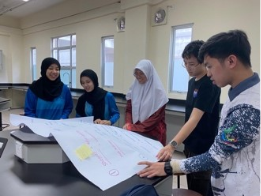
Participants worked in a group to work collaboratively in groups to identify a key environmental issue related to plastic pollution, map the relevant stakeholders involved, and analyse how these actors interact within the system. Using a design thinking approach, each group then proposed innovative and sustainable solutions that addressed the root causes of the problem. Ideas were visually developed and communicated through sketches and system maps on large canvases, encouraging creative thinking and shared understanding.
- Group Pitches & Reflection
The group presented their solution and received immediate feedback. Numerous solutions were pitched across different industries such as security and groceries, their interdisciplinary solutions definitely showed a mature thinking. These reflections allowed students to link environmental problems to real-life community situations, even daily situations.
Session 2: Personal Accountability & Reflection
- Talk 2 : “What Matters to Me”
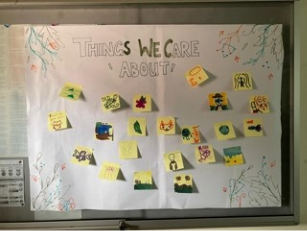
Students were encouraged to reflect on how environmental issues personally affect their lives, values, and families, fostering a deeper sense of personal connection and responsibility towards environmental challenges
- Activity 2 : Steps into Accountability
Participants explored how their daily habits influence the environment, reflected on privilege and access to resources, and examined how small, individual actions can collectively create significant impact. The activity provided a safe and inclusive space for honest self-reflection and open discussion, encouraging participants to develop greater self-awareness and a sense of accountability in addressing environmental challenges.
- Group Reflection & Closing
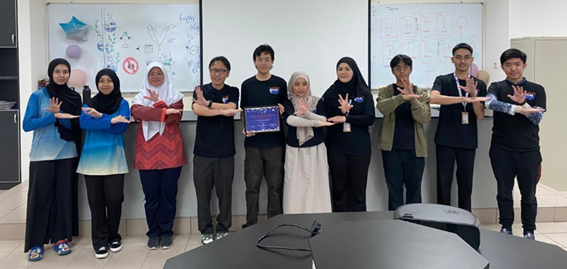
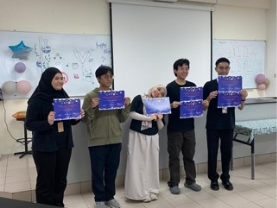
All facilitators led an open forum where participants reflected on key lessons learned, articulated personal and collective commitments, and discussed concrete actions they intended to take moving forward. The workshop was closed with a group photo and certificate presentation concluded the session.
Outcome
The workshop successfully achieved its intended objectives by strengthening participants’ capacity as emerging environmental advocates. Students developed a deeper understanding of environmental advocacy, particularly in recognising plastic pollution as a systemic challenge that requires proactive and preventative solutions. Through hands-on activities, participants demonstrated strong application of design thinking skills, enabling them to analyse problems critically, collaborate effectively, and propose innovative responses grounded in real-world contexts. The workshop also contributed to the development of leadership and communication abilities, as students were encouraged to articulate ideas, present solutions, and engage in constructive dialogue with peers. High levels of participation throughout the sessions reflected strong engagement and thoughtful reflection, resulting in the creation of practical, locally relevant project ideas that could be realistically implemented within their schools and communities. Overall, participants left the workshop feeling inspired, informed, and empowered to take meaningful action and initiate positive change in their immediate environments.
As this workshop also posed as a hands-on activity for the facilitators, below are the 3 main outcomes of the facilitators (Project Ripple Effect participants):
- Effective workshop delivery under time constraints: The team successfully delivered a 4-hour structured workshop, including two sessions, hands-on activities, and reflection segments. Despite logistical limitations, the facilitators managed time effectively and maintained strong engagement throughout.
- Successful facilitation of self-awareness and accountability: The “Steps into Accountability” and “What matters to me” sessions enabled students to reflect on how personal behaviour impacts the environment as well as how they have their own privilege and role in environmental change. This resulted in meaningful, honest discussions and a deeper emotional connection to the issue.
- Leadership and teamwork development: Each team member demonstrated improved leadership, communication, and task delegation skills. This workshop strengthened their capacity to manage future community projects.
Feedback
Feedback on the workshop was collected through a combination of quantitative and qualitative methods to ensure a comprehensive evaluation of participant engagement and learning outcomes. This included survey forms to capture individual responses, as well as facilitated verbal reflection sessions and group discussions that allowed participants to openly share insights, challenges, and key takeaways. In addition, facilitators conducted direct observations throughout the activities to assess participation levels, collaboration dynamics, and the practical application of concepts introduced during the workshop. Together, these feedback mechanisms provided valuable insights into both the effectiveness of the workshop design and the participants’ learning experiences.
- Were you (principal, teachers, and students) satisfied with the workshop?
The workshop received a highly positive response from both the students and the supervising teachers of Sengkurong Sixth Form Centre. The participants demonstrated strong commitment and enthusiasm throughout the session, as seen through their active involvement in both discussions and hands-on activities, particularly during the System Hack Sprint and reflection exercises.
The success of the workshop was further reflected in the students’ ability to clearly articulate their understanding of environmental advocacy, design thinking, and personal accountability in relation to plastic pollution. Many participants were able to confidently present sustainable and practical ideas during the group pitching session, demonstrating not only knowledge acquisition but also critical thinking, leadership, and communication skills. Teachers observed that students were more engaged, vocal, and reflective than in most regular classroom sessions, highlighting the effectiveness of the interactive and discussion-based workshop format.
- Would you be interested in having us host another workshop at your school in the future? If so, how would you want it to be?
The school expressed strong interest in having a follow-up workshop in the future. It was suggested that subsequent sessions could transition from an awareness-based model to a more implementation-focused or project-based format, where students would have the opportunity to actively bring their proposed ideas to life within the school or surrounding community.
Building on the momentum of the workshop, several potential pathways were identified to sustain and expand its impact. These include the establishment of student-led recycling or waste reduction programmes within the school, as well as hands-on design challenges that encourage students to develop creative solutions using recycled materials. Opportunities for collaboration with local environmental agencies were also highlighted, such as organising field visits or joint clean-up campaigns to strengthen students’ exposure to real-world environmental efforts. In addition, a long-term mentorship programme could be introduced to provide ongoing guidance, track progress, and support the implementation of student-led initiatives. Such follow-up actions would not only reinforce the knowledge and skills gained during the workshop, but also cultivate a strong sense of ownership, responsibility, and long-term commitment to environmental sustainability among students.