Reported by
Mohammad Nurdhiyauddin bin Haji Nudin, Haji Muhammad Izzuddin bin Haji Nor Hisham, and Mohammad Wafiy Mustaqim bin Bahrin
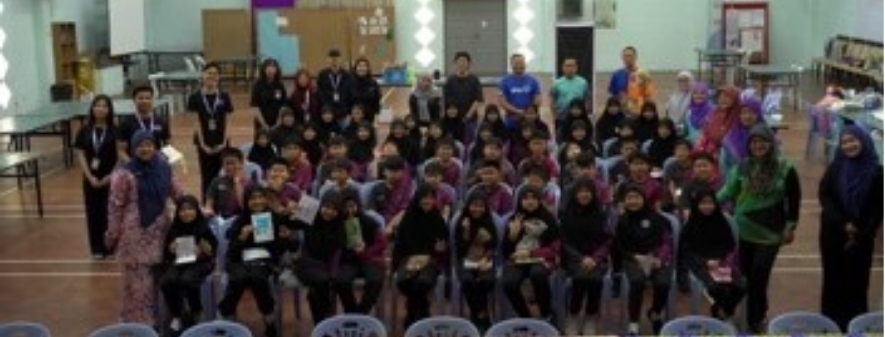
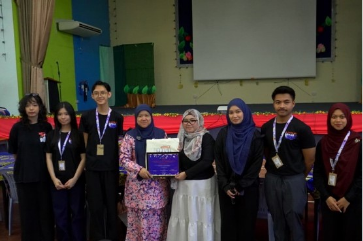
As a key implementation phase of Project Ripple Effect, participants who had completed the Masterclass Workshop Series—covering Leadership, Advocacy, Sustainability, and Environment—were tasked with translating their learning into real-world action through school-based outreach. In Brunei, three participant teams designed and delivered interactive environmental workshops for primary (8-12 years old), high school (12-16 years old), lower sixth-form (17-18 years old) students, aiming to raise early awareness of plastic pollution through engaging, age-appropriate activities. This report covers the workshop held in primary school. Equipped with games, this workshop marked the participants’ first hands-on facilitation experience for most of the team, demonstrating how the project’s train-the-trainer approach empowered youth to move beyond theory and take on active educator roles within their communities.
Key Takeaways
- The participants strengthened their knowledge on waste sorting and the three R’s: Students demonstrated a foundational and practical understanding of proper waste management, with at least 80% successfully meeting the key learning goal of being able to identify three (3) recyclable materials. The hands-on categorization activity (“What is in the box?”) specifically reinforced their ability to distinguish between recyclables, non-recyclables, and reusable items, establishing a solid basis for practicing the three R’s (reduce, reuse, recycle).
- Participants had a better conceptual understanding of plastic pollution’s effects: The workshop effectively conveyed the necessity of environmental action, enabling the participants to understand the consequences of environmental damage. A high majority of participants were able to explain at least one effect of plastic pollution during the final reflection obstacle. Furthermore, when assessed, they could articulate actionable plans for what they would do after learning about these effects, indicating not just factual recall but also a successful internalization of the importance of taking personal responsibility.
- Participants showed enthusiastic engagement and high information retention: The students showed significant enthusiasm and active participation throughout the entire two-hour session, confirming the effectiveness of the interactive, gamified learning structure. Their perceptive engagement during the facilitators’ Q&A sessions and their successful completion of all four-themed activity booths confirm that the format was highly engaging, leading to strong information retention as proved by their ability to reflect accurately on their learning during the final prize redemption reflection obstacle.
Main Highlights
- Date: 8 November 2025 at 10:00 – 12:00 BNT
- Venue or location: Keriam Primary School, Tutong District, Brunei Darussalam
- Organizer: AJYELN Brunei: Din Din and Friend Team
- Facilitator: Project Ripple Effect participants: Keriam Primary School team
The workshop team was selected based on a prior pitch activity where members demonstrated their ability to tailor a project to a specific audience; so, the organizers assigned the members based on the audience they initially targeted, using their established foundational knowledge. Notably, this team was inexperienced, with only one of the seven members having prior experience in managing or creating a workshop, and the designated leader also lacked prior leadership experience in coordinating a “big event” of this scale.
- Participants: Primary school students ranging from Year 4 to Year 6 with their age range from 8 to 12 years old.
- No. of participants: 50
Activities Implemented
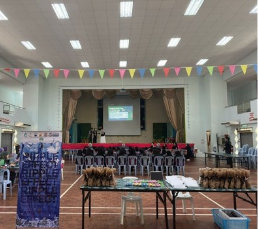
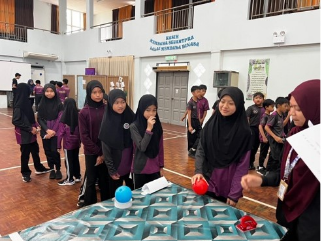
The Project Ripple Effect hosted a two-hour interactive workshop led by seven (7) participants and four (4) volunteers, designed to offer primary students a fun, hands-on learning experience about environmental awareness. The session began with a brief welcome and an essential overview of plastic pollution, emphasizing its impact on the environment and the importance of early action. Following this introduction, students actively rotated through four distinct activity booths, each centered on a different side of environmental protection, ensuring the learning process was both exciting and memorable. Students were given a stamp card that required completion of all four themed activity booths to redeem a prize to enhance engagement and provide clear motivation. This gamified approach made the workshop more fun, easier for the students to follow, and established a tangible end goal for their active participation. The workshop concluded on a creative note with a prize redemption and a coloring activity focused on ocean conservation, allowing students to reflect on the day’s lessons and express their understanding. The four-themed activity booths structure are as follows:
- Activity Booth 1: What is in the box?
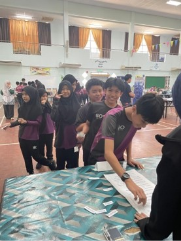
The first activity challenged students with a blind box sensory experience, requiring them to reach in and randomly select different items of “trash” to categorize into one of three groups: recyclables, non-recyclables, or reusable items. After each attempt, facilitators provided immediate feedback, explaining the correct categorization and rationale to reinforce the students’ understanding of proper waste sorting.
- Activity Booth 2: Match the cards!
The second activity was a matching game designed to encourage continuous reading and critical thinking. Students worked to pair a set of ten hidden card (The facilitators prepared at least five (5) pairs of ten (10) hidden cards). They flipped one card to read its content (either a question or an answer) and then flipped a second card, attempting to find its corresponding match (the related answer or question). This format required sustained attention and strategic recall, reinforcing the connection between the presented environmental facts.
- Activity Booth 3: Fill in the blanks.
For the third booth, students participated in a fill-in-the-blank reading activity where they were presented with a passage containing missing words, which they had to correctly identify and supply. To ensure broad exposure to relevant topics, various passages were prepared, allowing each student to engage with a unique text and learn about different aspects of environmental awareness and protection.
- Activity Booth 4: True or False bowling.
The final activity booth, ”True or False Bowling”, combined physical fun with environmental education. Students were presented with five (5) random statements concerning topics like recycling, plastic pollution, and waste management. To answer, they would roll a bowling ball toward one of two sets of pins: the left set for “True” and the right set for “False”. If a student answered incorrectly, the facilitator immediately explained the correct information and gave the student an additional statement to answer. This corrective mechanism ensured that for every wrong answer, up to a maximum of five, the student received another chance to learn, with one incorrect answer equaling one additional statement.
- Prize Redemption Reflection Obstacle:
The final session served as a brief, but important, obstacle before students could complete their stamp card and redeem their prize. To ensure active learning retention, the facilitator engaged each student in a short Q&A session, requiring them to articulate what they had learned about plastic pollution or specific lessons from the four activity booths. Only upon providing a satisfactory answer could the student receive their reward, reinforcing the educational takeaways of the workshop.
Outcome
The workshop effectively met its core educational goals, as shown by observations and feedback from the main organizer (the Project Ripple Effect team) and the school (the observing principal and teachers). A post-event assessment showed that at least 80% of the primary student participants successfully met key learning goals: they were able to identify three (3) recyclable materials, particularly during the categorization activity, and could explain at least one effect of plastic pollution during the final prize redemption obstacle. Furthermore, when asked about their future intentions following the discussion of plastic pollution’s effects, the students were able to articulate actionable plans.
Throughout the session, the students displayed significant enthusiasm and active participation, especially during the interactive games and activities. They demonstrated a foundational understanding of the three R’s (Reduce, Reuse, Recycle) and the consequences associated with single-use plastics. The students were particularly perceptive during the Q&A sessions that followed the facilitators’ brief presentations on the basics of plastic pollution, showing a strong engagement with the core material.
While the facilitators’ initial proposal included the goal of improving teamwork and communication skills through group-based activities, this outcome was not achieved. The implemented booth activities, as described, were primarily designed for individual student participation, limiting opportunities for collaborative effort. Although some impromptu teamwork was seen, such as students assisting their friends, this did not align with the intended structured group engagement. A brief, non-thematic group energizer was conducted at the start, but it did not sufficiently address the goal of fostering collaboration related to the workshop’s main theme.
As this workshop also posed as a hands-on activity for the facilitators, below are the 3 main outcomes of the facilitators (Project Ripple Effect participants):
- The participants successfully delivered a highly engaging and effective curriculum: The participants implemented the two-hour session which started 2 weeks before their workshop date, which is quite impressive, as they had other commitments and mostly did their meetings online and during the end of the last two workshops. They managed to adapt and manage their time appropriately and used the knowledge they have gained from the workshops well resulting in a workshop with high student enthusiasm and the achievement of core learning goals (more than 80% of students met key learning targets). The creative use of activities that they had implemented with modifications to cater the primary school students showed innovation in environmental education delivery.
- Effective use and adaptation of feedback and assessment methods: The participants recognized that the standard feedback forms were unsuitable for primary school students and successfully adapted their assessment method by substituting it with the Prize Redemption Reflection Obstacle activity. This adaptation was a smart solution, ensuring that the primary goal of the final session shifted from mere prize-giving to a crucial, on-the-spot assessment of learning retention. This provided immediate, qualitative feedback on the students’ knowledge, which was highly valued by the school staff.
- Failure to integrate planned teamwork/collaboration goal: Although this is not a good outcome, it is a mistake that the participants can learn from. While the activity booths were successful for individual learning, they were primarily designed for one student at a time, limiting collaborative opportunities. This gap in execution meant a key, stated goal of the proposal was not met, showing a need for better alignment between the intended educational goal and the practical activity design in future workshops.
Out of the seven (7) participants that made this workshop, six (6) of them had no prior experience in managing or creating any workshop. Hence, this can be a mistake that they can learn from, but this workshop also serves as an achievement for them as they were able to do such a great workshop despite it being their first time.
Feedback
Instead of administering traditional feedback forms, which are typically used during Project Ripple Effect workshops but were unsuitable for this group of primary school students, the facilitators substituted the process with the prize redemption reflection obstacle. This final challenge served as a direct assessment of learning retention, testing whether students could articulate what they had learned to redeem their prizes. Formal evaluation was instead gathered primarily through qualitative feedback from the school’s principal and teachers, who assessed the workshop’s effectiveness based on the students’ overall interaction, enthusiasm, and accuracy of answers throughout the entire session.
- Were you (principal, teachers, and students) satisfied with the workshop?
The workshop garnered a highly positive response, with participants (the students) displaying great satisfaction through their active participation in all activities and their perceptive engagement during the short Q&A sessions. The success was further confirmed by the students’ ability to successfully complete all four-themed booths and articulate what they had learned during the prize redemption reflection. Both the principal and teachers affirmed this positive outcome, noting that the students were unusually active, interactive, and clearly enjoying the session when compared to their typical behavior during regular classes.
- Would you be interested in having us host another workshop at your school in the future? If so, how would you want it to be as?
The principal expressed strong interest in hosting a future follow-up workshop, specifically requesting that the next session if it is possible for the organizers to do should serve as a continuous learning opportunity where students can actively apply their knowledge. She suggested the format evolve into a project-based model, enabling students to build or create something tangible, such as designing fashion from recyclable materials or learning the process of composting. Furthermore, the principal proposed incorporating an educational excursion, like participating in a beach cleaning campaign, to provide students with practical, real-world experience.