Reported by
Mohammad Nurdhiyauddin bin Haji Nudin, Haji Muhammad Izzuddin bin Haji Nor Hisham, and Mohammad Wafiy Mustaqim bin Bahrin
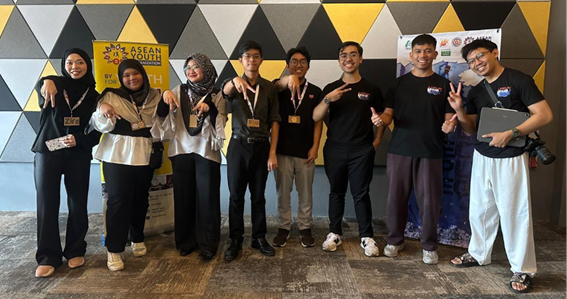
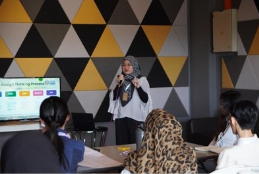
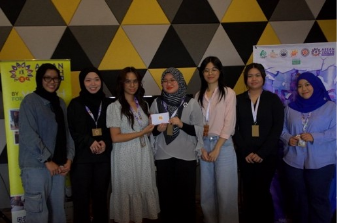
As part of the Project Ripple Effect, a structured Masterclass Workshop Series was implemented to build the capacity of volunteers and students as youth advocates for sustainable plastic-pollution reduction. The program was designed around a train-the-trainer approach, equipping participants with the knowledge, skills, and confidence needed to actively engage their communities and educate others. The masterclass was conducted in four thematic sessions—Leadership, Advocacy, Sustainability, and Environment—each addressing a core competency required for effective youth-led environmental action. This time, the workshop was facilitated by one (1) trainer and four (4) facilitators from the ASEAN Youth Organization (AYO) Brunei Youth Chapter, with additional support from the organizing team. The fourth masterclass, which focused on the Environment theme, began with AYO Brunei Youth Chapter’s “Ideas2Impact EcoLab” in its first half. This session took the form of a hands-on, fast-paced environmental innovation lab designed to empower youth to address the critical issue of plastic pollution. Participants were introduced to the Design Thinking framework as a simple, human-centered problem-solving approach, gaining insight into how local and international youth leaders apply this method to generate impactful solutions. The session concluded with a highly practical component, in which participants applied the framework to design and test their own innovative school-based outreach solutions, directly supporting the project’s ripple-effect objectives.
Key Takeaways
- Participants mastered the design-thinking process to solve environmental problems through workshops: Participants learned to systematically address complex issues by mastering the Design Thinking framework. This process moved them beyond abstract concern into practical action. They utilized the Visual Environmental Analysis and the 5Ws framework (Who, What, Where, When, Why) to precisely define a single, user-centric plastic pollution problem. This focused analysis was then synthesized into an actionable “How Might We…” (HMW) statement, which served as the blueprint for the subsequent Ideate and Prototype activity, ensuring their solutions were human-centered and targeted.
- The participants deepened their awareness on environmental equity and action: Through the Project Ripple Effect team activities, participants gained a crucial, firsthand understanding of the socio-environmental landscape. The activities visually demonstrated that individuals have different environmental “starting lines” due to varied access and privilege, fostering empathy and nuanced social awareness. Concurrently, the other activity provided immediate, practical knowledge on waste segregation (recyclables, landfill, compostables), enhancing their ability to design realistic and effective local solutions.
- The participants learned to transition their ideas to actionable outreach plans: The forum prompted participants to self-reflect on their aspirations and entry points into sustainability. Whether through starting small (“start where you stand”), being curious and research-driven, or drawing from personal experiences and resilience, participants understood that advocacy begins with identifying what matters to them. They were encouraged to explore actionable steps they can take in their communities, reinforcing the message that every individual has the capacity to lead change, regardless of background or skill set.
Main Highlights
- Date: 26 October 2025
- Venue or location: Youth Hub, Stadium Negara Hassanal Bolkiah, Brunei Darussalam
- Organizer: Din Din and Friend Team
- Facilitators: Din Din and Friend Team, and
ASEAN Youth Organization (AYO) Brunei Youth Chapter
The ASEAN Youth Organization (AYO) is a youth-led community with over 600,000 registered members, operating as a foundation and social enterprise in Indonesia and the Philippines. This independent, non-profit, non-governmental international organization promotes international understanding and goodwill in line with the ASEAN Moto, embodying “one vision, one identity, and one community”. AYO’s vision is to foster deep youth engagement with ASEAN through empowering activities that drive positive, sustainable change. Operating in over 14 countries, AYO has implemented over 300 projects, creating over 1 million positive impacts across Southeast Asia, empowering youth, fostering regional unity, and promoting sustainable development. In October 2024, AYO was awarded the ASEAN Prize at the 44th and 45th ASEAN Summits, recognizing its leadership in promoting youth participation and cross-cultural collaboration, strengthening youth connections and regional integration.
- Participants: Participants are from local universities, higher institutions, and some of them are already employed. They ranged in age from 17 to 30 years old, with the majority falling within the 18 to 25 age group, with a notable high female representation, with 16 of the 22 participants being female.
- No. of participants: 21 participants
Activities Implemented
Introduction of AYO and Ice-Breaking Activity (Led by AYO Brunei Youth Chapter)
The introductory 30-minute session began by orienting participants with the ASEAN Youth Organization background and introducing the facilitators, setting the stage for the workshop’s objectives. A dynamic sorting activity followed, where participants were divided into three groups based on assigned educational levels (Primary, Secondary, Pre-University). This establishes their permanent teams and physical base for the entire workshop duration. To foster creative synergy, each team then drew an inspiring, abstract word from the “Jar of Bizarre Rojak Words” (e.g., Sigma, Aura), which they combined with a common plastic household item to create a unique team name. The session concluded by outlining the structural goal of the workshop: the Design Thinking process (Empathize, Define, Ideate, Prototype, and Test), positioning this methodology as the core framework for their upcoming collaborative work.
Visual Environmental Analysis Activity (Led by AYO Brunei Youth Chapter)
The Visual Environmental Analysis activity was a 30-minute deep-dive designed to cultivate participants’ ability to identify the multi-faceted impact of plastics across schools, households, and communities. Using a visual prompt depicting a plastic pollution scenario, participants collaboratively applied the 5Ws framework (Who, What, Where, When, Why) to structure their understanding of the problem and its context. This analysis led directly to the creation of a Stakeholder Map, which first required them to Assess the Situation by detailing affected groups (WHO), specific plastic issues (WHAT), locations (WHERE), and timing (WHEN). Next, the activity guided them to Understand the Root Problem & Need by repeatedly asking “WHY” to uncover underlying causes, with the final Stakeholder Map serving as the critical output that will directly inform and guide the subsequent “How Might We” challenge.
The final segment of the session successfully leveraged the detailed data from the Stakeholder Map by requiring participants to narrow down on only one specific issue (e.g., plastic cups, lack of upcycling knowledge) they wished to tackle. This focused decision-making exercise directly led to the culminating challenge: transforming their chosen problem into a clear, actionable, and user-centric “How Might We…” (HMW) statement. This conversion exemplified by turning the challenge of unengaging recycling into the HMW question, “How might we make recycling fun for primary students?” which was crucial for setting the stage for the next phase of the workshop, ensuring that their efforts would be specific, empathetic, and squarely focused on a problem identified from the stakeholders’ perspective.
Ideate & Prototype: Designing Outreach (Led by AYO Brunei Youth Chapter)
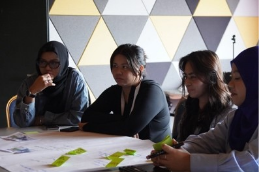
The Ideate and Prototype activity immediately followed, challenging participants to rapidly brainstorm and develop innovative, practical solutions centered on their previously defined “How Might We…” statements. Using a structured template, groups were required to design low-cost, easily replicable school activities focused on plastic reduction, detailing the activity name, the specific target audience level, necessary materials, and a clear explanation of how the activity directly reduces plastic usage. This practical exercise transitioned their abstract understanding of the problem into concrete, tangible educational interventions ready for future testing.
Pitch: Outreach Plan for Schools (Led by AYO Brunei Youth Chapter)
The final activity, led by the AYO facilitators, culminated in each group delivering a focused, three-minute presentation of their school outreach plan. This presentation required participants to articulate their end-to-end journey, beginning with their foundational experiences using the Design Thinking process, demonstrating their application of Empathy, Definition, Ideation, and Prototyping, and concluding with a detailed overview of their proposed outreach strategy. Immediately following each presentation, a crucial peer and facilitator feedback session was conducted, providing quick, constructive critique essential for refining the viability and impact of their designed interventions.
After completing the first half of the workshop, participants transitioned into a session with the Project Ripple Effect team to learn about activities they can conduct at their assigned school workshops. The activity implement and flow are as follows:
Environment Privilege Walk (Led by the Project Ripple Effect Team)
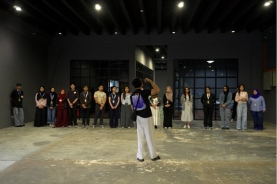
The Environmental Privilege Walk was a powerful, experiential 20-minute activity designed to foster immediate awareness of environmental equity and starting-line differences. Participants initially lined up facing the facilitator, closed their eyes, and silently responded to a series of questions related to their habits, knowledge, and environmental experiences by taking one step forward (indicating a privilege or access) or one step backward (indicating a lack thereof), while remaining still if uncomfortable. The physical separation that resulted when they opened their eyes served as a stark, immediate visual metaphor, prompting a concluding discussion on why their lines had fragmented, thereby achieving the core objective of helping participants viscerally recognize that everyone possesses a unique environmental “starting line” shaped by individual background, access, and privilege.
Trash Audit Challenge (Led by the Project Ripple Effect Team)
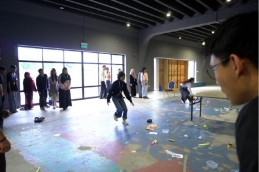
The Trash Audit Challenge was a high-energy, competitive activity designed to rapidly enhance participants’ awareness and knowledge of waste segregation. Participants were divided into two (2) teams, starting at a fixed line, where they engaged in a timed relay: one (1) person at a time had only five (5) seconds to sprint to a scattered pile of mixed waste, grab one item, and correctly categorize it into one of three (3) bins (recyclables, landfill, or compostables). Two (2) facilitators strictly monitored the time limit, ensuring quick rotation and adherence to the constraint, fostering rapid recognition under pressure. The activity concluded with a hands-on facilitated audit for each team, where the categorized bins were reviewed and corrected, thereby providing immediate, concrete learning on the practical distinctions between various waste streams.
School Workshop Briefing Session (Led by the Project Ripple Effect Team)
Upon concluding the main workshop activities, the groups naturally transitioned back into their predetermined, education-level cohorts: the Primary School, High School, and Pre-University teams, to begin the practical planning phase. At this point, members of the Project Ripple Team were strategically deployed to work individually with each group, facilitating detailed discussions and providing the essential logistical parameters necessary for organizing their upcoming school workshops, including confirming crucial details such as project dates, expected participant counts, and the allocated workshop funding budget. This facilitated transition ensured that the learning immediately moved into actionable planning tailored to the specific context of their target educational level.
Outcome
The overarching outcome of the “Ideas2Impact EcoLab” workshop was the successful empowerment of youth participants to transition from abstract problem identification to the development of concrete, actionable environmental solutions. Participants not only mastered the Design Thinking framework, using the 5Ws to define a single plastic pollution problem and convert it into a “How Might We…” statement, but also prototyped low-cost, replicable school outreach activities, which they then pitched for critical peer and facilitator feedback. Furthermore, through experiential learning activities like the Environmental Privilege Walk and the Trash Audit Challenge, they significantly deepened their awareness of environmental equity and practical waste segregation, culminating in a structured School Workshop Briefing that moved their designed solutions into the final logistical planning phase for real-world implementation within their assigned educational contexts.
In the three workshops and one forum, the organizers and all the facilitators in each workshop/forum are on an on-going evaluation for each participant to be given a certificate of achievement based on their leadership, teamworking skills, etc. The certificate of achievement titles is as follows:
- Top Outstanding Leader
- Top Promising Advocate
- Top Sustainable Changemaker
- Overall Active Participant
They will be notified and given these certificates after they finish the Project Ripple Effect program.
Feedback
Following every workshop and forum, we administer a post-event feedback form to serve as a comprehensive reference on participant satisfaction, provide constructive feedback to facilitators for the continuous improvement of their sessions, and gather participant expectations to ensure future facilitators can effectively tailor their upcoming workshops to meet expressed needs.
The following average ratings and answers that were taken from the form results:
- How satisfied were you with Week 4’s Masterclass: 4.5/5
- How would you rate the quality of the content delivered: 4.5/5
- How much do you think you have learned: 4.5/5
- What is the most meaningful lesson you have learned from this event?
The consensus among participants is that the most meaningful lesson learned from the “Ideas2Impact EcoLab” is the crucial necessity of human-centered problem-solving that acknowledges environmental equity. The workshop fundamentally demonstrated that solving plastic pollution requires more than just awareness; it demands the structured empathy of the Design Thinking framework, which forced them to precisely define a problem through the eyes of specific stakeholders using the actionable “How Might We…” technique. Furthermore, the Environmental Privilege Walk provided a powerful, visceral understanding that individuals have different “starting lines” due to background and privilege, making it clear to everyone that any effective school outreach solution must be thoughtfully designed to be both low-cost and equitable to truly achieve widespread and sustainable impact.
- Feedback on this workshop?
Overall, the workshop was highly effective and well-structured, successfully leveraging the Design Thinking framework to transition us from problem identification to pitch-ready school outreach solutions. The most valuable aspect was the practical application in activities like the Ideate and Prototype session, which connected abstract ideas to tangible, low-cost activities. However, the time allocated for the intense activities, particularly the 15-minute discussion in the Visual Environmental Analysis, felt too rushed, limiting the depth of their initial analysis. A minor complaint is that the Trash Audit Challenge, while fun, could have included a clearer debrief on the trash categorization audit from just one facilitator rather than two facilitators, which made it confusing as the debrief were different.
- Would you be interested in joining another event by AYO Brunei? If yes, what do you want to be included in?
Yes, there is strong interest in joining future events organized by AYO Brunei, as the structure and practical nature of the activities were highly engaging and relevant. The most requested inclusion for future events would be more hands-on skill-building sessions, particularly dedicated time focused on fundraising strategies or proposal writing, since implementing our newly designed outreach plans requires securing resources. Additionally, participants would appreciate a component dedicated to long-term project monitoring and evaluation methods, ensuring we can measure the impact of our solutions beyond just the initial prototype. The format of blending a robust framework like Design Thinking with experiential awareness activities should definitely be maintained.