Reported by
Mohammad Nurdhiyauddin bin Haji Nudin, Haji Muhammad Izzuddin bin Haji Nor Hisham, and Mohammad Wafiy Mustaqim bin Bahrin
As part of the Project Ripple Effect, a structured Masterclass Workshop Series was implemented to build the capacity of volunteers and students as youth advocates for sustainable plastic-pollution reduction. The program was designed around a train-the-trainer approach, equipping participants with the knowledge, skills, and confidence needed to actively engage their communities and educate others. The masterclass was conducted in four thematic sessions—Leadership, Advocacy, Sustainability, and Environment—each addressing a core competency required for effective youth-led environmental action. This time, the Academic Sustainability Forum was conducted as a key intellectual component of Project Ripple Effect, serving as a bridge between the theoretical foundations introduced in earlier masterclasses and the practical implementation of subsequent activities. The forum provided a platform for participants to engage with multidisciplinary perspectives on sustainability through real-world experiences, personal narratives, and sector-specific insights shared by three distinguished speakers. By highlighting pathways spanning entrepreneurship, scientific research, youth-led initiatives, and values-driven community leadership, the forum emphasized that sustainability work is neither singular nor linear, and encouraged participants to recognize that meaningful impact can emerge from diverse backgrounds, strengths, and roles in contributing to a more sustainable future.
Key Takeaways
- Participants gained a multi-pathway understanding of sustainability and advocacy: The forum successfully demonstrated that sustainability is not confined to environmental activism alone. Through the perspectives of entrepreneurship, scientific research, and youth leadership, participants learned that impactful change can be pursued through diverse avenues. This broadened their mindset beyond traditional advocacy, helping them see how their own strengths, disciplines, and lived experiences can shape unique contributions to sustainability.
- The importance of integrating purpose, evidence, and empathy in sustainability work: Across all three speakers, a recurring theme emerged: sustainable impact requires more than passion, it requires alignment of purpose (Angie), evidence and data (Farhan), and empathy-driven leadership (Rafhanah). Participants recognised that effective sustainability efforts hinge on combining grounded innovation, scientific truth, and human-centred values to create solutions that are not only impactful, but also responsible and enduring.
- Participants were encouraged to reflect on their personal role, starting point, and pathway forward: The forum prompted participants to self-reflect on their aspirations and entry points into sustainability. Whether through starting small (“start where you stand”), being curious and research-driven, or drawing from personal experiences and resilience, participants understood that advocacy begins with identifying what matters to them. They were encouraged to explore actionable steps they can take in their communities, reinforcing the message that every individual has the capacity to lead change, regardless of background or skill set.
Main Highlights
- Date: 19 October 2025 at 13:30 – 17:00 (BNT)
- Venue or location: Youth Hub, Stadium Negara Hassanal Bolkiah, Brunei Darussalam
- Organizer: Din Din and Friend Team
- Speakers:
Angie Ang
Angie Ang is a passionate youth advocate and sustainability leader from Brunei Darussalam who integrates her legal and commercial expertise to drive strategic projects and transformation initiatives across local and regional programmes. She is dedicated to uplifting the startup and creative sectors, mentoring young entrepreneurs through Brunei Mentors for Entrepreneurs Network and the Young Professionals Network Brunei, where she also serves as a Core Team Member. Recognised for her impact, Angie has been named among Brunei’s “33 Under 33 Women to Watch” (2017), was part of the inaugural Obama Leaders Asia-Pacific cohort (2019), and was listed in The Bruneian’s 50 Most Influential & Inspiring LinkedIn Icons (2020–2021).
Farhan Ramlee
Farhan Ramlee is a passionate advocate for health, environmental awareness, and sustainability through science and community action. A First-Class Honours graduate in Biomedical Science from Universiti Brunei Darussalam and recipient of the Vice Chancellor’s List, he recently completed his Master’s at the University of Leeds, focusing on the effects of microplastics on male fertility health. Farhan has been actively involved in promoting student and community well-being as a senator of the IHS Student Council and through initiatives with Brunei Methanol Company and Takeabreak.bn. He also contributed to the 3rd National Health and Nutritional Status Survey with the Ministry of Health and UNICEF. Through his work, Farhan highlights the vital connection between human health and environmental sustainability.
Rafhanah Hasnul
Rafhanah is the Vice President of My Actions for SDGs, where she leads youth-driven sustainability initiatives that empower young people across Brunei to create meaningful impact. A PhD candidate at Universiti Teknologi Brunei, her research explores eco-conscious consumerism—linking financial decision-making with environmental responsibility. She is also the co-founder of Iklim Chapters, Brunei’s first digital climate literacy toolkit, and has represented Brunei at international platforms such as the ASEAN Leaders’ Interface at the 42nd ASEAN Summit in Labuan Bajo and the Commonwealth Youth Forum in Samoa. Through her leadership and research, Rafhanah champions the message that informed, small-scale actions can collectively drive sustainable change.
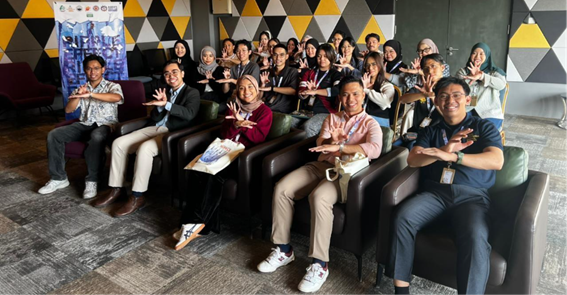
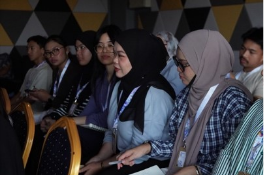
- Participants: Participants are from local universities, higher institutions, and some of them are already employed. They ranged in age from 17 to 30 years old, with the majority falling within the 18 to 25 age group, with a notable high female representation, with 16 of the 22 participants being female.
- No. of participants: 22 participants
Activities Implemented
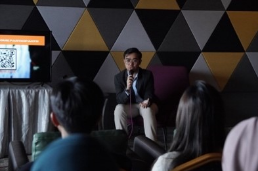
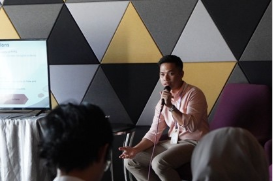
The session was divided into three speaker segments, each covering a unique dimension of sustainability. The flow of the programme was intentionally curated to progress from innovation and strategy, to science and evidence-based advocacy, and ending with personal transformation and youth leadership. This sequence allowed participants to explore sustainability through both technical and human lenses, ensuring a holistic learning experience.
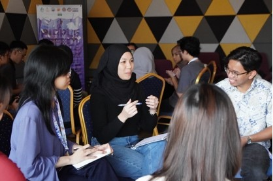
Following the speaker presentations, an open discussion and Q&A session provided the platform for deeper engagement. Participants raised questions about career pathways, practical strategies, and the intersection between personal values and global issues. The session concluded with a reflection on actionability—emphasising the importance of translating new knowledge into meaningful contributions within individual and collective capacities.
Sustainable Entrepreneurship & Grounded Innovation by Angie Ang
Angie Ang opened the forum by presenting sustainability through the lens of entrepreneurship. She shared her experiences working within Brunei’s startup and creative ecosystems, highlighting the importance of grounded innovation that begins with real problems faced by real communities.
Her message centred on the idea that sustainability is not merely a checklist or policy term; it must be embedded in the mindset and culture of young leaders. Angie introduced the sustainable startup equation and walked participants through the foundations of building an environmentally responsible business. She also provided a practical “Starter Kit” to help aspiring changemakers transform their ideas into viable initiatives.
Angie’s segment encouraged participants to view entrepreneurship as a strategy for empowerment and impact. Her question, “What breaks your heart enough that you want to fix it?”, prompted many to reflect on the issues that personally resonate with them and to consider how innovation can be shaped around purpose-driven solutions.
Environmental Health, Scientific Advocacy & the Reality of Microplastics by Farhan Ramlee
Farhan followed with a science-focused presentation on microplastics and their notable effects on human health particularly male fertility. Drawing from his academic research, he highlighted the growing body of evidence linking microplastics to hormonal disruptions and long-term health risks. His session underscored the significance of academic research as a silent yet powerful driver of sustainability.
Farhan’s approach demonstrated that advocacy does not always require public campaigns or activism. Sometimes, it begins in a laboratory, through methodical research, data collection, and critical inquiry. Participants learned how scientific evidence can support policy decisions, shape public awareness, and influence societal behaviour.
His explanation of microplastic exposure, equivalent to ingesting a credit card’s worth of plastic annually was particularly striking for participants. This segment raised awareness of the invisible threats to environmental and human wellbeing, reinforcing the need for research-informed advocacy.
Youth Empowerment, Values-Based Leadership & Humanising Advocacy by Rafhanah Hasnul
The final session was delivered by Rafhanah, who presented a deeply personal narrative on navigating youth leadership, self-discovery, and the challenges that shaped her journey into sustainability advocacy. As a PhD candidate and Vice President of My Actions for SDGs, her experiences offered participants insight into both formal and informal avenues of driving change.
Rafhanah emphasised that sustainable leadership requires empathy, vulnerability, and alignment with personal values. Her statement, “You can’t promote empowerment without empathy,” resonated strongly with participants. She discussed how advocacy often begins in unexpected places, sometimes in hardship and how personal growth can lead to wider societal impact.
Her session, positioned as the closing narrative, provided a warm and grounding end to the forum. Participants appreciated the authenticity of her story and the reminder that advocacy is ultimately a human endeavour shaped by compassion and courage.
Outcome
Throughout the forum, participants actively engaged with the speakers, asking thoughtful questions on entrepreneurship, scientific communication, and youth mobilization. Their inquiries reflected growing curiosity and an eagerness to understand how to apply these perspectives in their own contexts.
Participants expressed particular interest in:
- Identifying realistic entry points into sustainability work
- Exploring career pathways aligned with environmental impact
- Understanding the challenges faced by practitioners
- Finding balance between personal values and professional ambitions
- Learning how to convert knowledge into community-centered initiatives
The diversity of speaker backgrounds contributed to the dynamic atmosphere, and participants appreciated being able to compare different advocacy styles within a single session.
Feedback
Following every workshop and forum, we administer a post-event feedback form to serve as a comprehensive reference on participant satisfaction, provide constructive feedback to facilitators for the continuous improvement of their sessions, and gather participant expectations to ensure future facilitators can effectively tailor their upcoming workshops to meet expressed needs. The following average ratings and answers that were taken from the form results:
- How satisfied were you with Week 3’s Masterclass: 4.00/5
- How would you rate the quality of the content delivered: 4.00/5
- How much do you think you have learned: 4.17/5
- Participants highlighted:
- High relevance and inspiration from all three speakers
- Appreciation for the variety of perspectives
- Valuable insights into entrepreneurship, research, and youth empowerment
- Clear and confident session facilitation
- Smooth programme flow and strong alignment with the project theme
- Selected comments include:
- “I resonated deeply with the idea of starting where you stand.”
- “The science behind microplastics opened my eyes to how serious the issue is.”
- “Rafhanah’s journey reminded me that setbacks are not the end.”
- “The event was well-organised and presented.”
- Areas for Improvement, common suggestions included:
- The venue was hot, which affected concentration levels
- Food portions could be increased to accommodate all participants
- Some participants wished for even more practical examples and grounded links between topics
- Requests for clearer transitions between speaker themes
- Interest in Future Engagement
- Participants expressed strong interest in joining future activities with the speakers, including:
- Sustainability and innovation workshops with Angie
- Health-related or research-driven initiatives with Farhan
- Youth leadership programmes and SDG-focused projects with Rafhanah
- Participants expressed strong interest in joining future activities with the speakers, including:
- Topics Requested for Future Masterclasses
- Participants requested:
- Workshop facilitation techniques for various age groups
- Managing challenges during outreach and identifying effective solutions
- Understanding positive feedback loops and follow-up strategies
- Learning about long-term impact measurement after events
- Participants requested:
- The Academic Sustainability Forum successfully broadened participants’ understanding of sustainability by presenting three distinct yet interconnected approaches. Through entrepreneurship, scientific research, and compassionate youth leadership, participants were shown that advocacy can be shaped by individual strengths and personal journeys. The diversity of perspectives enabled participants to appreciate sustainability not merely as an environmental concept, but as a multidimensional and human-centred practice.
- The session also generated meaningful dialogue and curiosity, setting the foundation for deeper engagement in upcoming masterclasses. Feedback gathered will inform future improvements, ensuring that learning spaces remain comfortable, reflective, and empowering.
Overall, the forum achieved its objective of equipping participants with the inspiration, awareness, and confidence to explore their own roles in contributing to sustainable development within their communities.