Reported by
Mohammad Nurdhiyauddin bin Haji Nudin, Haji Muhammad Izzuddin bin Haji Nor Hisham, and Mohammad Wafiy Mustaqim bin Bahrin
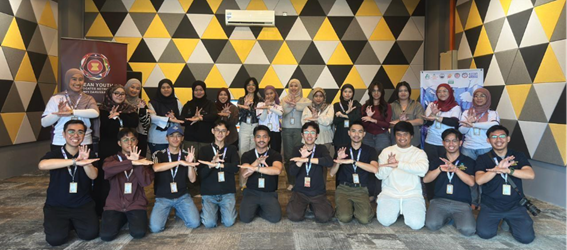
As part of the Project Ripple Effect, a structured Masterclass Workshop Series was implemented to build the capacity of volunteers and students as youth advocates for sustainable plastic-pollution reduction. The program was designed around a train-the-trainer approach, equipping participants with the knowledge, skills, and confidence needed to actively engage their communities and educate others. The masterclass was conducted in four thematic sessions—Leadership, Advocacy, Sustainability, and Environment—each addressing a core competency required for effective youth-led environmental action. The session was facilitated by one (1) facilitator and five (5) supporting team members from the ASEAN Youth Advocates Network (AYAN) Brunei Youth Chapter, with additional support from the organizing team. The Second Masterclass, centered on the theme of Advocacy and titled “Facilitating 101: Making an Impact,” was designed as a hands-on capacity-building workshop aimed at transforming participants into confident and effective discussion facilitators. Through this session, participants developed essential speaking and presentation skills, learned how to read and meaningfully engage diverse audiences, and practiced contextualizing their messages to strengthen impact and purpose. The masterclass emphasized experiential learning, culminating in practical exercises that allowed participants to directly apply their newly acquired facilitation skills—reflecting the principle that effective facilitation is best mastered through active practice.
Key Takeaways
- Participants learned about their values and purpose of advocating: The most significant outcome was the participants’ ability to discover and solidify their core values and link them directly to advocacy and social impact. This process successfully encouraged the youths to step outside of their comfort zones, define their personal niche and mission (especially within the local context of Brunei), and reflect on the challenges faced by their generation when advancing specific issues.
- Participants gained clarity on their personal values, motivations, and the issues they feel compelled to champion: Through a series of guided reflections, they identified the root causes behind their desire to advocate and began to translate their lived experiences into meaningful social missions. This process empowered them to step outside their comfort zones, develop conviction in their advocacy identity, and understand how personal values shape long-term social impact.
- Participants identified their stakeholders and learned how to tailor advocacy strategies: A core outcome of the workshop was the participants’ ability to map out their stakeholders, understanding who they need to influence, each group’s characteristics, communication preferences, and potential barriers to engagement. They practiced segmenting audiences, examining the needs and motivations of different groups, and determining the most effective ways to craft messages for each stakeholder. This activity strengthened their ability to advocate with precision, clarity, and audience awareness.
- Participants deepened their understanding of leadership in advocacy and envisioned their role in shaping Brunei’s future: Through discussions on “What makes a good leader?”, participants learned that advocacy requires empathy, consistency, courage, and the ability to hold space for others’ perspectives. The closing reflection circle “If you could change one thing to make Brunei better, what would it be?” allowed participants to voice their hopes for the nation and recognize the collective aspirations within the group. This session reinforced the idea that advocacy is not only about skills, but also about shared purpose and inclusive leadership.
Main Highlights
- Date: 12 October 2025 at 13:30 – 17:00 (BNT)
- Venue or location: Youth Hub, Stadium Negara Hassanal Bolkiah, Brunei Darussalam
- Organizer: AJYELN Brunei: Din Din and Friend
- Facilitator: ASEAN Youth Advocates Network (AYAN) Brunei Youth Chapter
- Participants: Participants are from local universities, higher institutions, and some of them are already employed. They ranged in age from 17 to 30 years old, with the majority falling within the 18 to 25 age group, with a notable high female representation, with 16 of the 22 participants being female.
- No. of participants: 20 participants
Activities Implemented
Introduction, Values Discovery, and Self-Reflection
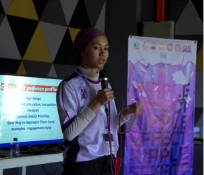
Together with the ASEAN Youth Advocates Network (AYAN), the workshop opened with a comprehensive introduction to the network’s regional mission, core values, and ongoing initiatives in youth empowerment across Southeast Asia. The main facilitator emphasized that AYAN’s flagship masterclasses typically take place over multiple days, but for this program, the content was carefully distilled into a half-day session. This ensured that participants received the essence of AYAN’s advocacy and facilitation framework while still allowing flexibility for personal interpretation, introspection, and discussion.
AYAN also highlighted that the content had been refined based on participant expectations and the feedback collected from the previous masterclass. Instead of focusing solely on facilitation skills, the revised structure provided a stronger grounding in the fundamentals of advocacy, its purpose, philosophy, and relevance to local contexts in Brunei.
Following the introduction, participants engaged in a guided values-discovery activity designed to help them identify their core motivations, lived experiences, and the beliefs that shape their desire to advocate. Through quiet reflection, journaling, and sharing in small groups, participants explored questions about what matters most to them, why certain issues resonate deeply, and how their personal stories could guide their advocacy journey. This process fostered an atmosphere of trust and openness, enabling participants to recognize the diversity of causes represented within the group. The session effectively grounded the entire workshop in self-awareness, reinforcing that authentic advocacy begins with understanding oneself before influencing others.
Stakeholder Discovery and Audience Analysis Activity
The second activity introduced participants to the essential advocacy skill of stakeholder identification and audience analysis. Through an interactive, discussion-based approach, participants learned how advocacy efforts often succeed or fail based on how well one understands the people involved—whether as allies, decision-makers, beneficiaries, or opposing voices.
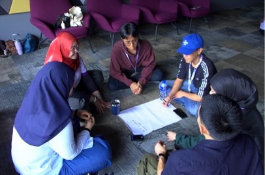
Participants worked in small groups to map out their key stakeholders by analyzing who is affected by their chosen issue, who has influence or power over outcomes, who needs to be informed, and who could support or hinder progress. They discussed stakeholder characteristics such as motivations, values, backgrounds, and levels of awareness, and then determined the most effective communication pathways for each group. This included exploring different audience categories—such as policymakers, students, educators, parents, community leaders, and youth groups—and understanding how language, tone, and messaging must be adapted to resonate with each audience.
Through this structured analysis, participants discovered that effective advocacy requires not only passion but also strategic empathy and communication literacy. The activity strengthened their ability to design targeted advocacy approaches that are grounded in real human dynamics rather than assumptions. It also provided them with a practical framework they can apply in future school outreach, campus initiatives, or community-based campaigns.
Understanding Leadership in Advocacy
The third session centered on the concept of leadership within advocacy, prompting participants to reflect on the qualities that make an individual not just a vocal advocate, but a responsible and effective one. The facilitator opened the discussion by exploring the question, “What makes a good leader?” and guided participants through a collective brainstorming exercise.
Participants identified leadership traits such as active listening, humility, consistency, adaptability, and the ability to hold space for diverse perspectives. The facilitator highlighted that advocacy leadership differs from traditional leadership models; it is rooted in service, empathy, and a commitment to elevating others’ voices—not in hierarchy or authority. Participants also discussed the importance of emotional intelligence, integrity, and the role of steady, values-driven guidance when navigating sensitive conversations or community challenges.
This session helped participants internalize the idea that advocacy is not solely about speaking loudly or being the most visible person in the room. Instead, it is about building safe, inclusive spaces where dialogue can take place, guiding discussions thoughtfully, and leading with clarity of purpose. The conversation aligned leadership with responsibility, reinforcing that effective advocacy requires both inner strength and outward sensitivity.
Reflection Circle: Imagining a Better Brunei
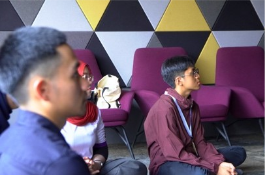
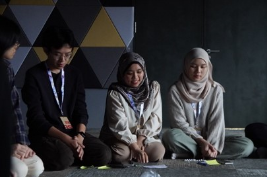
The workshop concluded with a powerful reflection circle, designed to connect personal advocacy values to broader societal aspirations. Participants were invited to sit together in an open circle and respond, voluntarily and in their own time, to the question:
“If you could change one thing to make Brunei a better place, what would it be?”
This closing session created a safe and heartfelt space where participants shared personal hopes rooted in their lived experiences. Responses touched on a range of issues, including mental health support, environmental conservation, educational equity, inclusivity for marginalized groups, youth empowerment, and the need for more open dialogue within communities. Many participants expressed hopes for a more compassionate society, better support systems for vulnerable groups, and more youth participation in decision-making processes.
The shared reflections highlighted common struggles and dreams, reminding participants that advocacy is not only about addressing individual issues but also about contributing to the collective progress of the nation. The circle reinforced a unifying message: meaningful change begins with intentional reflection, a willingness to understand others, and the courage to articulate one’s vision for the future. It also strengthened the sense of community within the group, closing the workshop on an inspiring and purposeful note.
Outcome
The Advocacy Workshop, led by the AJYELN Brunei and ASEAN Youth Advocates Network (AYAN) Brunei Youth Chapter helped empower the participants to define their personal mission by helping them discover their core values, thereby enabling them to find their unique niche in advocacy. Furthermore, the program was designed to develop practical skills by teaching participants how to effectively facilitate their own workshops, drawing upon the youth organization’s experience and providing constructive feedback tailored to help them adjust their approach based on the specific audience. With this workshop, it equips them the skills to create and facilitate their own workshops in the future.
In the three workshops and one forum, the organizers and all the facilitators in each workshop/forum are on an on-going evaluation for each participant to be given a certificate of achievement based on their leadership, teamworking skills, etc. The certificate of achievement titles is as follows:
- Top Outstanding Leader
- Top Promising Advocate
- Top Sustainable Changemaker
- Overall Active Participant
They will be notified and given these certificates after they finish the Project Ripple Effect program.
Feedback
Following every workshop and forum, we administer a post-event feedback form to serve as a comprehensive reference on participant satisfaction, provide constructive feedback to facilitators for the continuous improvement of their sessions, and gather participant expectations to ensure future facilitators can effectively tailor their upcoming workshops to meet expressed needs.
The following average ratings and answers that were taken from the form results:
- How satisfied were you with Week 2’s Masterclass: 4.67/5
- How would you rate the quality of the content delivered: 4.33/5
- How much do you think you have learned: 4.56/5
- What is the most meaningful lesson you have learned from this event?
The most meaningful lessons learned revolved around personal purpose, values, and the real-world application of advocacy, particularly for the youth generation. Participants found significant value in discovering their core values and relating them to advocacy to find their niche and mission for making an impact, especially within their local community or Brunei. This exploration encouraged them to step outside their comfort zones and embrace advocacy while young. A secondary, yet impactful, lesson was the flexibility needed in facilitation, noting how content must adapt to the audience, tone, and social setting to support its impact. Finally, participants reflected deeply on the current challenges faced by their generation, such as issues like low employment and the difficulty of advancing certain causes when facing resistance or a lack of understanding from senior stakeholders.
- Feedback on this workshop?
The workshop was widely regarded as insightful and well structured, with a smooth and logical flow throughout the session. Participants appreciated the clear and accessible presentation style, as well as the supportive and interactive engagement of the AYAN members during discussions. During group activities, some participants felt that facilitation could be made even more effective by allowing slightly more space for independent discussion, enabling participants to express their ideas more freely and build confidence in articulating their own perspectives. From a logistical perspective, participants suggested rotating group compositions during activities to encourage broader interaction and highlighted the importance of concluding sessions on time, ideally around 5:00 PM, through improved management of session start times. Overall, the workshop content was considered highly meaningful, encouraging participants to reflect on their personal values and providing clear inspiration for their future facilitation and leadership practices.
- Would you be interested in joining another event by AYAN Brunei? If yes, what do you want to be included in?
There is an overwhelming interest in joining future events organized by AYAN Brunei, with several participants expressing a desire to take on a more active role, such as joining the committee or volunteer pool. The primary suggestions for future content revolve around deeper exploration of advocacy including focused workshops on personal values, sharing the experiences and processes of current youth advocates, and practical training on building confidence and preparedness for public talks. Additionally, there is strong interest in sessions related to Bruneian culture and in tackling less-discussed societal issues, particularly women’s empowerment or gender inequalities within the country, potentially including sex education for youth.
- What do you want to learn from Week 3’s Sustainability Forum invited speakers on the Sustainable Development Goals (SDG), health, and entrepreneurship?
For the Week 3 Forum featuring invited speakers on SDG, health, and entrepreneurship, participants are primarily interested in practical application and local relevance. Specifically, attendees want to move beyond surface-level knowledge of the SDGs to understand how Brunei is implementing these goals and the specific efforts being made locally. A major focus is the intersectionality of the topics, seeking to learn how health and entrepreneurship are directly linked to the SDGs and how business ideas can simultaneously improve public health and support sustainability. Participants are also looking for inspiration from the speakers’ experiences, guidance on where local youth and leaders should go next after the current training, and practical advice on where to start and who to consult when developing a business idea.