Reported by Khaing Su Myat Thin, Win Pyae Pyae Aung, Myat Noe Khin Khin, Aye Chan Pwint Phyu
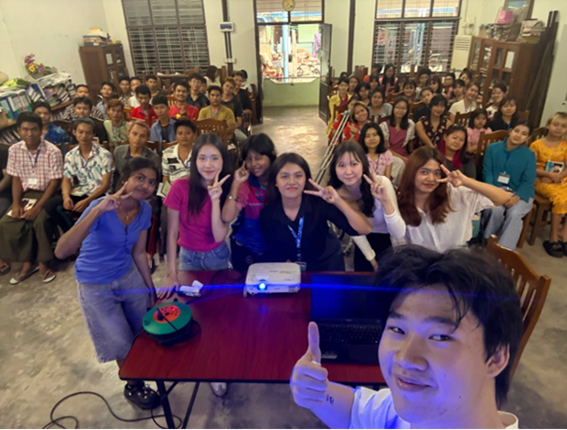
The “Trash-Sorting Workshop,” held on 30 October 2025 at the Association for Aid and Relief Japan (AAR Japan) in Myanmar and organized by ReCircle (AJYELN Myanmar Fellows), promoted waste segregation and upcycling through inclusive, hands-on learning. Around 50 participants—including wheelchair users and deaf participants—joined the session, supported by sign language interpretation and accessible visual materials. Participants learned to separate waste into wet, dry, plastic, and hazardous categories, with four trash bins donated to help sustain daily sorting practices. Plastic bags collected during the event will be reused in an upcoming upcycling workshop, linking both sessions into a continuous cycle of sustainability.
Association for Aid and Relief, Japan (AAR Japan), a vocational training school for people with disabilities in Myanmar, played an important role in making the workshop successful. The organization kindly provided the venue for the event and supported the team by arranging a sign language interpreter to ensure inclusivity for deaf participants. AAR Japan also assisted with the technical setup, including a projector setup and helping with the overall venue preparation, which allowed the workshop to run smoothly and efficiently. Their support and cooperation were essential to creating an accessible and engaging learning environment for everyone.
Key takeaways
Inclusive environmental education: The workshop ensured accessibility for participants of all abilities through sign language interpretation, accessible seating, and clear visual materials, enabling everyone to participate equally and meaningfully.
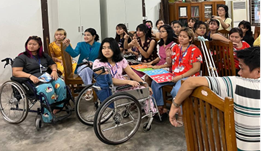
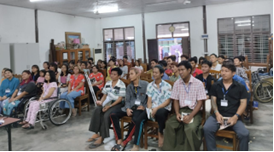
Participants listening to knowledge-sharing session
Understanding waste segregation: Participants gained a clear understanding of how to classify biodegradable, recyclable, and hazardous waste, learning how proper segregation reduces pollution and enhances recycling efficiency.
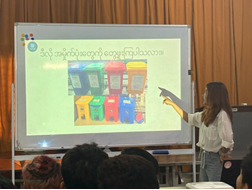
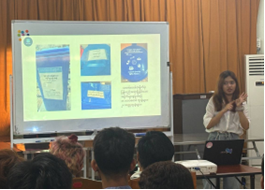
Volunteer from ReCircle explaining about different bin
Collaborative hands-on learning: Using color-coded boards and sorting stickers, participants practiced waste separation in small, mixed-ability groups—fostering teamwork, communication, and shared learning while turning knowledge into real action.
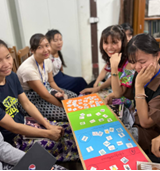

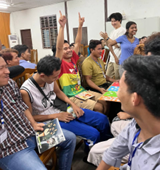
Participants actively engaging in a color-coded trash sorting game
Linking sorting to upcycling: Participants discovered how properly sorted materials—especially plastics—can be repurposed into creative upcycled products, highlighting the connection between waste management and sustainable reuse.
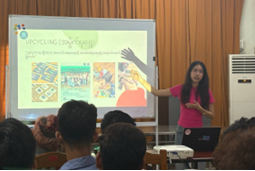
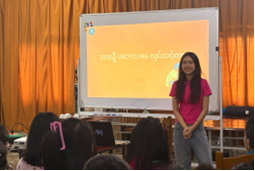
Volunteer from ReCircle explaining about Upcycling
Event information
- Date: 30 October 2025
- Venue: AAR-Japan Myanmar
- Organizer: ReCircle Project (AJYELN Myanmar Fellows)
- Co-organizer: AAR-Japan (Association for Aid and Relief, Japan)
- No. of participants: 50 participants (this includes persons with disabilities: wheelchair users and deaf participants).
- Special note: Trash bins were donated to the school for continued practice. Plastic bags collected will be reused in the upcoming upcycling workshop.
Activities implemented
ReCircle Introduction and Knowledge Sharing Session
The workshop opened with an introduction by the ReCircle team, followed by an engaging knowledge-sharing session on the importance of waste segregation and its link to upcycling, led by the ReCircle team. Volunteers were also given the chance to present, helping them build confidence in public speaking and strengthen their leadership skills for future community initiatives. To ensure inclusivity, sign language interpretation was provided throughout, and presentation slides were designed with larger text and clear visuals for better accessibility.
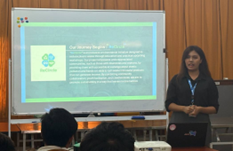
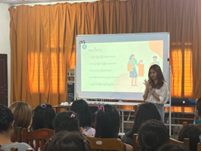
ReCircle Introduction and Knowledge Sharing Session
Trash Sorting Activity
During the trash-sorting activity, participants were divided into small groups and provided with cardboards and color-coded papers representing various waste categories—wet, dry, plastic, and hazardous. Using trash stickers, they practiced sorting items into the appropriate categories, promoting teamwork, communication, and shared learning.
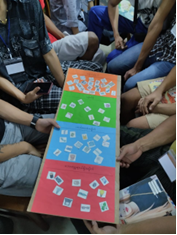
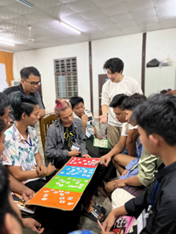
Gamified Trash-sorting Activity
Prize giving + Trash bin Donation
The activity concluded with a friendly sorting challenge, where the fastest and most accurate team received reusable water bottles as prizes, reinforcing the theme of sustainability. Additionally, trash bins were donated to the school, allowing participants to continue practicing proper waste management in their daily routines.
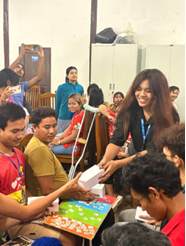
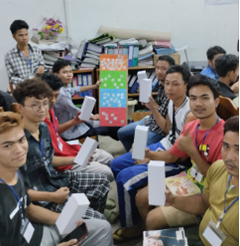
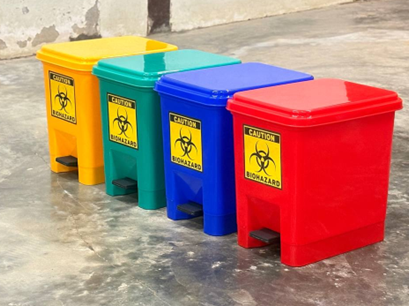
Prize Giving to the winning team + Trash Bin Donation
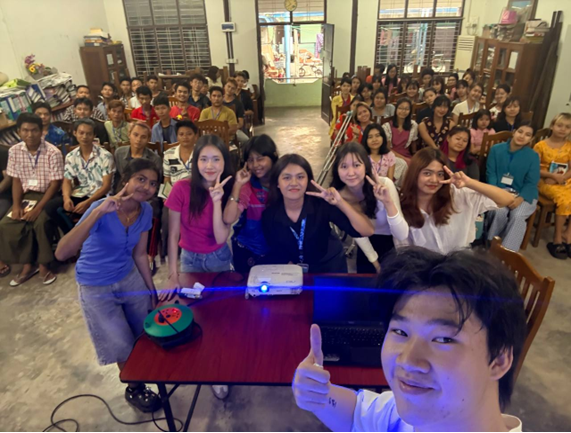
Closing remark + Group photo
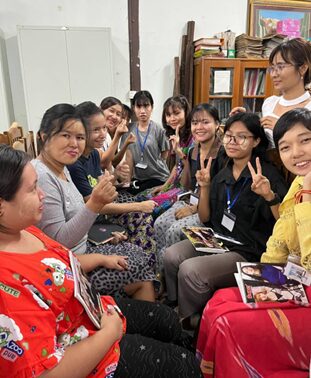
The day wrapped up with closing remarks and a group photo session, celebrating a meaningful day of learning, inclusion, and collective action for a cleaner environment.

Outcome
- Raised awareness on waste segregation and upcycling among participants of diverse abilities.
- Provided an inclusive learning environment that encouraged equal participation and understanding for all.
- Strengthened teamwork and environmental awareness through collaborative, hands-on activities.
- Donated trash bins to the school to support continuous waste-sorting practices.
- Reused collected plastic bags for the upcoming upcycling workshop, linking theory to practical application.
- Stronger collaboration between ReCircle and AAR Japan Myanmar, advancing inclusive sustainability education.
Feedback
From Volunteers
Volunteers expressed that presenting during the session boosted their confidence to lead similar workshops in the future and inspired them to raise environmental awareness within their own communities. Many also shared their pride in contributing to an inclusive event and valued the opportunity to collaborate closely with participants of different abilities.
From Participants
Participants described the workshop as both fun and educational, appreciating the interactive games and group activities that made learning engaging. Many shared that they now clearly understand how to properly separate different types of waste and are motivated to practice proper sorting both at school and at home.