

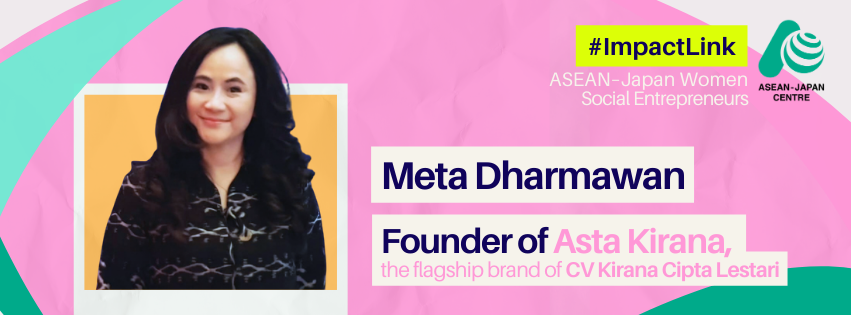
Preserving Heritage Through Impactful Craft Innovation
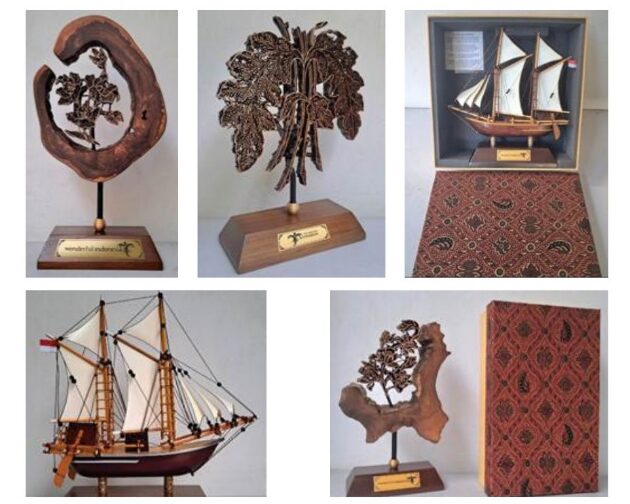
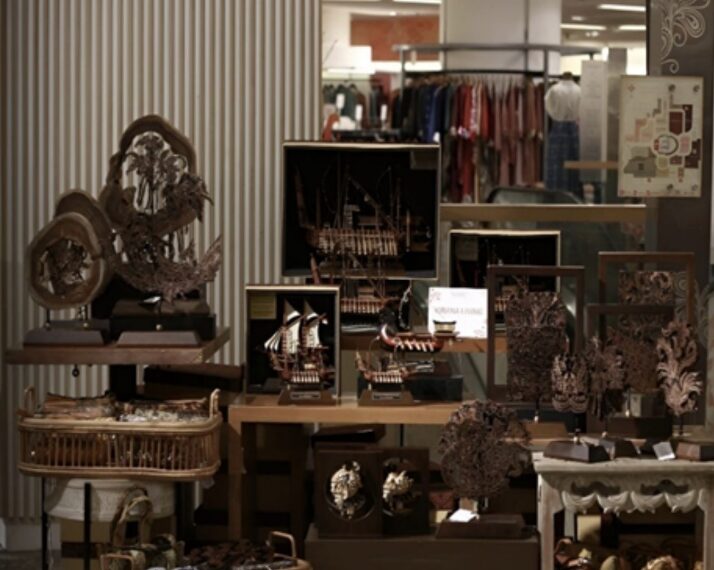
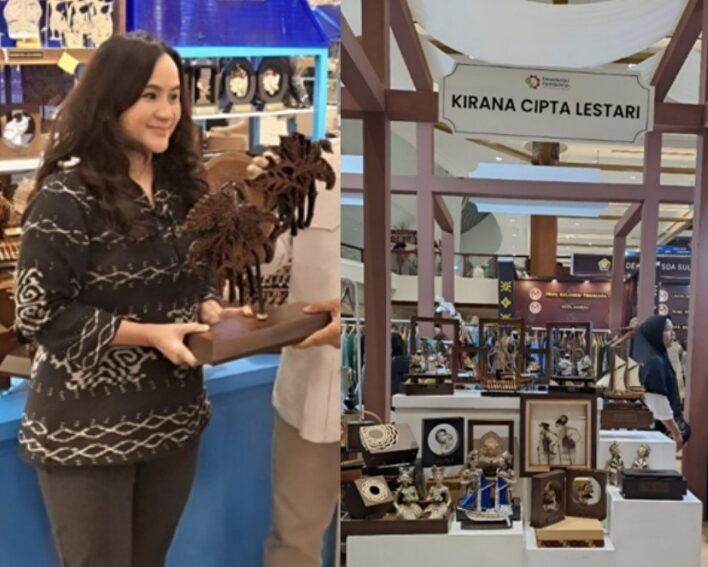
Asta Kirana, the flagship brand of CV Kirana Cipta Lestari, is an Indonesian social enterprise dedicated to bringing locally crafted products to the global stage. Rooted in authenticity, craftsmanship, and thoughtful design, the enterprise creates distinctive products that respond to evolving customer preferences while preserving the cultural heritage embedded in Indonesian handmade traditions.
Recognising that traditional crafts risk fading over time due to factors such as mass-produced alternatives, shifting consumer preferences, and the declining transmission of artisanal skills to younger generations, Asta Kirana works closely with local artisans to innovate and revitalise their products. By transforming and upcycling traditional materials, the enterprises develops innovative cultural gifts and hospitality décor for international market. Through this approach, Asta Kirana not only introduces Indonesian craftsmanship to a wider global audience but also helps sustain artisanal heritage and create meaningful economic opportunities for artisan communities.
Founder Meta Elisa Dharmawan shares her entrepreneurial journey and reflects on how the #ImpactLink Programme strengthened her strategic clarity, impact measurement framework, and funding readiness.
➤ What key challenges did you have in scaling your social enterprise?
Before joining ImpactLink, I realised that although our work was creating tangible value for artisan communities, I struggled to articulate that impact in a structured and forward-looking way. I relied primarily on purchase records and production data from our artisan partners. While these numbers reflected activity and growth, they did not clearly demonstrate how our daily operations contributed to long-term systemic change.
Through ImpactLink, I developed a clearer and more comprehensive impact structure. I introduced what I now refer to as an “Impact Staircase,” categorising progress into short-, medium-, and long-term outcomes. This framework enabled me to connect technical skill development and quality control improvements with increased income stability and, ultimately, the preservation of cultural heritage. For the first time, I could clearly project and communicate our social return on investment in a way that was both measurable and strategic.
➤ How has your approach to communicating impact evolved?
My communication has evolved from being descriptive to becoming structured, measurable, and outcome-oriented. Previously, I focused primarily on explaining what we were doing. Today, I focus on demonstrating the logic behind how our work creates sustainable change.
I established a clear causal pathway — from technical skill-building and strengthened quality control, to increased production capacity and income growth, and ultimately to sustainable livelihoods for artisan communities. I also refined our mission into a concise guiding message: “Economically empowered artisans preserve Indonesian cultural heritage.”
Another significant shift was learning to differentiate clearly between outputs and outcomes. Instead of reporting the number of training sessions conducted, I now measure how those sessions translate into income increases, production improvements, and long-term stability. Aligning our Theory of Change with clearly defined key performance indicators has strengthened both our credibility and our ability to communicate impact with confidence.
As I reflected during the programme:
“Previously, my impact metrics were very big numbers, but there were no personal stories behind them.”
“Through ImpactLink, I learned how important it is to include beneficiary stories to make our impact more emotional and credible.”
– Meta Dharmawan – Founder, CV Kirana Cipta Lestari
➤ How did your thinking around impact, fundraising, and investment change?
The coaching process included a readiness self-assessment that fundamentally shifted my perspective on fundraising and growth. It helped me understand that funders look not only for passion and vision, but for clarity of purpose, strong supporting evidence, and structured documentation.
In terms of impact, I recognised the importance of maintaining a consistent narrative across our Theory of Change, impact story, and pitch deck. Alignment across these documents ensures that our impact narrative remains coherent, credible, and measurable.
On fundraising, mentoring helped me better interpret funder objectives and KPIs. Rather than pursuing general capital, I now focus on strategic, impact-linked funding that aligns with our measurable outcomes and long-term mission.
From a growth perspective, I adopted what I describe as “opportunity maximisation.” This involves developing scalable and reproducible product lines with sustainable long-term demand, while strengthening professional inventory management systems to respond effectively to B2B and B2G opportunities. This approach ensures that growth is both commercially viable and mission-aligned.
Overall, this experience strengthened our positioning as both a mission-driven and commercially credible enterprise — capable of delivering measurable social impact while operating with professional discipline and strategic foresight.
➤ How has #ImpactLink supported your readiness to receive funding or grants?
Previously, I found it challenging to translate complex financial information into a narrative that funders could quickly and confidently understand. ImpactLink provided practical tools and frameworks that allowed me to integrate commercial insights, impact storytelling, and financial projections into one coherent presentation.
I learned the importance of preparing structured documentation, including clear track records, strengthened inventory systems, comparative cash flow analyses (with and without funding scenarios), and realistic forward projections. These elements enable funders to understand our current position and future potential at a glance.
Establishing a structured data framework with a comprehensive document checklist has further ensured that Asta Kirana is prepared for due diligence processes required by international grants and impact investors. This preparation has significantly strengthened my confidence in engaging funders at a professional and international level.
➤ How has your readiness to pursue funding or grants evolved?
Participating in ImpactLink has been transformative. It shifted Asta Kirana from being primarily passion-driven to becoming more structured, data-informed, and investment-ready.
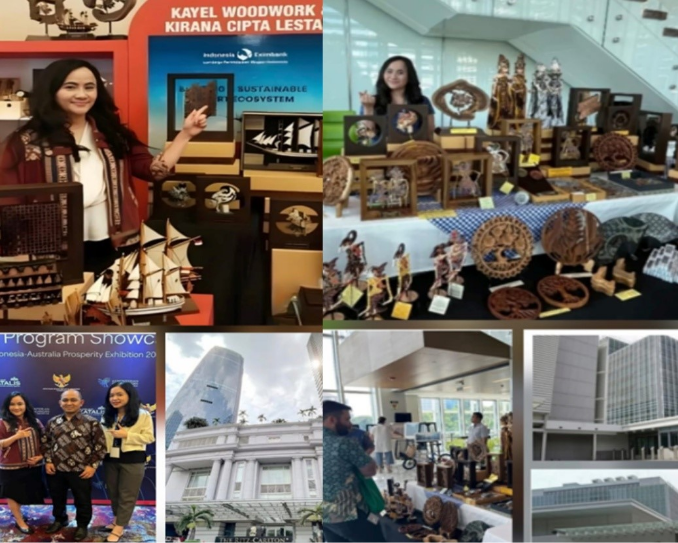
Today, I approach funding and partnership discussions with greater clarity and confidence. I understand how to present our mission, impact pathway, and financial sustainability in a way that demonstrates both social value and commercial viability. This readiness will enable Asta Kirana to continue empowering artisan communities while preserving Indonesia’s cultural heritage in a sustainable and scalable way.
Learn more about CV Kirana Cipta Lestari: https://kiranaciptalestari.com/home/
Follow the company on social media: https://www.instagram.com/kiranaciptalestari
Disclaimers:
This article is published for informational purposes only and does not constitute the promotion or endorsement of the featured business. Interview content has been edited for clarity and conciseness.
#ImpactLink is an initiative of the ASEAN-Japan Centre, launched in FY2025, to systematically strengthen the funding and investment readiness and professional capabilities of women-led social enterprises across ASEAN and Japan. The programme convenes entrepreneurs from both regions to enhance financial literacy, digital competencies, and investment readiness, while enabling the effective translation of knowledge into practical, investment-relevant action.
The Centre works as an Enabler, collaborating with ecosystem partners to support inclusive entrepreneurship through capacity-building programmes, mentorship, and cross-border collaboration.
Be a part of the #Iqamapct and send us an email at info_rpa@asean.or.jp


