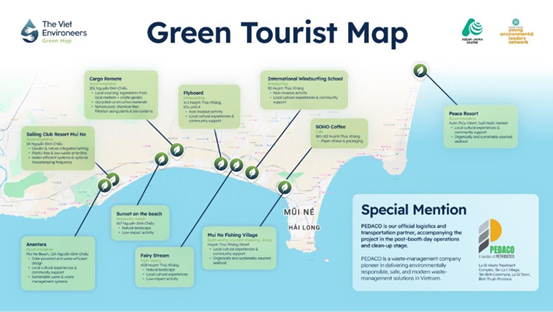
(Main image caption: Figure 1 The Green Tourist Map generated in this project)
31 December 2025, Mũi Né Beach, 10 partnerships
Reported by Lê Đoàn Ngọc Hân, Lê Đỗ Thanh Tú
The Green Tourist Map was launched as a community-based initiative to support green tourism in Mũi Né by engaging local vendors and coastal businesses. Initially, the project aimed to reduce plastic pollution by promoting alternative, environmentally friendly materials for small vendors. However, stakeholder consultations revealed practical constraints, including cost, supply limitations, and operational feasibility. In response, the project was refined to focus on promotional collaboration—highlighting environmentally responsible businesses to raise visitor awareness, encourage responsible consumption, and strengthen partnerships that support sustainable tourism and coastal protection.
Key Takeaways
- Local business engagement is critical for context-responsive sustainability: Direct collaboration with coastal cafés, resorts, and waste management enterprises enabled Vietnam Fellows to co-develop sustainability practices that reflect local operational realities. This approach demonstrates that environmentally responsible solutions are most effective and scalable when they are grounded in the day-to-day context of local businesses.
- Sustainability storytelling enhances green tourism visibility and public awareness: Through strategic use of media and communication skills, the Green Tourist Map documented and amplified sustainable practices adopted by local businesses. By translating these efforts into accessible narratives, the initiative increased visitor awareness and reinforced the role of tourism operators as active contributors to environmental stewardship.
- Cross-sector collaboration unlocks long-term pathways for youth-led sustainability impact: The initiative laid out the groundwork for sustained partnerships among youth leaders, local enterprises, and educational institutions. With potential extensions into mentorship, environmental education, and school-based activities, the Green Tourist Map emerges not only as a promotional resource but as a platform for long-term youth empowerment, leadership development, and community-driven sustainability outcomes.
Main Highlights
- Date: 31 December 2025
- Venue or location: Mũi Né Beach, Bình Thuận
- Organizer: The Viet Environeers
- Partners: 10 business partners
Activities Implemented
Developed a Preliminary List of Vendors
At the initial stage, the project founders, in coordination with the external relations team, conducted a stakeholder mapping and identified a preliminary list of local vendors and coastal businesses for potential collaboration under the Green Tourist Map initiative. The team actively reached out to these enterprises to introduce the project’s objectives and explore opportunities for partnership in promoting green tourism practices.
Field Visits for Interviews and Knowledge Exchange
Field visits were conducted as part of the Green Tourist Map development process to observe sustainability practices within coastal tourism and service settings in Mũi Né. These visits aimed to facilitate knowledge exchange with local operators and to gather practical insights into how environmental considerations are integrated into daily business operations. The activities focused on understanding operational constraints, identifying feasible plastic-reduction measures, and examining how sustainability concepts are translated into practice across different tourism-related contexts.
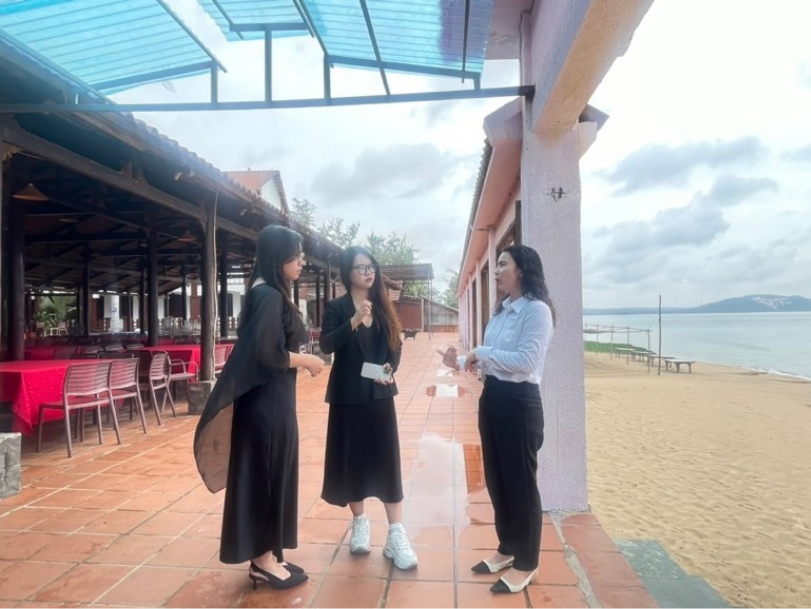
Through on-site observations and structured interviews, a range of approaches related to material use, waste reduction, customer engagement, and environmental awareness were documented. These interactions provided insight into how environmentally conscious practices are implemented in real-world settings, while also highlighting common challenges such as cost implications, supply stability, and operational feasibility.
Selected excerpts from field interviews and on-site observations were compiled into short video documentation materials to support transparency and knowledge sharing. The content reflects individual perspectives shared during the engagement process and is provided for reference purposes only. The inclusion of these materials does not constitute endorsement or promotion of any specific business or entity.
- Video documentation: https://www.facebook.com/reel/25355049894137784
- Video documentation: https://www.facebook.com/reel/737090672750719
Engagements also included discussions with a professional waste management service provider to better understand formal waste collection and transportation systems. This component offered practical perspectives on regulatory compliance, operational standards, and the role of service providers in supporting responsible waste management. The exchange further explored opportunities for future knowledge-sharing activities, including environmental education and youth engagement initiatives.
Overall, the field visits functioned as an applied learning and documentation exercise, linking sustainability principles with local practice. The insights gathered informed the development of the Green Tourist Map as an informational and awareness-raising resource, while maintaining a neutral stance by emphasizing observation, dialogue, and contextual understanding rather than the promotion or endorsement of individual businesses.
Outcome
Outcomes are assessed across four key domains: local business engagement, environmental communication effectiveness, partnership development, and youth-led sustainability capacity.
Increased Adoption and Recognition of Context-Appropriate Sustainability Practices among Local Tourism Businesses
Local tourism enterprises demonstrated increased awareness, acceptance, and visibility of feasible sustainability practices aligned with their operational capacities.
- Evidence and Indicators:
- Number of businesses engaged through direct outreach and interviews: 5
- Number of businesses featured on the Green Tourist Map: 10
- Reduction of single-use plastics (paper cups, paper straws, glass alternatives) • Reuse of materials and adaptive architectural design
- Customer behavior nudging (encouraging reusable bottles/bags)
Field observations and interviews indicate that businesses were more receptive to incremental and cost-sensitive environmental actions than to externally imposed material substitutions. This confirms findings in sustainable tourism literature that localized adaptation increases implementation likelihood and long-term compliance.
- Analytical Insight:
- The outcome suggests a shift from theoretical sustainability advocacy to practice-based environmental management, grounded in local economic and supply-chain conditions. This approach reduces implementation barriers and increases the probability of sustained behavior change among small and medium tourism enterprises.
Improved Visibility and Public Awareness of Green Tourism Options through Digital Environmental Communication
The Green Tourist Map contributed to measurable increases in public exposure to sustainability-oriented tourism narratives and participating local businesses through coordinated digital communication across social media platforms, such as Facebook and Instagram, helping raise awareness of green tourism practices and environmentally responsible travel choices.
- Evidence and Indicators
- Number of digital platforms utilized: 3 platforms (Facebook, TikTok, Instagram)
- Total content produced (videos, posts, interviews): 3 content pieces
- Estimated reach across platforms: 1,156 users
- Total views across platforms: 2,502 views
- Engagement metrics (likes, shares, comments, saves): 170 total interactions
These figures demonstrate that the Green Tourist Map achieved meaningful visibility and engagement, indicating effective digital environmental communication and increased public awareness of green tourism options among online audiences.
Strengthened Cross-Sector Collaboration Supporting Long-Term Environmental Governance
Outcome Statement: The initiative established functional partnerships across youth organizations, tourism businesses, and professional environmental service providers, creating pathways for sustained collaboration beyond the project lifecycle.
- Evidence and Indicators
- Total number of formal and informal partnerships established: 10
- Sectoral diversity of partners
- Hospitality and food services
- Eco-oriented resorts
- Professional waste management services
The partnership with PEDACO Green Environment Joint Stock Company represents a strategic linkage between grassroots environmental advocacy and formal waste management infrastructure, addressing a critical structural gap in coastal tourism sustainability.
- Analytical Insight:
Cross-sector partnerships increase institutional resilience by distributing environmental responsibility across actors rather than concentrating it within volunteer-based initiatives. This outcome aligns with systems-based sustainability models emphasizing shared governance and multi-stakeholder engagement.
Feedback on Limitations and Data Gaps
The feedback session identified several methodological and data-related limitations encountered during implementation. First, the absence of baseline quantitative data on plastic consumption prior to the intervention limited the ability to assess changes attributable to the project. Second, constraints in technical and human resources restricted opportunities for direct measurement of waste reduction outcomes. Third, the assessment relied primarily on self-reported sustainability practices shared during interviews, which may not fully capture the consistency or scale of implementation.
These insights provide important guidance for future phases of the initiative, where standardized indicators, baseline setting, and longitudinal data collection mechanisms can be incorporated to strengthen evidence-based evaluation and impact assessment.