Reported by Sakura Suzuki, Hazuki Moriyama, Noa Tatsuno, and Hajime Kaneto
Key takeaways
- Making Invisible Activities Visible: Through consistent posting and story sharing, activities that were previously visible only to participants became accessible to a wider audience. Social media transformed on-site, small-scale actions into publicly visible initiatives, reaching many residents across Akita and extending the impact beyond the physical events.
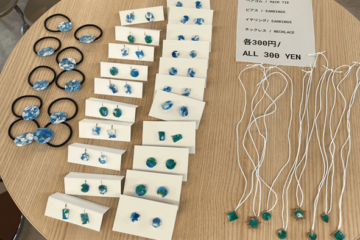
- Expanding Reach and Public Awareness: Starting from zero followers in August, the project’s Instagram account grew to over 200 followers by December through regular content sharing, including seven posts and nearly 20 stories. In addition to online growth, the activities gained offline visibility by being featured on a local television program, highlighting accessory-making and sales at the Marche and further amplifying public awareness.
- Converting Online Engagement into Participation: social media functioned not only as an awareness tool but also as an effective recruitment channel. Followers who engaged with posts and stories subsequently attended workshops and events, demonstrating a clear link between digital outreach and on-the-ground participation.
Main highlights
Campaign period: August – December 2025 (will continue in the future)
Platform used: Instagram, Akita TV (local news)
Number of followers:
Instagram: 221 followers
Total Instagram content: 7 posts (including 1 interview video on marine plastic waste)
Activities implemented
To promote each activity and ensure broad outreach, the team implemented a multi-channel communication strategy. Event details and highlights were consistently posted on Instagram after each activity to extend visibility beyond on-site participants and maintain ongoing public engagement. In parallel, flyers were distributed at local markets and off-campus workshops to reach community members who may not be active on social media. Additionally, activity announcements and updates were shared through official school communication channels, including university email and the AIU LINE network, enabling timely dissemination of information to students and the wider academic community.
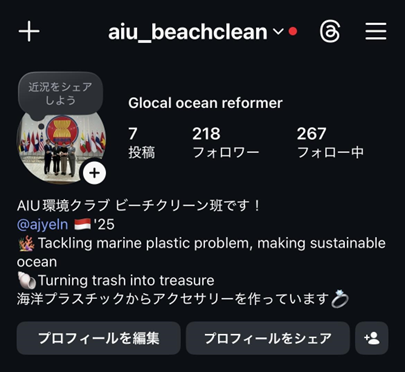
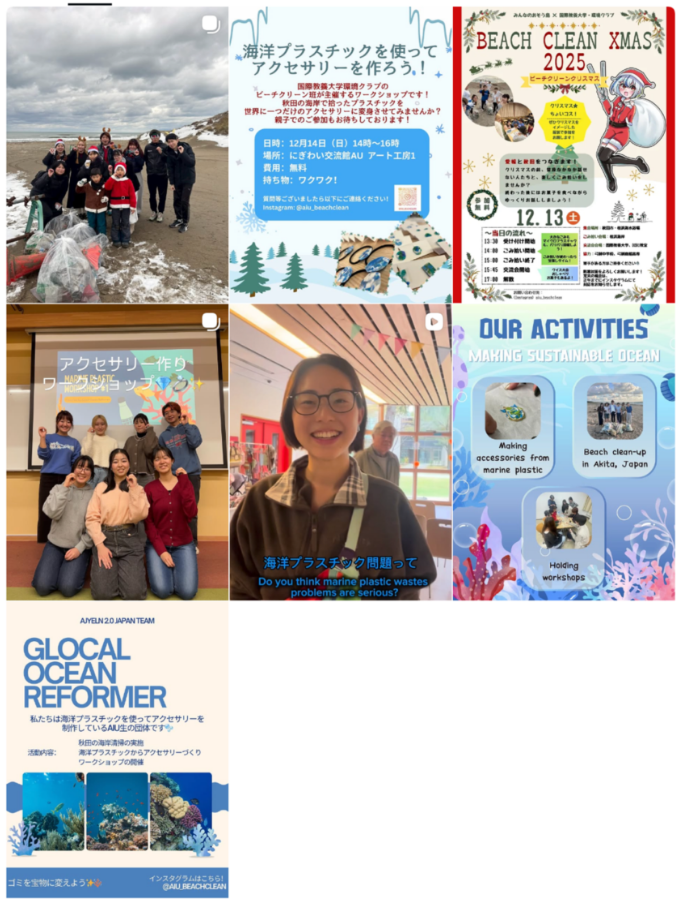
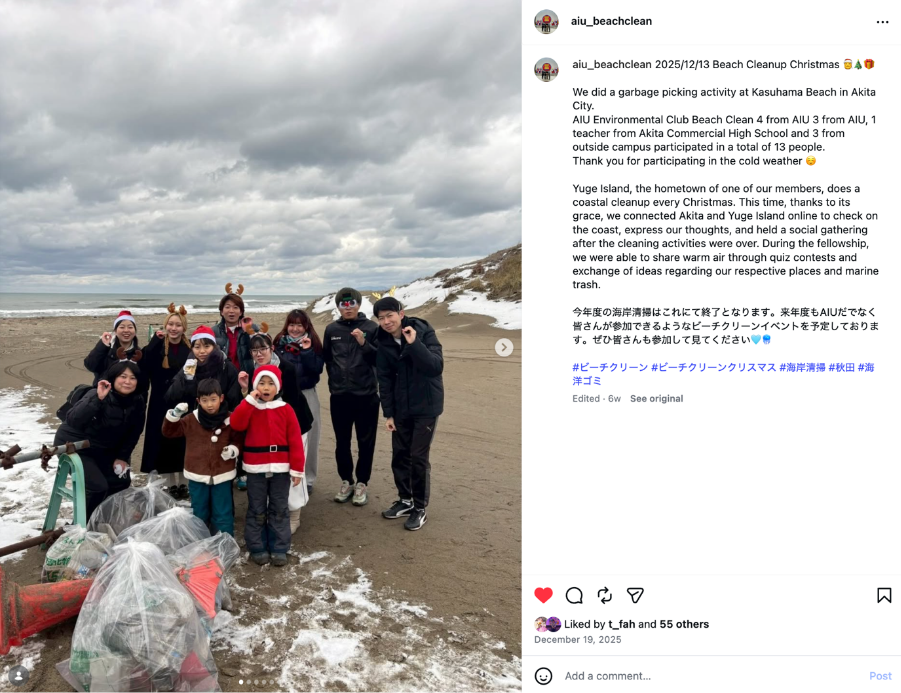
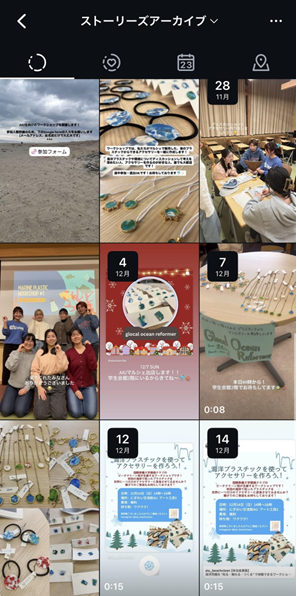
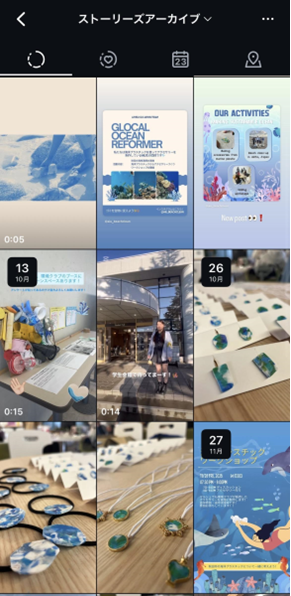
Figure 4 Story posts in Instagram
Akita TV
In addition to on-site promotion and social media outreach, the project activities were further amplified through coverage by local media. The team was featured in a local Akita television program, which showcased key activities such as marine-plastic accessory making and product sales at community markets. This media exposure significantly broadened public visibility, reaching audiences beyond direct participants and online followers, and contributed to raising wider community awareness of marine plastic issues and the project’s educational objectives. The news coverage was also published on the Akita Umi no Hi platform, reinforcing the credibility and public recognition of the initiative.
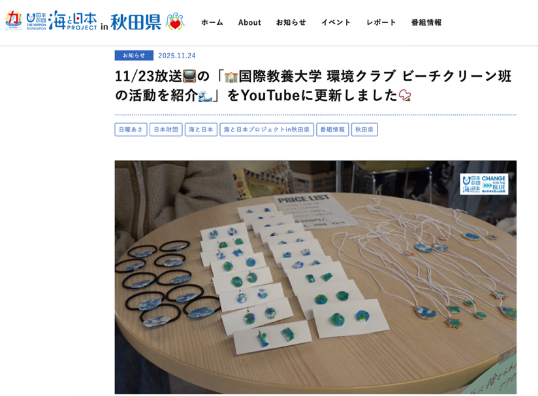
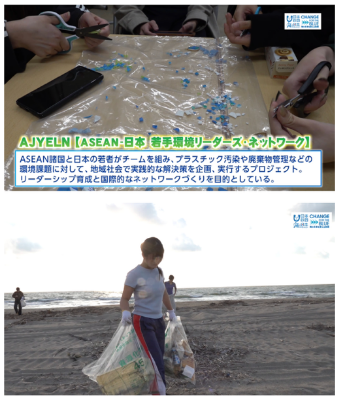
Figure 5 Media coverage from local news TV
Link to the news article:
Outcome
As a result of the integrated outreach strategy—combining social media dissemination, on-site flyer distribution, institutional communication channels, and local television coverage—the project achieved a substantial increase in public visibility and community awareness. Activities that were previously limited to on-site participants reached a broader audience across Akita, strengthening recognition of marine plastic issues and the project’s educational message. The expanded exposure translated into tangible engagement, with online audiences becoming event participants and workshop attendees. Moreover, local media coverage enhanced the project’s credibility and legitimacy, positioning it as a community-relevant initiative and supporting sustained interest in subsequent activities.