Reported by Padaphone Atvaly, Prasone Khaosaath, Phoutthavong Phoumivong, and Xayyadeth Ounniyom
Key takeaways
- Building Community–Temple Collaboration through Waste Sorting: The SalaSara team successfully organized the Sorting Day activity at Sokkham Mai Temple, engaging monks, novices, and community members in practical waste-sorting practices. The initiative strengthened collaboration between the temple and its surrounding community, fostering a shared sense of responsibility and collective action toward a cleaner and greener environment.
- Translating Daily Actions into Measurable Waste Reduction: Through hands-on waste-sorting sessions, participants learned to clearly differentiate between organic, recyclable, non-recyclable waste, and plastics. This practical learning approach demonstrated how small, daily behavioral changes can significantly reduce waste generation within the temple. The activity resulted in the collection and separation of plastic waste, including approximately 10 kg of water bottles, 5 kg of cups and straws, and 3 kg of other single-use plastics.
- Generating Data and Momentum for Sustainable Waste Management: Beyond awareness-raising, the activity provided valuable data on the types and quantities of waste generated at the temple, serving as a foundation for designing future, context-appropriate waste management systems. The day concluded with shared discussions and reflections, strengthening participant bonds and encouraging sustained environmental engagement beyond the activity itself.
Main highlights
Date: 1 November 2025
Venue or location: Sokkham village, Xaysettha, Vientiane, Laos
Organizer: SalaSara team
Participants: Monk and Sokkham community
No. of participants: 250 participants and 9 volunteers
Activities implemented
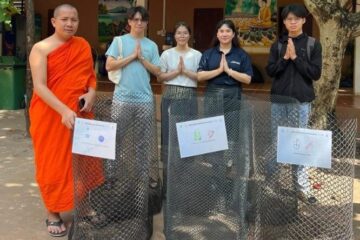
The activity began with an inspection of existing waste bins, followed by clear explanations to temple visitors on how different types of waste should be separated. Participants then conducted hands-on waste sorting and cleaning activities throughout the temple grounds from 6:00 a.m. to 12:00 p.m. Collected plastic waste was subsequently washed and safely stored at the temple in preparation for the recycling process.
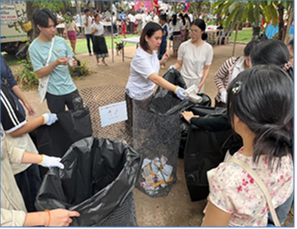
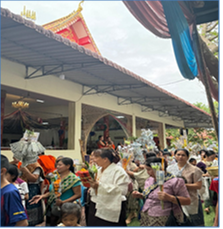
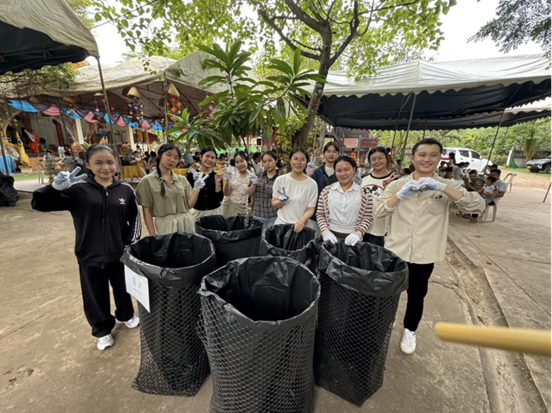
Figure 1 & 2 As the temple hosted a kathina ceremony, we helped the locals participating in the ceremony separate their waste
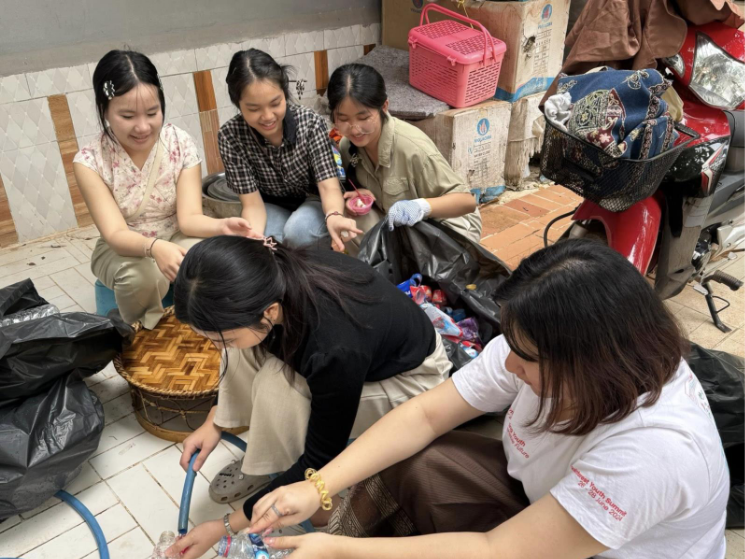
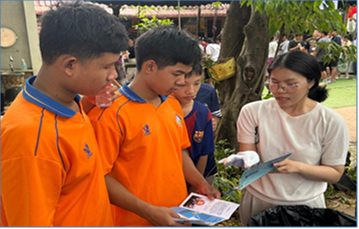
Figure 3: Our team member and youth volunteers are cleaning plastic waste, Figure 4: Our team member is talking to high school students to promote our project
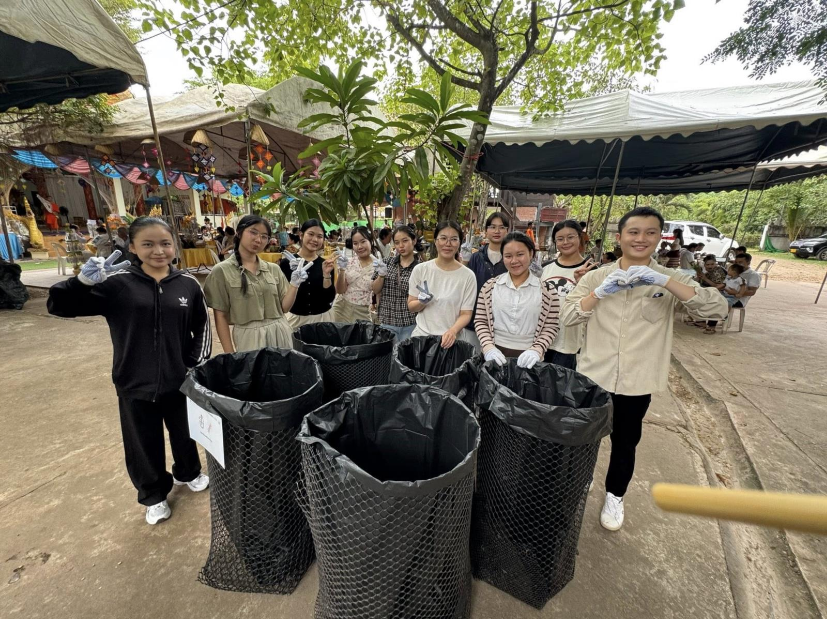
Outcome
The activity successfully strengthened community engagement at Sokkham Mai Temple, bringing together monks, novices, and local residents in a shared effort to improve waste management practices. This collective participation fostered a sense of ownership and collaboration between the temple and the surrounding community, reinforcing the role of religious spaces as important hubs for environmental action.
Through hands-on learning and direct participation, the activity enhanced participants’ knowledge and practical skills in waste separation. Participants gained a clearer understanding of how to identify and sort organic, recyclable, non-recyclable waste, and plastics, supporting the adoption of more sustainable daily habits. As a tangible outcome of these efforts, a total of 18 kg of plastic waste was collected and properly sorted, comprising approximately 10 kg of water bottles, 5 kg of cups and straws, and 3 kg of other single-use plastics.
In addition to awareness-raising, the activity generated valuable data on the types and volumes of waste produced within the temple. These findings will serve as an evidence base for designing a more sustainable and context-appropriate waste management system tailored to the temple’s needs and operational realities.
Overall, the activity contributed to increased community awareness of the importance of reducing, reusing, and recycling waste. By linking practical action with environmental responsibility, participants were encouraged to extend these practices beyond the temple, supporting broader efforts to maintain cleanliness and environmental stewardship within the wider community.
Feedback
The Temple Cleanup activity received overwhelmingly positive feedback from monks, novices, and community members at Sokkham Mai Temple. Participants expressed their appreciation for the SalaSara team’s visit and guidance, particularly valuing the practical and hands-on approach to learning proper waste-separation techniques. Many noted that the activity addressed long-standing confusion about waste management and provided clear, actionable knowledge.
Several participants shared personal reflections highlighting the impact of the activity. One monk commented, “Now I finally understand how to separate waste properly,” while another shared, “This activity opened my eyes to how important recycling is for our temple.” Community members also expressed strong interest in continued engagement, with one villager stating, “Please continue doing these programs—we want to learn more.” These reflections indicate that the activity successfully increased awareness and motivation for responsible waste practices.
Participants further mentioned that the activity improved their confidence in managing waste more effectively and encouraged them to consider adopting these practices in their daily lives. Many expressed interest in joining similar environmental initiatives in the future, demonstrating the potential for sustained community involvement beyond the one-day activity.
In terms of logistical feedback, some interested participants noted that they live too far from the current plastic collection point to participate regularly. As a result, there is a clear opportunity to improve accessibility by establishing additional collection points, such as at a nearby university, to strengthen participation in the plastic collection network.
Overall, the feedback reflects strong appreciation for the educational content, hands-on learning methods, and the supportive, approachable spirit of the SalaSara team. The activity was widely regarded as meaningful and impactful, reinforcing the value of community-based environmental education in religious and communal spaces.