Reported by Ni Putu Mas Swandewi and Luh Anggreni
Key Takeaways
- Implementation of Reuse Concepts at the Household Level: Participants understood that sustainable practices can begin with small steps, such as extending the lifespan of plastic bags through proper folding and storage techniques to prevent them from becoming immediate waste.
- Strengthening the Role of Women in the Market Ecosystem: Involvement of market vendors, Women Farmers Group (Kelompok Wanita Tani/KWT), and Family Welfare Empowerment (Pemberdayaan dan Kesejahteraan Keluaga, PKK) members is strategic, as they are key actors in the circulation of plastic in traditional markets and household waste management.
- Creative Waste Management Solutions: Participants gained new practical skills, specifically creating storage boxes for used plastic bags, enabling a more organized waste system at home.
Main Highlights
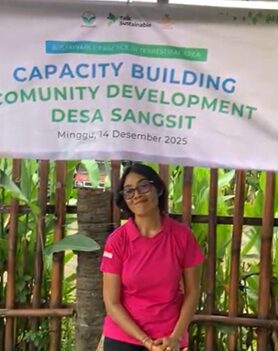
- Date: 14 December 2025
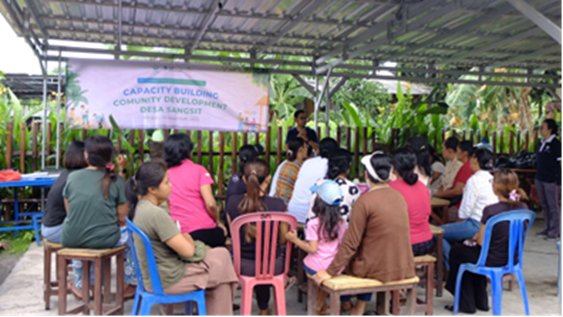
- Venue or location: Gerbangsih Sangsit Village
- Organizer: Community Development Team of Talk Sustainable Community
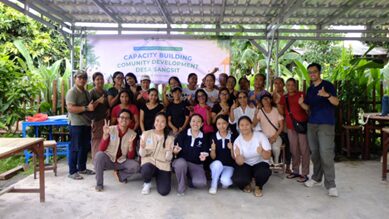
- Participants: Representative of market vendors, residents living near the river, Women Farmers Group (Kelompok Wanita Tani/KWT), and Family Welfare Empowerment (Pemberdayaan Kesejahteraan Keluarga/PKK)
- No. of participants: 25 participants
Activities Implemented
The program commenced with thorough preparatory activities, including the development of the speaker’s Terms of Reference (ToR), coordination with participants, and the organization of the venue and catering. Prior to the session, the organizing team conducted an internal briefing to ensure smooth coordination and seamless implementation. At 10:00 AM, participants and the speaker arrived at the venue and proceeded with registration.
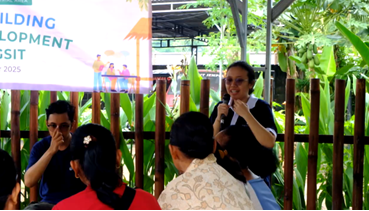
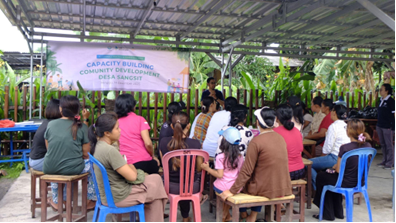
The session opened with a discussion on the high volume of single-use plastics commonly found in market environments, highlighting how limited awareness contributes to the growing challenge of plastic waste management. Participants were then invited to reflect on earlier practices when organic waste was more prevalent, before plastic became a daily necessity. While acknowledging the efficiency of plastic in modern life, the session emphasized practical reuse strategies, particularly for functional plastic bags. The speaker demonstrated simple techniques for folding and storing plastic bags in boxes to maintain order and maximize household space, promoting small yet sustainable habits and positioning housewives as key agents of change in family-level waste management.
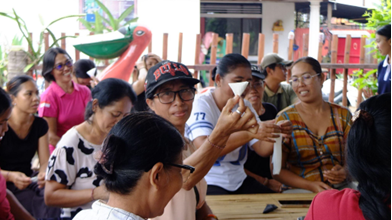
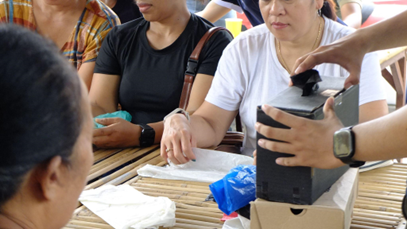
The demonstration was met with strong enthusiasm, with several participants sharing that they had already adopted similar practices in their daily routines. During the discussion, concerns were raised regarding the village’s once-a-week waste collection system, which often results in waste accumulation and unpleasant odors at home. In response, the speaker proposed the strict separation of organic and inorganic waste as a practical solution. Organic waste such as kitchen scraps and leaves can be managed through simple composting methods using repurposed buckets or gallons buried in the ground, thereby reducing the volume of waste requiring collection.
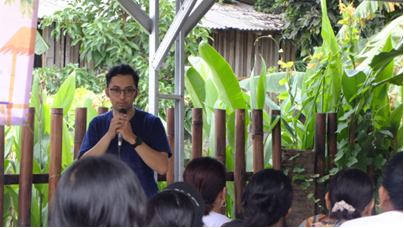
Following an hour of constructive dialogue, selected participants were interviewed to provide testimonials and share their experiences in managing household waste. The activity concluded with a documentation session and informal discussions among attendees, followed by an internal team evaluation to assess outcomes and inform future follow-up actions.
Outcome
The activity resulted in a noticeable increase in participants’ knowledge of sustainable practices in terrestrial and household settings, particularly in relation to everyday waste management. Beyond awareness, the session fostered a positive shift in mindset toward eco-friendly behavior, encouraging participants to recognize the value of small, practical actions. Simple habits—such as properly folding and storing plastic bags to extend their usable life—were reframed as meaningful contributions to reducing waste, demonstrating that sustainability can begin with manageable steps integrated into daily routines.
Feedback
The attendees showed high engagement during the practical sessions and discussions, reflecting the local community’s desire, especially those living around the market, to adopt better environmental habits.