Reported by Ni Putu Mas Swandewi and Luh Anggreni
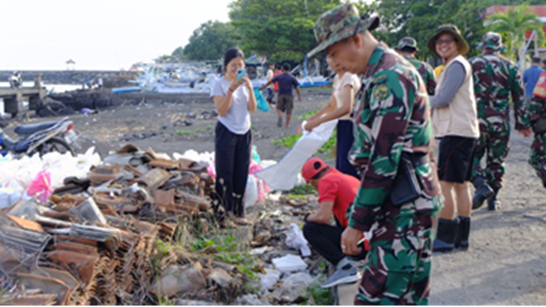
The Beach Clean Up activity at Sangsit Beach is a concrete step in supporting SDG 14 (Marine Ecosystems) by protecting coastal areas from the threat of plastic pollution. This location was chosen very strategically because Sangsit Beach is a tourist destination famous for its grilled fish culinary, so maintaining environmental cleanliness is a top priority for the comfort of visitors. In addition to the tourism aspect, clean waters are crucial for the survival of 57 local fishing families who depend on healthy seafood for their livelihoods. Through cross-sector collaboration, this routine action not only cleans the beach area but also educates the community about the importance of sustainable waste management for the future of the village.
Key Takeaways
- Tangible and Cumulative Environmental Impact: Across two clean-up activities, the initiative delivered measurable results by removing large volumes of coastal waste from Sangsit Beach. This included clearing a 150-meter stretch of coastline and collecting substantial amounts of both organic and inorganic waste, significantly reducing pollution and visibly improving shoreline cleanliness.
- Sustained Cross-Sector Collaboration: The activities demonstrated strong and consistent collaboration among community members, youth groups, local and district government officials, law enforcement (TNI/Polri), and environmental organizations. This cross-sector engagement reflected a shared responsibility and long-term commitment to protecting the coastal environment.
- Strengthened Waste Management Awareness and Practice: Beyond waste removal, the program emphasized proper waste segregation and responsible handling. Participants practiced on-site sorting, with organic waste managed locally and inorganic waste transferred for further processing, reinforcing awareness of sustainable waste management and the importance of maintaining clean coastal areas through routine action.
Main Highlights
Beach Clean-up #1
- Date: 21 November 2025
- Venue: Pantai Dermaga Desa Sangsit (Sangsit Village Pier Beach)
- Organizer: Community Development Team of Talk Sustainable Community & Sungai Watch
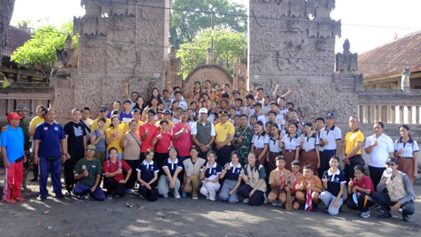
- Participants: Indonesian Army (TNI AD) & Navy (TNI AL), Sawan Sector Police & Sawan Military Command (Koramil), Head of Sawan District & Sangsit Village Government, Village Council (BPD), Karang Taruna (Youth Organization), community members of Banjar Beji and Banjar Pabean, fishermen & coastal vendors, and Sungai Watch Team.
- No. of participants: 137 participants
Beach Clean-up #2
- Date: 12 December 2025
- Venue: Dermaga Desa Sangsit (Sangsit Village Pier Beach)
- Organizer: Community Development Team of Talk Sustainable Community & Sungai Watch
- Participants: Sawan Sector Police & Sawan Military Command (Koramil), Head of Sawan District & Sangsit Village Government, Village Council (BPD), Sangsit Village Youth Organization (Karang Taruna), Sispala SMAN 1 Sawan, Sangsit Village Administration, Sangsit Village Community Members, fishermen & coastal vendors.
- No. of participants: 105 participants
Activities Implemented
Beach Clean-up #1
Beach Clean-up #1 began with the preparation of essential logistics, including sacks, weighing scales, cleaning tools, and refreshments, alongside coordination with local stakeholders from the pier area to ensure community involvement. These preparations laid the groundwork for an efficient and well-organized cleanup activity.
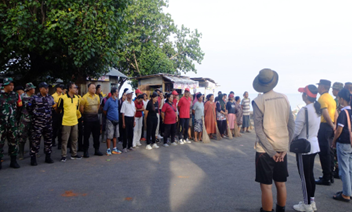
At 07:00 AM, 137 community members assembled at Segara Sangsit Beach, each equipped with personal cleaning tools. The event opened with remarks from the Sangsit Village Government and Avirama, followed by a technical briefing from the community development coordinator. Participants were then divided into groups and assigned to clean a 150-meter stretch of the coastline, with a primary focus on collecting inorganic waste.
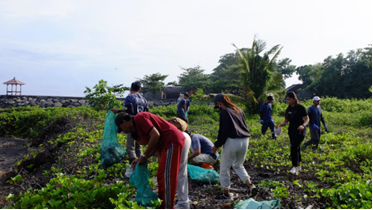
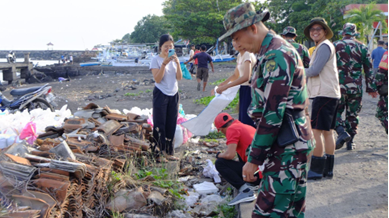
After approximately two hours of coordinated action, the community successfully collected 20 sacks of waste. The weighing process recorded a total of 108.34 kg of inorganic waste, consisting mainly of food packaging, plastic bottles, styrofoam, cigarette butts, and disposable diapers. Organic waste found on-site was largely composed of ceremonial leftovers and dry leaves. Following the cleanup, the Head of Sangsit Village encouraged participants to continue the activity as a regular Friday routine and reminded the community to make proper use of the trash bins provided along the beach.
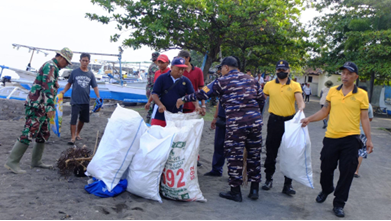
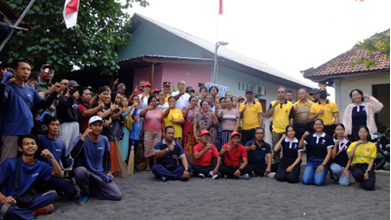
All collected inorganic waste was subsequently transported to Sungai Watch for further sorting and processing. The activity concluded with a team evaluation and a final inspection of the coastline to ensure that the entire 150-meter area had been thoroughly cleaned and no waste remained.
Beach Clean-up #2
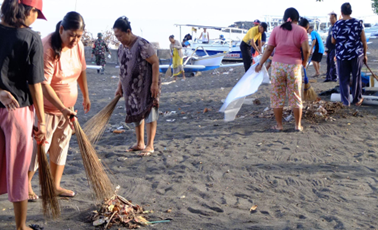
Beach Clean-up #2 was implemented following comprehensive logistical preparations, including the provision of sacks, weighing scales, refreshments, and cleaning tools such as bamboo rakes. Prior to the activity, the organizing team coordinated closely with local stakeholders around the beach area to ensure broad participation. An internal briefing was also conducted to align all team members on roles, safety measures, and the overall execution plan.
At 07:00 AM, a total of 105 community members gathered at Segara Sangsit Beach, bringing their own cleaning equipment. The activity officially commenced with opening remarks from the Sangsit Village Government and Avirama, followed by a technical briefing delivered by the community development coordinator. Participants were then divided into groups and assigned to clean a 200-meter stretch of the coastline, with clear instructions to segregate organic and inorganic waste into separate sacks.
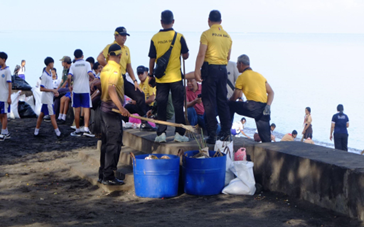
The cleanup action proceeded immediately after the briefing and continued for approximately two hours. Through collective effort, the community collected 22 sacks of waste. A collaborative weighing session recorded a total of 116 kg of organic waste and 76.4 kg of inorganic waste. During a short break, the Sangsit Village Government encouraged participants to institutionalize the cleanup as a regular Friday activity and emphasized the importance of educating tourists about responsible waste disposal, supported by the availability of trash bins throughout the beach area.
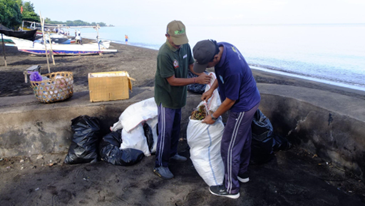
Waste analysis revealed that organic waste was dominated by Hindu ceremonial remains and fallen leaves from nearby trees. Inorganic waste primarily consisted of food packaging, beverage bottles, styrofoam, glass bottles, cigarette butts, plastic bags, fabric, and disposable diapers. For further management, all inorganic waste was transported to Sungai Watch for detailed sorting and processing, while organic waste was managed by the village for use as compost. The activity concluded with a team evaluation and a final site inspection across the 200-meter zone to ensure all waste had been removed and the beach was left completely clean.
Outcome
Beach Clean-up #1
Beach Clean-up #1 achieved tangible environmental outcomes through the successful collection of 108.34 kg of waste, equivalent to 20 sacks, from a 150-meter stretch of the coastline. The activity contributed to a visible reduction in coastal pollution and improved the overall cleanliness of the beach area. Waste generated during the cleanup was systematically sorted into organic and inorganic categories, reinforcing proper waste management practices among participants. As a key follow-up outcome, the Sangsit Village Government committed to continuing beach clean-up activities as a regular Friday initiative, ensuring sustained environmental action beyond the one-day event.
Beach Clean-up #2
Beach Clean-up #2 further strengthened the initiative’s impact by expanding both the scale and consistency of action. A total of 22 sacks of waste was collected, consisting of 116 kg of organic waste and 76.4 kg of inorganic waste, resulting in the effective cleaning of a 200-meter stretch of the coastline. The activity demonstrated improved community engagement and reinforced routine waste segregation practices, with participants consistently separating organic and inorganic waste throughout the process. The continuation of weekly Friday clean-ups was reaffirmed, highlighting growing community ownership and a sustained commitment to maintaining a clean and healthy coastal environment.
Feedback
Overall, the community demonstrated strong enthusiasm and commitment throughout the activity. The active participation of fishermen, vendors, and local residents—working alongside government officials, volunteers, and military personnel—reflected a shared sense of responsibility and a growing awareness of the importance of maintaining a clean and sustainable coastal environment.