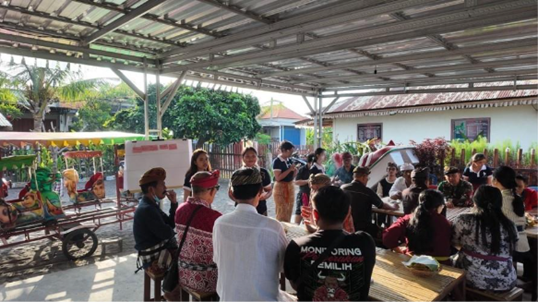
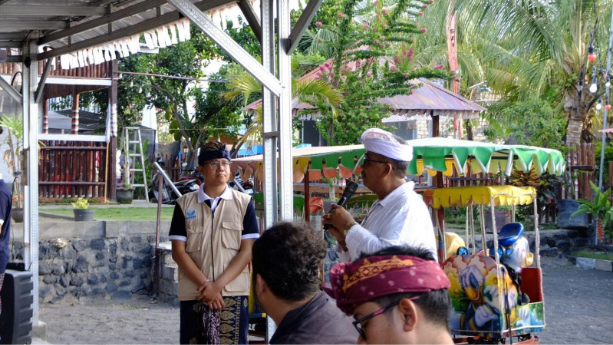
(Main image caption: Figure 1 Each representative from an agency or group will express their opinion and describe the actual situation regarding waste in the village)
Reported by Ni Putu Mas Swandewi and Luh Anggreni
The problem of plastic waste in Sangsit is a deep-rooted sustainability problem. Sangsit Village, which has an area of 425.63 ha with a dense population and status as a coastal tourism area, makes it the epicenter of plastic waste accumulation. In response to this, the AJYELN Indonesia “Talk Sustainable” team plans to implement the Sustainable Sangsit Initiative Project, which aims for environmental improvement, community empowerment, and long-term sustainability in the Sangsit Village. The project includes Capacity Building program, FGDs, and river and beach clean-up designed to strengthen social relationships, build teamwork, and foster a sense of shared responsibility among the community
The Focus Group Discussion (FGD) is a crucial step in supporting SDG 17 (Partnerships For the Goals) by building cross-sector commitment and collaboration between the government, educational institutions, and community groups. This activity serves as an instrument to map the root of the waste problem in Sangsit Village and identify gaps between existing regulations and the reality of community understanding on the ground.
Through these discussions, the development team can gather practical ideas that are aligned with local needs, such as the formation of a permanent waste management task force and the development of customary regulations or customary laws related to waste management. Ultimately, the FGD results ensure that every community empowerment initiative undertaken is targeted, measurable, and has the full support of all stakeholders for the village’s ecological sustainability.
Key Takeaways
- Strengthened Multi-Stakeholder Collaboration: Village government, schools, environmental offices, community groups, and NGOs such as Rumah Plastik Mandiri expressed a strong commitment to address waste management issues in Sangsit Village, recognizing waste as a shared responsibility across all levels of society.
- Practical and Localized Waste Management Solutions Identified: The need for dedicated waste management teams, localized regulations (such as awig-awig for waste), and implementation of community-based recycling strategies were highlighted as important steps to support sustainable change.
- Educational Initiatives as a Key Driver for Change: Schools and the Family Welfare and Empowerment Organization (PKK) put forward concrete ideas like waste-for-lessons programs and household-level waste segregation to build a culture of environmental responsibility starting from children and families.
Main Highlights
- Date: 18 October 2025
- Venue or location: Gerbangsih Sangsit Village
- Organizer: Community Development Team of Talk Sustainable Community
- Key Participants:
- Subdistrict Head of Sawan
- Environmental Agency of Buleleng
- Sangsit Village Officials
- Traditional Village Government
- Military and Police representatives
- School Principals
- Rumah Plastik Mandiri
- Family Welfare and Empowerment Organization
- Youth Group (Karang Taruna)
- Farmers’ Women Group
- Fishermen
- Market Vendors from coastal areas
- No. of participants: 23
Activities Implemented
Pre-Activity Phase
Prior to the main activity, members of the Community Development team of Talk Sustainable Community conducted a series of surveys targeting key stakeholder groups in Sangsit Village, including fishermen, coastal-area vendors, and local residents. These surveys were designed to gain a grounded understanding of current waste conditions in the village and to capture the community’s initial perceptions of waste and waste management practices. The insights gathered during this stage helped shape the overall approach of the program. Detailed interview questions used in this process are provided in the appendix.
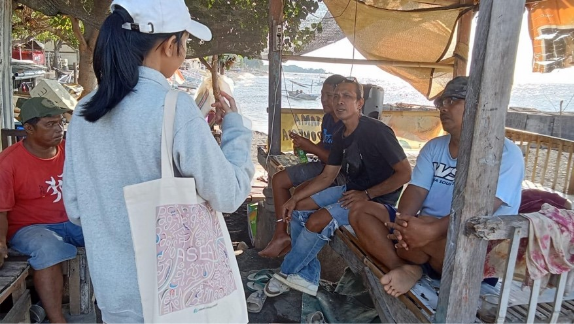
In parallel, the team established collaborations with relevant stakeholders and organizations working in the environmental sector, particularly in waste management. These stakeholders were engaged as potential speakers for capacity-building sessions, strategic partners in formulating practical waste management solutions, and government representatives who could contribute to or influence local waste regulations. During this preparation period, the team also finalized all logistical arrangements for the Focus Group Discussion (FGD), including the discussion guidelines, venue, consumption, and supporting facilities. The pre-activity phase concluded with an internal team briefing to ensure alignment on objectives, roles, and implementation strategies.
Main Activities
On the day of the event, participants arrived at the venue at around 4:00 PM, prior to the official start of the program. The Talk Sustainable Community team managed participant registration and attendance before formally opening the session. The event began with a series of welcoming and opening remarks from key local figures. The Head of Sangsit Village officially opened the event and welcomed all attendees, followed by the village’s traditional leader, who explained the current waste situation in Sangsit, available resources for waste management, and existing challenges. The session continued with remarks from the Director of the AVIRAMA Foundation, who outlined the objectives of the community development initiative and highlighted the importance of sustainability and waste management for the future of Sangsit Village.
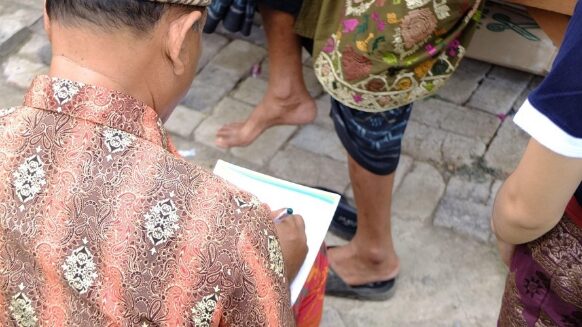
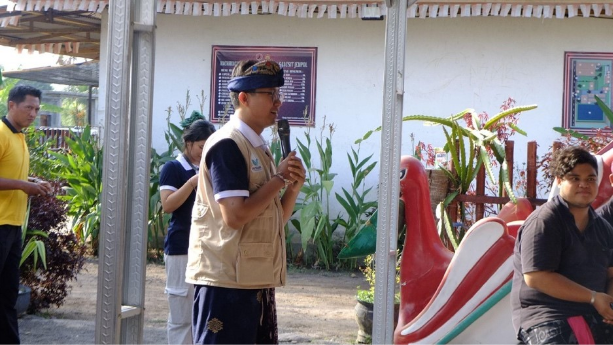
The core activity of the day was the Focus Group Discussion, facilitated by Anggreni, Lead of the Community Development Program at Talk Sustainable Community. The FGD was conducted using guidelines developed during the pre-activity phase, while maintaining flexibility to accommodate participants’ questions and inputs. Participants were divided into two discussion groups. The first group consisted of government and authority figures with regulatory and decision-making influence, including representatives from the sub-district and village administrations, traditional leadership, schools, law enforcement, the Indonesian Army, and Rumah Plastik Mandiri (Independent Plastic House). The second group comprised community-based actors such as fishermen, traditional market representatives, hamlet heads, Family Welfare Empowerment representatives, Women Farmers Group leaders, and youth organization members (Karang Taruna). Each group was supported by a moderator and a note-taker to ensure all perspectives and discussion outcomes were carefully documented. Every participant was given an equal opportunity to share their views, suggestions, and proposed actions to address waste issues, which were then discussed collectively within each group.

The FGD aimed to identify the fundamental waste management challenges faced by Sangsit Village from both government and community perspectives, as well as to uncover gaps in understanding and implementation of waste regulations. Discussions explored whether both sides shared the same interpretation of the waste problem and assessed the effectiveness of existing policies. Specific attention was given to education and character-building in schools, the role of Rumah Plastik Mandiri in future plastic management and recycling efforts, the implementation of 3R (Reduce, Reuse, Recycle) practices at the household level, and the practical impact of government regulations on daily waste management behaviors.
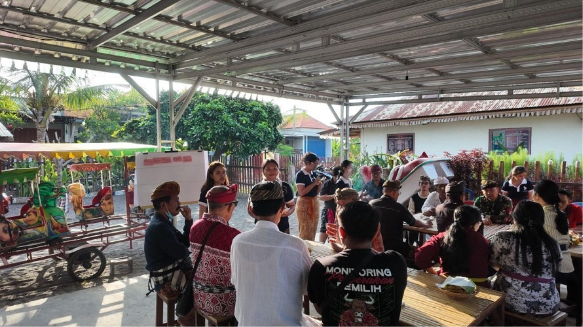
The discussion lasted approximately one and a half hours and revealed several critical findings. Participants concluded that a significant gap exists between government intentions and community understanding, particularly due to limited education on household waste management. The village also faces resource constraints, including insufficient waste collectors, transportation capacity, and landfill facilities. While incinerators had previously been used to reduce waste volume, damaged and rusted equipment rendered them unusable, resulting in waste accumulation at the village landfill. Although the village government had initiated a traditional-modern waste management system (Teba Modern) to manage organic waste, the initiative was short-lived, as the community eventually reverted to mixing organic and inorganic waste.
Based on these findings, the Community Development team emphasized the need to strengthen collaboration between the government, supervisory bodies, and the community to ensure sustainable and effective waste management. Regulations must be supported by adequate facilities, continuous supervision, and active government engagement with residents to better understand on-the-ground challenges. Monitoring mechanisms are also essential to help communities adapt to and sustain new waste management practices.
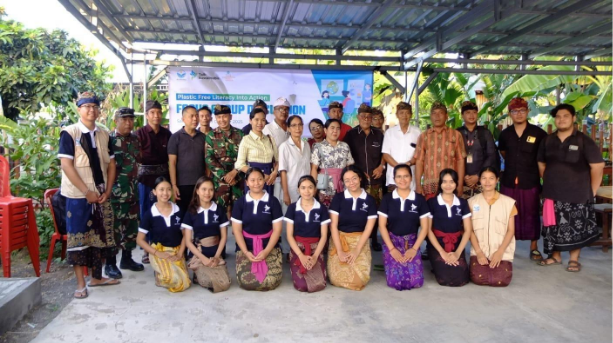
The event concluded with closing remarks from the Head of Sangsit Village, followed by a group photo to commemorate the activity. After participants returned to their daily activities, the Talk Sustainable Community team conducted an internal evaluation to reflect on the outcomes of the FGD and to begin planning subsequent activities based on the discussion results.
Outcome
The Focus Group Discussion resulted in several key agreements and follow-up initiatives to strengthen waste management in Sangsit Village. Participants reached a consensus on the establishment of a permanent, village-level waste management task force to coordinate actions and ensure continuity. In addition, there was a shared commitment to initiate the formulation of traditional village regulations (awig-awig) aimed at guiding and improving community behavior related to waste disposal.
The discussion also generated a proposal for a waste-to-value approach, whereby recyclable waste could be collected and sold by weight, with the proceeds reinvested to support village programs and environmental initiatives. To support implementation, participants identified the importance of collaboration with Rumah Plastik Mandiri, particularly for technical guidance and assistance in the collection, processing, and distribution of recyclable materials. Together, these outcomes reflect a collective effort to move toward a more structured, sustainable, and community-driven waste management system in the village.
Feedback
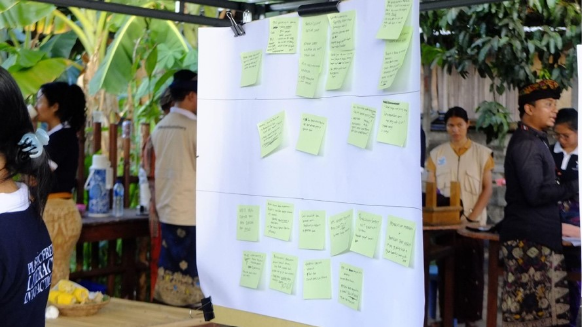
At the end of the session, participants wrote their feedback on sticky notes. One of the comments read:
“The community still needs more socialization and clear regulations. If all sectors are involved, the chances of success will be much greater” – Traditional Village Leader of Sangsit
Other participants also shared their concerns, such as:
“We, as fishermen, feel the impact directly. Sometimes, there is more trash than fish” – Representative of Fishermen
“The children are already very good at sorting waste at school, but we don’t know if they do the same at home. Family guidance is needed” – Primary School Principal in Sangsit Village