8 November 2025 | AAR Japan Myanmar | 28 Participants
Reported by Khaing Su Myat Thin, Win Pyae Pyae Aung, Myat Noe Khin Khin, Aye Chan Pwint Phyu
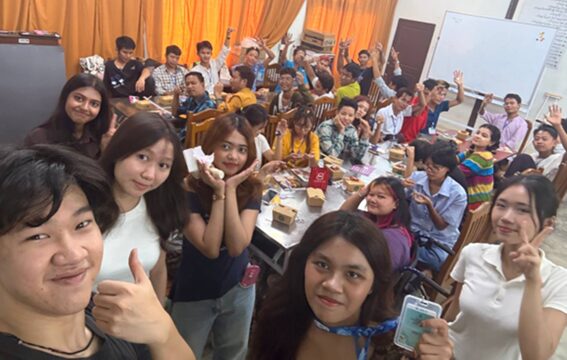
On 8 November 2025, ReCircle (AJYELN Myanmar Fellows) organized an Upcycling Workshop at AAR Japan Myanmar as a follow-up to the Trash-Sorting Workshop held the previous week. The session engaged around 28 participating persons with disabilities (PWDs), including wheelchair users and persons with hearing impairment, in hands-on activities to transform collected plastic sachets into creative keychains. With sign-language interpretation, accessible materials, and guidance from volunteers, the workshop demonstrated how responsible waste management can be both inclusive and creative, with participants proudly taking home their handmade upcycled products.
Key takeaways
- From waste sorting to creative transformation: building on lessons from the previous trash-sorting workshop, participants learned how properly separated and cleaned plastic sachets can be transformed into valuable and creative products. This process helped shift perceptions of waste—from something to be discarded to a resource with potential for reuse.
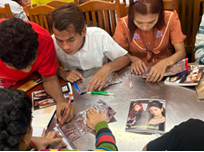
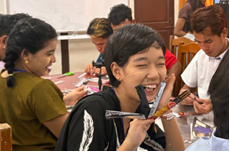
Figure 2 Participants actively engaging the workshop
- An inclusive and creative upcycling experience: the workshop provided a welcoming and supportive environment for participants of all abilities to engage in hands-on upcycling through keychain making. With guidance from volunteers and the support of sign-language interpretation, all participants were able to take part comfortably and express their creativity.
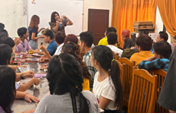
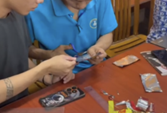
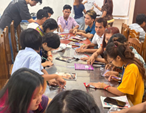
Figure 3 Participants joining the workshop collaboratively and volunteers helping with their needs
- Strengthening community through sustainability: beyond the upcycling activity, the workshop fostered collaboration and connection among participants and volunteers. By working together, sharing ideas, and supporting one another, the session became both educational and enjoyable—reinforcing sustainability as a shared effort built on community and inclusion.
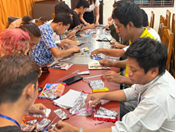
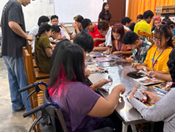
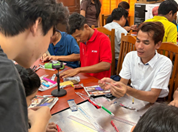
Figure 4 Participants making upcycled keychains
Main highlights
- Date: 8 November 2025
- Venue or location: AAR-Japan Myanmar (Association for Aid and Relief, Japan)
- Organizer: ReCircle Project team
- Co-organizers: AAR-Japan Myanmar
- No. of participants: 28 PWDs (including wheelchair users and persons with hearing impairment,)
Activities implemented
Washing Plastic Sachets (Volunteers’ Preparation)
The day began with volunteers washing and drying plastic sachets collected during the previous Trash-Sorting Workshop. This preparation ensured that all materials were clean, safe, and ready for use in the upcycling activity. It also served as a warm-up exercise for volunteers, fostering teamwork and reinforcing responsible handling of recyclable materials.
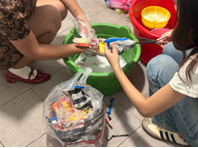
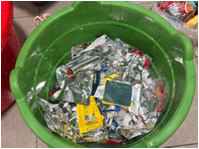
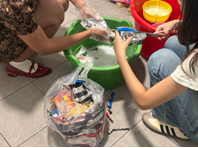
Figure 5 Volunteers washing and preparing plastic sachets for crafting
Revision and Q&A Session
The workshop officially opened with a brief recap of the previous Trash-Sorting Workshop. Myat Noe, the on-ground project lead, together with volunteers, facilitated an interactive discussion to reinforce participants’ understanding of waste segregation and its role in the upcycling process. A question-and-answer session followed, allowing participants to clarify any remaining questions and gain a clearer understanding of how sorted waste can be transformed into creative and useful products.
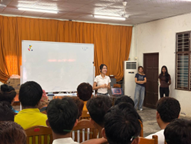
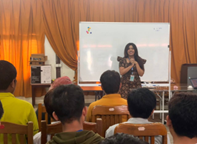
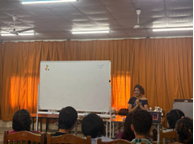
Figure 6 Volunteer revising key learning points from last week’s session
Keychain Crafting Session
The main highlight of the day was the hands-on upcycling activity. Participants learned how to transform the washed plastic sachets into colorful keychains, guided step by step by ReCircle volunteers. Using simple tools such as scissors, clips, and thread, participants shaped and assembled the plastic pieces into decorative accessories. The activity encouraged creativity, patience, and collaboration among participants of all abilities, while emphasizing the importance of reusing materials in a sustainable way.
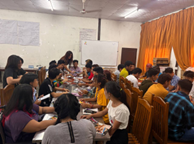
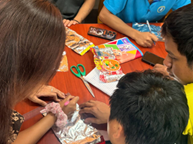
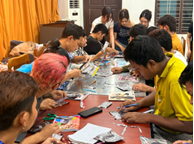
Figure 7 Participants crafting keychains from plastic sachets with volunteer guidance
Lunch and Community Interaction
A lunch break was provided for all participants and volunteers, offering time to rest and connect through informal conversations. The relaxed atmosphere created opportunities to share creative experiences, exchange ideas, and further strengthen the relationships built during previous sessions.
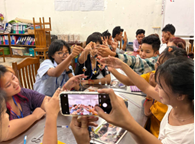
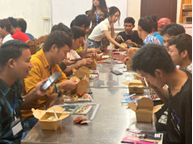
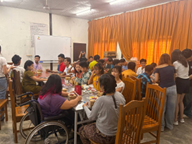
Figure 8 Participants enjoying lunch together after the activity
Photo and Interview Session
The workshop concluded with a reflection, photo, and interview session. Participants proudly showcased their handmade keychains and shared brief reflections on what they learned from the activity. Several participants also took part in short interviews, expressing how the upcycling experience had positively influenced their perspectives on waste and sustainability. The day ended with group photos filled with smiles, laughter, and a strong sense of shared achievement.
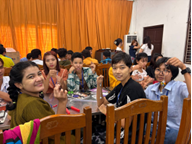
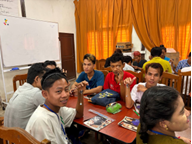
Figure 9 Participants and their upcycled keychains
Outcome
The outcomes from this workshop are listed below:
- Participants gained practical skills in transforming waste materials into reusable and creative crafts.
- Understanding of the link between proper waste sorting and effective upcycling was strengthened.
- Creativity, collaboration, and teamwork were fostered among participants with diverse abilities.
- Volunteers developed facilitation skills and increased confidence in leading sustainability-focused workshops.
- Continued collaboration between ReCircle and AAR-Japan Myanmar was reinforced, supporting inclusive environmental education initiatives.
Feedback
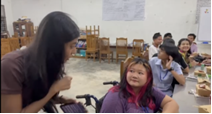
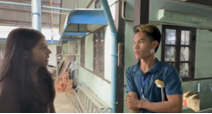
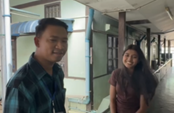
Figure 10 Interviews with participants to ask for their suggestions and thoughts about the workshop
Feedback from Volunteers
Volunteers shared that the hands-on upcycling activity was a meaningful experience in promoting creative and practical environmental learning. They appreciated the opportunity to facilitate and support participants throughout the session, which helped build their confidence and strengthen their leadership and facilitation skills for future workshops. Many volunteers were also inspired by the participants’ enthusiasm and creativity, highlighting how inclusive activities can bring people together through a shared sense of purpose.
Feedback from Participants
Participants expressed enjoyment in creating something new from waste and shared pride in their handmade keychains. Many noted that the workshop helped them better understand how waste materials can be reused instead of discarded, encouraging them to view waste more positively and creatively.