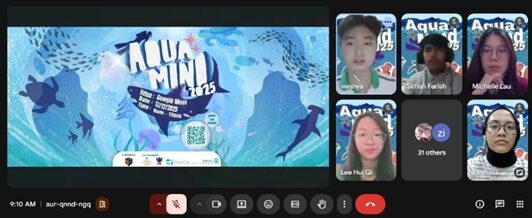
13 December 2025 | Online (Google Meet) | 179 participants
Reported by Samuel Ling How Zhuon, James Ling Lee Sheng, Michelle Lau Ling Ling
Aqua Mind 2025 is an online educational initiative that aims to raise environmental awareness among youth, with a strong focus on marine conservation and ocean sustainability. Organised by the Malaysian Fellows of the ASEAN-Japan Young Environmental Leaders Network (AJYELN) in collaboration with the Electrical & Electronics Engineering Student Society (E3S2), SOA Malaysia, MareCet, and the Interact Club of SMK St. Anthony Sarikei, the programme brought together experts, educators, and students in a shared learning space. Through expert-led sessions, visual materials, and interactive discussions, participants gained insights into marine biodiversity, human impacts on ocean ecosystems, and practical actions to protect life below water, empowering youth to become advocates for sustainable ocean practices in their communities.
Key takeaways
- Enhanced awareness of marine biodiversity and conservation: Participants developed a strong foundational understanding of marine ecosystems, including the critical role of coral reefs, marine species, and healthy oceans in maintaining global ecological balance. The sessions highlighted how interconnected marine life is with climate stability and human livelihoods.
- Deeper understanding of human impacts on ocean ecosystems: Through expert-led presentations, the programme highlighted the effects of plastic pollution, overfishing, and climate change on marine environments. Participants gained clearer insight into how everyday human activities contribute to ocean degradation and how individual and collective behavioural changes can help mitigate these impacts.
- Youth empowerment through environmental education: Direct engagement with professionals in marine and environmental fields encouraged participants to think critically, ask meaningful questions, and reflect on their roles as future environmental stewards. The programme strengthened participants’ confidence to discuss environmental issues and advocate for sustainable practices within their communities.
Main highlights
- Date: 13 December 2025
- Venue: Online (Google Meet)
- Organizer: Sustainability Sass-Masters
- Co-organizers: Electrical & Electronics Engineering Student Society (E3S2)
- Collaborators: SOA Malaysia, MareCet, Interact Club of SMK St. Anthony, Sarikei
- Participants: Secondary school students, university students, NGO representatives and youth volunteers
- No. of participants: 179 participants
Activities implemented
Opening and Welcome Session
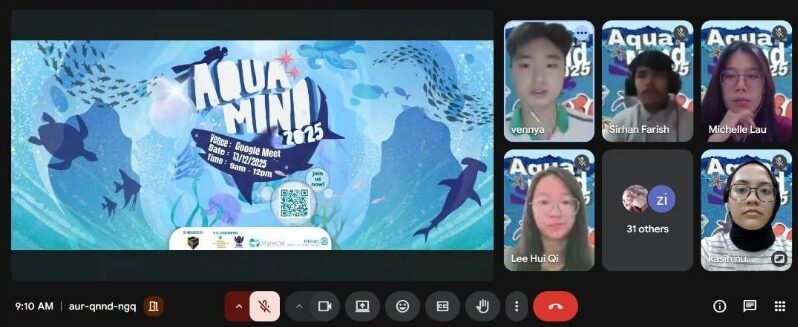
The programme opened with welcoming remarks by the Project Director, James Ling Lee Sheng, who outlined the objectives of Aqua Mind 2025 and emphasised the importance of youth participation in marine conservation. Participants were introduced to the programme flow and encouraged to engage actively throughout the sessions.
Speaker Sharing Sessions
A series of expert-led sharing sessions were delivered by invited speakers specialising in marine conservation and environmental advocacy. These sessions combined scientific insights on marine ecosystems and biodiversity with real-world experiences, enabling participants to better understand current challenges and the importance of collective action toward a plastic-free and sustainable ocean future.
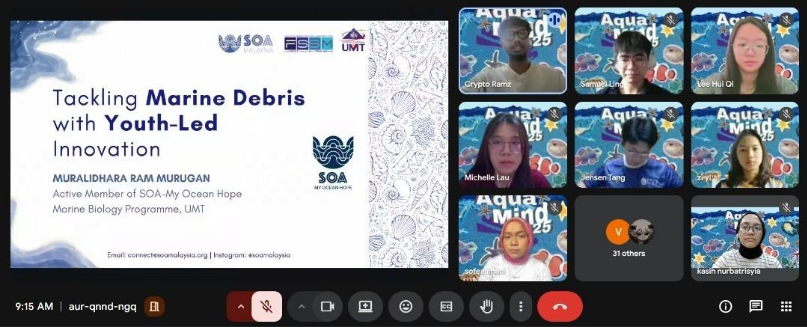
The first session was led by Muralidhara Ram Murugan from SOA Malaysia, who highlighted the scale and urgency of marine plastic pollution. Through case studies such as coastal clean-ups, plastic upcycling livelihood projects, and community-based social enterprises, the session demonstrated how youth-led innovation can transform environmental awareness into practical solutions that reduce marine debris while creating social and economic value.
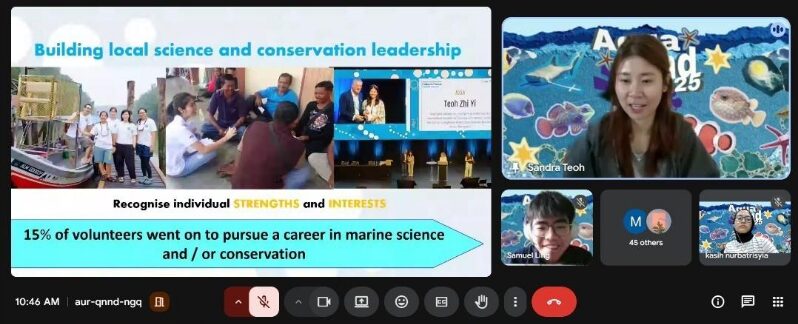
This was followed by a session from Sandra Teoh of MareCet, who introduced the diversity of marine mammals found in Malaysian waters. By sharing examples of dolphin research, whale strandings linked to plastic pollution, and the designation of Important Marine Mammal Areas (IMMAs), the session highlighted how scientific research, education, and community engagement contribute to effective marine conservation and empower youth to take meaningful action.
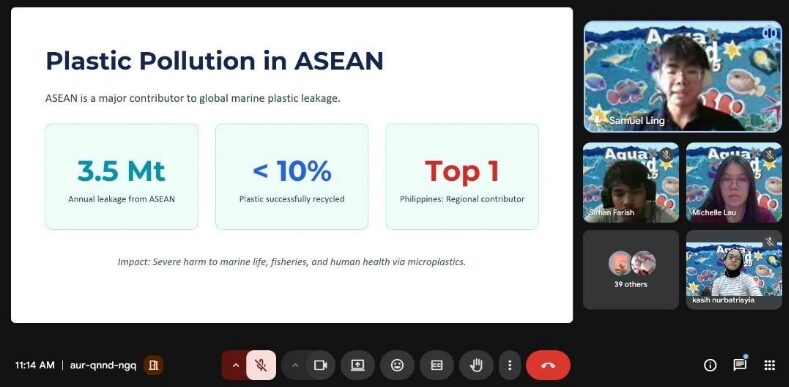
The final sharing session was delivered by Samuel Ling How Zhuon, representing the AJYELN Malaysia Team. The session emphasised the critical role of oceans in Malaysia’s environmental stability and identified plastic pollution as a major challenge across the ASEAN region. By linking regional data with everyday human behaviour, the presentation reinforced the urgency of marine conservation and individual responsibility.
Interactive Discussion and Q&A
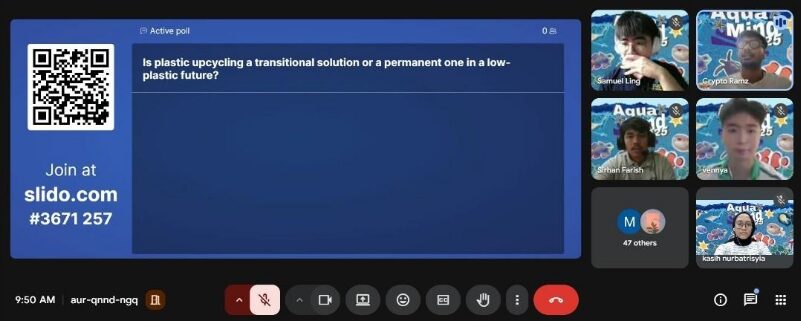
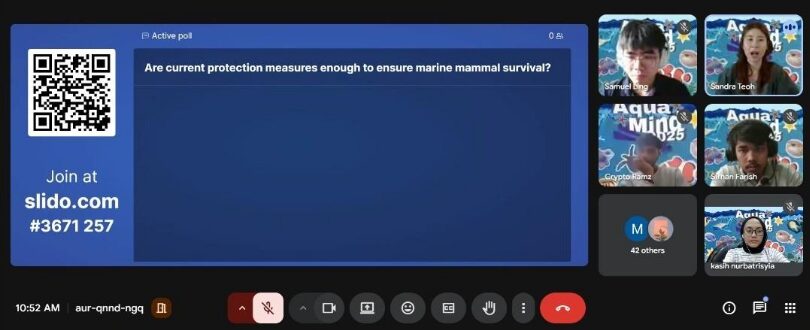
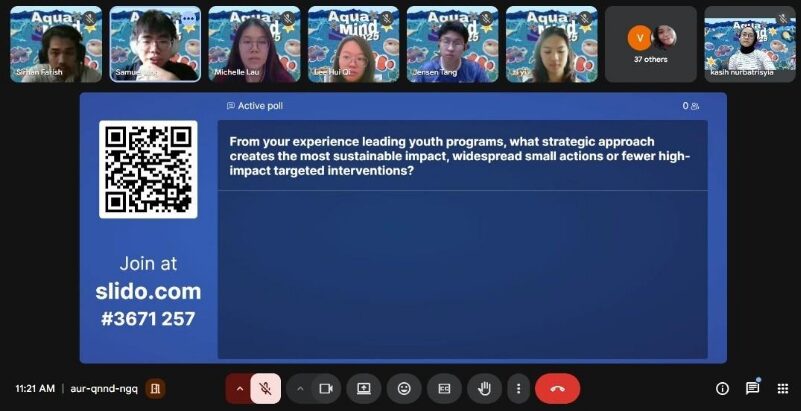
The programme concluded with an interactive question-and-answer session, providing participants with the opportunity to engage directly with the speakers. This segment encouraged critical thinking, clarified key concepts, and fostered deeper discussions on marine sustainability and youth-led environmental action.
Outcome
Aqua Mind 2025 successfully served as both an educational and inspirational platform, equipping youth with the knowledge, awareness, and motivation needed to protect marine ecosystems. The programme contributes to long-term youth engagement in marine conservation and supports broader efforts toward sustainable ocean management and the preservation of life below water, fully reflecting the spirit and mission of the ASEAN-Japan Young Environmental Leaders Network (AJYELN).
Key Outcomes
- Enhanced Environmental Knowledge
Participants demonstrated a stronger understanding of marine conservation principles, including biodiversity protection, sustainable consumption, and the important role individuals play in addressing environmental challenges.
- Development of Environmental Leadership and Soft Skills
Through expert-led sessions and interactive discussions, participants strengthened their communication, critical thinking, and environmental advocacy skills. Many expressed interest in leading or participating in sustainability initiatives within their schools and communities.
- Promotion of Long-Term Sustainable Behaviour
The programme effectively encouraged participants to adopt more environmentally responsible practices, such as reducing plastic use, practising proper waste management, and actively supporting marine conservation efforts.
Feedback
Feedback collected from participants reflected a strong and positive response to Aqua Mind 2025. Participants highlighted that the sessions were both informative and engaging, particularly the case studies on community-based social enterprises and dolphin research, which helped translate complex conservation issues into relatable, real-world contexts. Many respondents also reported an increased interest in marine conservation and expressed greater motivation to further explore environmental issues.
Overall, Aqua Mind 2025 demonstrated the effectiveness of structured environmental education in empowering youth to better understand and respond to marine conservation challenges.