Reported by Sodalis Sophea, Menghorng Kao, Somnang Chhum
Key takeaways
- Increased awareness of plastic pollution among the youth: The campaign successfully raised awareness among young people about plastic pollution, microplastics, and the environmental impacts of single-use plastics. Through short videos and storytelling-based content, young audiences gained a clearer and more relatable understanding of plastic-related issues and how they connect to everyday life.
- Strong youth engagement and positive behavioral influence: By presenting environmental issues in an accessible and youth-friendly manner, the campaign encouraged participants to reflect on their own plastic consumption and explore more sustainable alternatives. This shift in awareness and attitudes was further confirmed through surveys conducted during the Re-Plastic Workshop and Exhibition.
- Successful conversion from online awareness to offline action: The social media campaign effectively translated online engagement into real-world participation. Using organic content alone, the campaign achieved 70 applicant registrations and 80 participants attending the Re-Plastic Exhibition which demonstrate the power of digital platforms in mobilizing youth, fostering community engagement, and driving collective action for environmental sustainability.
Main highlights
- Campaign period: 13 November – 31 December 2025
- Platform used: Facebook and Instagram (@replastickh)
- Number of followers:
- Facebook: 266 followers
- Instagram: 17 followers
- Total Facebook content: 23 posts (11 videos and 12 poster/photo posts)
- Storytelling series: 4 youth-focused episodes on plastic problems, fun facts, and solutions
- Total Facebook views: 50,187 (100% organic, no paid ads)
During the campaign period, a coordinated social media outreach was implemented to raise awareness on plastic pollution and youth-led solutions through organic content distribution on Facebook and Instagram.
A total of 23 Facebook posts were published, consisting of 11 short-form videos and 12 poster or photo-based posts. Content was structured around a four-episode youth-focused storytelling series, highlighting plastic-related challenges, practical solutions, and engaging facts designed to resonate with young audiences.
Despite a relatively modest follower base (266 followers on Facebook and 17 on Instagram), the campaign generated a cumulative 50,187 views on Facebook, achieved through 100% organic reach with no paid advertising. This indicates strong content shareability and algorithmic amplification beyond the immediate follower community.
Overall, the campaign successfully established a foundational online presence, expanded public exposure to youth perspectives on plastic pollution, and laid the groundwork for deeper engagement and community growth in future phases.
Activities implemented
The Re-Plastic social media campaign leveraged digital platforms as a strategic tool to raise awareness about plastic pollution, promote youth-led environmental action, and mobilize participation for the Re-Plastic Workshop and Exhibition. The campaign primarily targeted high school and university students through engaging, youth-friendly content such as short videos, posters, photographs, and storytelling-based series.
Beyond awareness-raising, the campaign emphasized environmental education, behavioral change, youth empowerment, and community engagement, while also serving as a key promotional channel for volunteer recruitment and on-site event participation.
a. Awareness-Raising Content
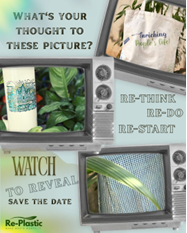
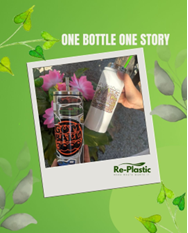
Educational posts and short videos were developed to explain plastic pollution, microplastics, and the environmental impacts of single-use plastics in clear, simple, and relatable ways. The content was specifically tailored to youth audiences to enhance accessibility and understanding.
b. Storytelling Campaign
A four-episode storytelling series was produced, focusing on plastic-related issues, interesting facts, and practical solutions. By using a narrative-driven approach, the campaign successfully captured attention, improved message retention, and motivated young people to take action.
Episode 1: One Bottle One Story
This film was created by our amazing volunteers to show how small actions can turn waste into meaning. Every bottle has a journey, and every choice matters. In the video, the character shows the audience the story behind a plastic bottle: why improper disposal of plastic matters and the effects plastic has on our health and the environment. The character then introduces alternative options to single-use plastics in daily life, such as using eco-friendly bottles and rice straws.
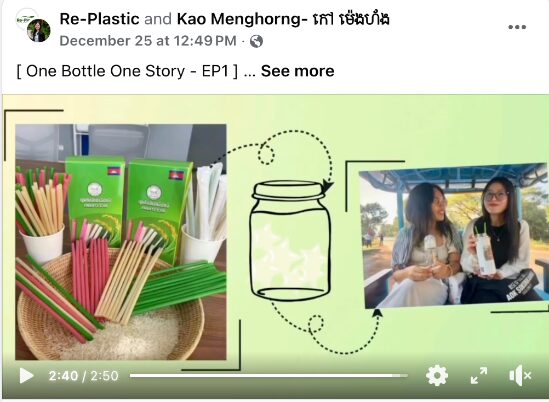
Link to video: https://www.facebook.com/share/v/1ApWT5ChCA/
Episode 2: One Bottle One Story (Part 2)
The character demonstrates how to sort waste into different categories using separate trash bins and introduces the use of eco-bags. Moreover, she shows how plastic collected from the market can be reused in daily life. She then recaps her journey by sharing what she has learned from her surroundings, especially about the environment, and emphasizes how everyone can contribute to protecting the environment.
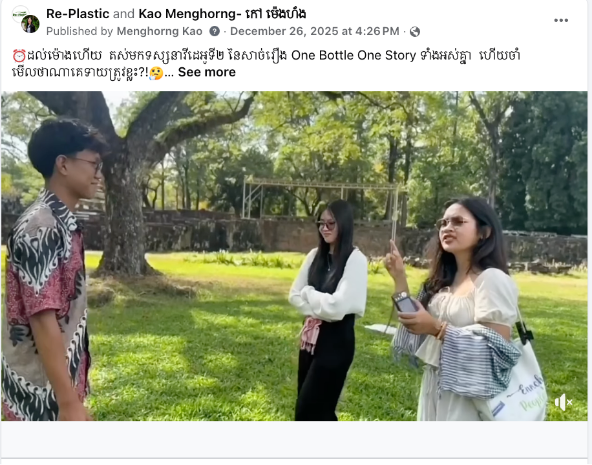
Link to video : https://www.facebook.com/share/v/17txekS5uG/
Episode 3: A new journey in a new place, but with the same mindset
This episode follows the character as she steps into a new chapter of life after graduating from high school and moving to Phnom Penh. Entering a new environment means adapting to new places, new people, and new routines, but one thing remains constant: plastic is everywhere. From daily necessities to street-side convenience, plastic use is deeply embedded in everyday life. Through this journey, the video invites viewers to reflect on how much plastic one person in Phnom Penh might use in a single day and encourages awareness of our daily choices, reminding us that even in a new place, a mindful and sustainable mindset still matters.
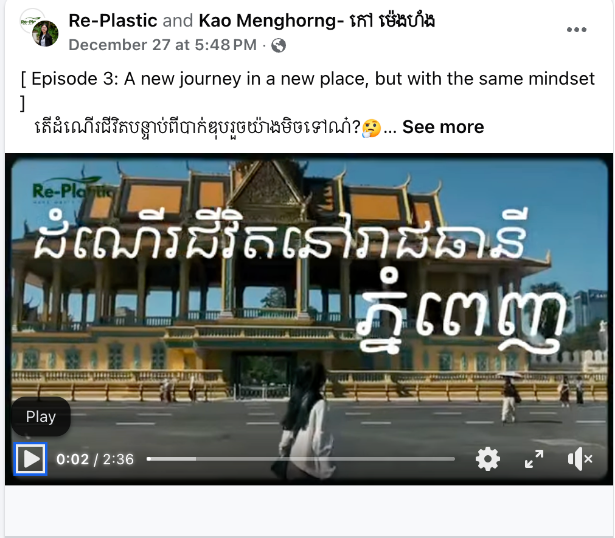
Link to video: https://www.facebook.com/share/v/1HwA2kbvis/
Episode 4: Small Habits, Less Plastic
This episode shows how small daily habits can affect the environment. It explains that simple actions, such as reducing plastic use in everyday life, can help protect the environment over time. The video also highlights that when one person starts changing their habits, people around them may be encouraged to do the same. Through this message, the episode reminds viewers that everyone can contribute to protecting the environment by making small but consistent changes in their daily routines.
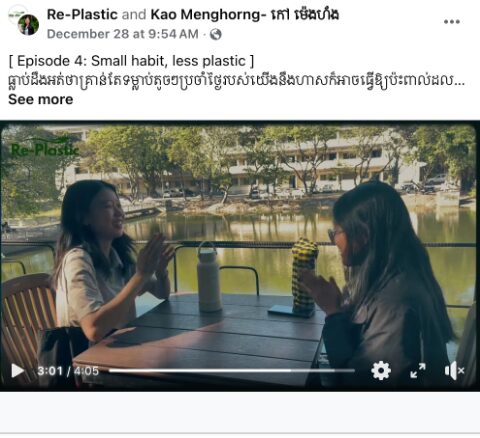
Link to video: https://www.facebook.com/share/v/16m3BhLgo5/
c. Volunteer Recruitment Campaign
Social media served as the primary platform for volunteer recruitment. Through targeted outreach and clear calls to action, the campaign received 70 volunteer applications, from which 30 volunteers were selected. These volunteers supported Re-Plastic activities across three teams: the DIY Team, Fashion Team, and Digital Media Team.
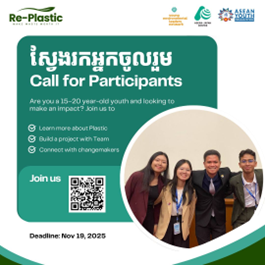
d. Event Promotion
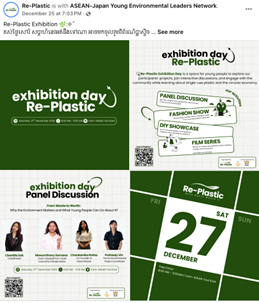
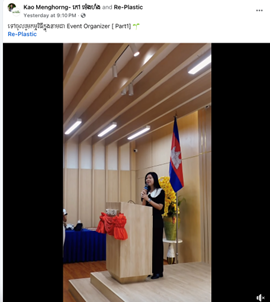
The campaign actively promoted the Re-Plastic Workshop and Exhibition through event announcements, countdown posts, and behind-the-scenes content. As a result, 80 participants attended the Re-Plastic Exhibition.
Outcome
The Re-Plastic social media campaign achieved strong organic reach and meaningful youth engagement across digital platforms. Through a combination of consistent awareness-raising content, storytelling, and event promotion, the campaign reached over 283 followers on Facebook and Instagram and 50,000 viewers organically on Facebook, generating high levels of interaction and watch time. Importantly, this online engagement translated into tangible offline impact, contributing to 70 volunteer registrations, strong participation in Re-Plastic activities, and increased youth awareness and motivation to take action against single-use plastic pollution.