Reported by Samuel Ling How Zhuon, James Ling Lee Sheng, Michelle Lau Ling Ling
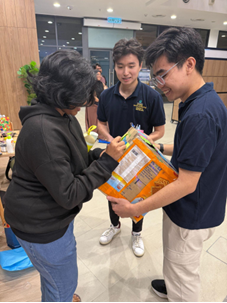
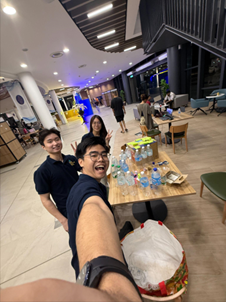
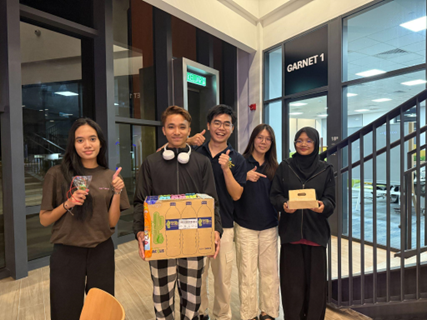
Figure 1 Activities hold during the Re-Purpose Exhibition
Plastic Waste Awareness Exhibition was successfully organized by the AJYELN Malaysia Team (Samuel, James, and Michelle) as part of their ongoing efforts to promote environmental sustainability on campus. Promoting their exhibition was organically carried out, with committee members spreading information through word of mouth. The main outreach method, however, was direct on-site engagement. As visitors passed the Nadi area, the team invited them to explore the exhibition and participate in the DIY activities.
Key takeaways
- Strong engagement through interactive activities: The hands-on DIY station emerged as the most effective way to attract and engage visitors. This interactive format offered a memorable learning experience and delivered greater impact than static displays.
- High interest in sustainability topics: The steady participation of at least 80 visitors shows a clear and growing interest in environmental issues among both students and staff.
- Useful insights for future programming: Over 80 feedback responses provide valuable data to guide future activities. The input highlights strong interest in areas such as DIY recycling and upcycling, which can inform the design of upcoming workshops.
Event information
- Date: 29 October 2025 (Wednesday)
- Venue: Nadi, Student Centre, Universiti Teknologi Petronas (UTP)
- Participants: Students and staff members of UTP
- No. of participants: 80 visitors
Objectives of the Exhibition
The exhibition was developed with several key objectives in mind:
- Introduce the UTP community to the various types of plastic waste generated in daily life.
- Educate and raise awareness on proper recycling practices and ways to repurpose plastic waste through DIY (Do-It-Yourself) activities.
- Provide an interactive learning experience that allows visitors to transform plastic waste into functional items.
- Gather data and feedback from the campus community to inform and improve future environmental programs.
Alignment with the Sustainable Development Goals (SDGs)
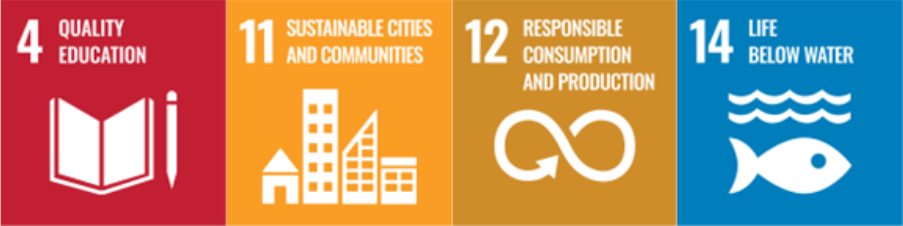
The initiative also aligns closely with several UN Sustainable Development Goals, reinforcing its broader impact.
- SDG 4 – Quality Education: The exhibition provided educational content and experiential learning activities that deepened understanding of plastic waste issues.
- SDG 11 – Sustainable Cities and Communities: By encouraging responsible waste management, the event contributed to creating a more sustainable campus environment.
- SDG 12 – Responsible Consumption and Production: Visitors were encouraged to rethink their consumption habits and explore practical methods of reusing (upcycling) plastic materials.
- SDG 14 – Life Below Water: Awareness was raised about the harmful effects of plastic pollution on marine ecosystems, connecting campus actions to global environmental challenges.
Activities implemented
The exhibition setup began at 7:00 PM, and the event officially opened to visitors at 7:30 PM. Over the course of three hours, the program ran smoothly, attracting a steady stream of participants throughout the evening. The activities were organized into three main stations, each offering a different learning experience:
- DIY Station: This served as the main attraction, where visitors learned how to transform plastic waste—particularly used palstic bottles—into practical items such as small flowerpots and stationery holders. AJYELN provided essential materials, including scissors, glue, and decorative accessories.
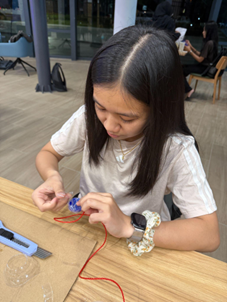
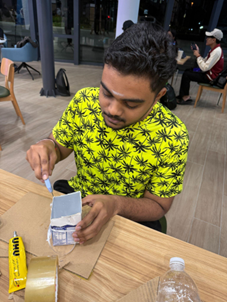

Figure 2 DIY Station: Participants making traditional toys from plastic waste
Showcase Station: This station displayed various types of common plastic waste (e.g., PET bottles, food packaging, polystyrene containers, HDPE plastics). Visitors received brief explanations about each material, including its decomposition period and associated environmental impact.
- Feedback Station: Before leaving, visitors were encouraged to complete a short feedback form to share their experience and level of awareness regarding plastic waste. The collected data will support the team’s post-event analysis and future planning.
*Visitor Flow: Movement between stations was casual and flexible, with no fixed sequence. As the venue (Nadi Student Centre) was open and accessible, visitors freely explored the DIY and Showcase Stations based on their interests, usually ending their visit at the Feedback Station.
Outcome
- Enhanced Awareness: The interactive DIY session proved to be a highly effective tool for raising awareness. Many visitors shared that they had not realized how easily plastic waste could be repurposed into useful items, demonstrating the activity’s strong educational impact.
- Informative Feedback for Future Programming: The 80+ feedback responses gathered during the exhibition provide valuable insights for upcoming initiatives. This data will be used to design a larger and more comprehensive workshop planned for next month, building on the momentum created by this event.
Feedback
- Many highlighted the interactive DIY session as the most impactful part of the exhibition, noting that it deepened their understanding of how plastic waste can be reused.
- Preliminary analysis of the 80+ feedback forms indicates a noticeable increase in participants’ self-reported environmental awareness after completing all stations.
The feedback gathered from participants was overwhelmingly positive:
- “I learned new, practical ways to reuse plastic waste” (35 responses):
This reflects insights gained from the DIY Station, where participants were taught simple upcycling techniques such as turning plastic bottles into flowerpots and stationery holders.
- “I feel more creative and inspired to try DIY projects” (24 responses):
Also linked to the DIY Station, this response shows that the activity not only educated participants but also inspired creativity and personal motivation to engage in future upcycling projects.
- “I better understand the environmental impact of plastic” (18 responses):
This feedback corresponds to the Showcase (Exhibition) Station, confirming that the visual display of various plastics and explanations of their decomposition periods effectively conveyed the core educational message.
- “I didn’t have a clear takeaway” (3 responses):
This very small percentage (3.8%) represents a minority who may not have fully engaged with the stations. The low number reinforces that the overall messaging and activities were effective for more than 96% of participants.