Published on March 24, 2026
Singapore’s Tourism Industry Sustainability Roadmaps Chart the Way Forward
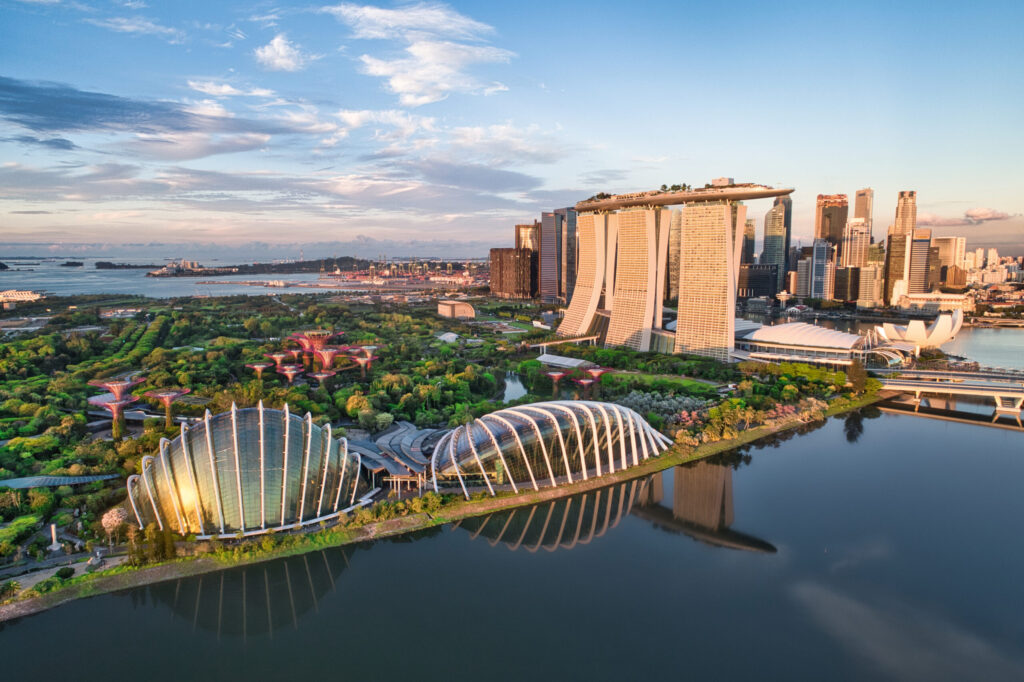
As sustainability becomes an increasingly important factor in global tourism competitiveness, Singapore has adopted a structured approach to the application of climate action and responsible management across its tourism ecosystem. Since 2022, the Sustainability Roadmaps for the Hotel, MICE, and Attractions sectors have provided sector-specific guidance and clear strategic direction. Aligned with the Singapore Green Plan 2030, the roadmaps translate national climate and sustainable development commitments into actionable targets and implementation frameworks for the tourism industry.
| Project : | Sustainability Roadmaps- Hotels, MICE and Attractions Sustainability Roadmaps |
| Place : | Singapore |
| Initiative : | Singapore’s Hotel, MICE and Attractions Sustainability Roadmaps offer government-initiated, sector-specific guidance to achieve net-zero emissions, enhance destination quality, and promote innovation through digital transformation. Anchored in the Singapore Green Plan 2030, the roadmaps set clear targets, align industries with international certification standards, and support implementation through partnerships, grants, and capacity building. |
| Actors : | Singapore Tourism Board(STB), Singapore Hotel Association(SHA), Singapore Association of Convention & Exhibition Organisers & Suppliers (SACEOS), the Association of Singapore Attractions (ASA), hotels, MICE venues, event organisers and attraction operators. |
Strategic Context and Policy Alignment
The Hotel, MICE, and Attractions Sustainability Roadmaps were developed by the Singapore Tourism Board (STB) in close collaboration with key industry associations. These include the Singapore Hotel Association (SHA), the Singapore Association of Convention & Exhibition Organisers & Suppliers (SACEOS), and the Association of Singapore Attractions (ASA).
The roadmaps translate national commitments under the Singapore Green Plan 2030 into actionable sectoral strategies and implementation pathways. They also support global sustainability objectives, helping to ensure that Singapore’s tourism sector remains competitive, credible, and resilient.
Hotel Sustainability Roadmap: Four Strategic Pillars
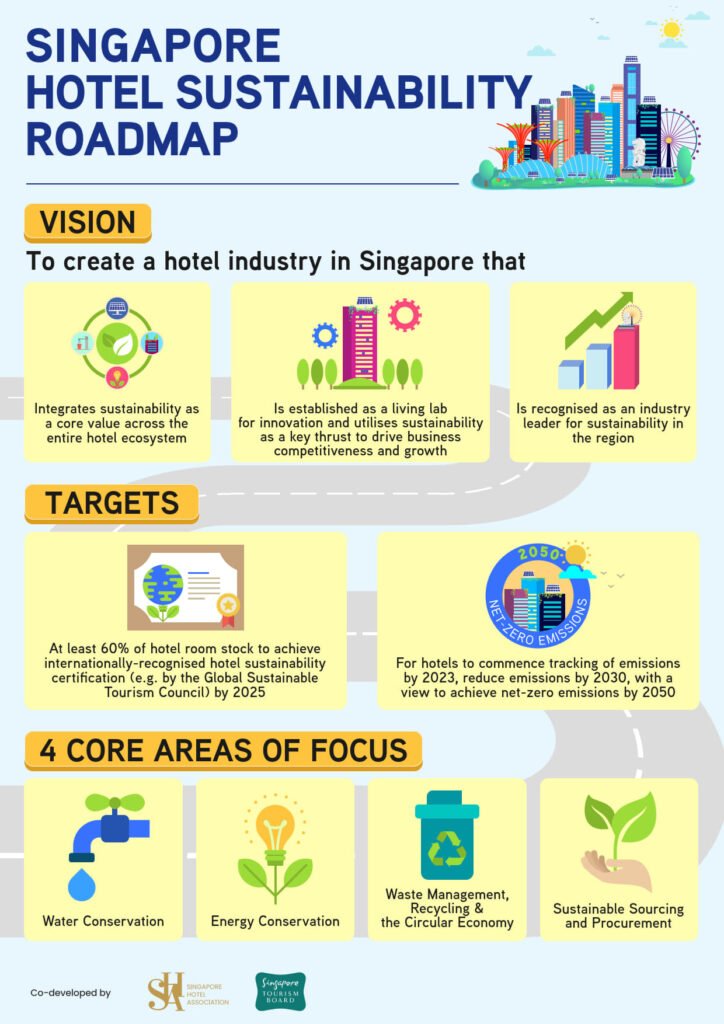
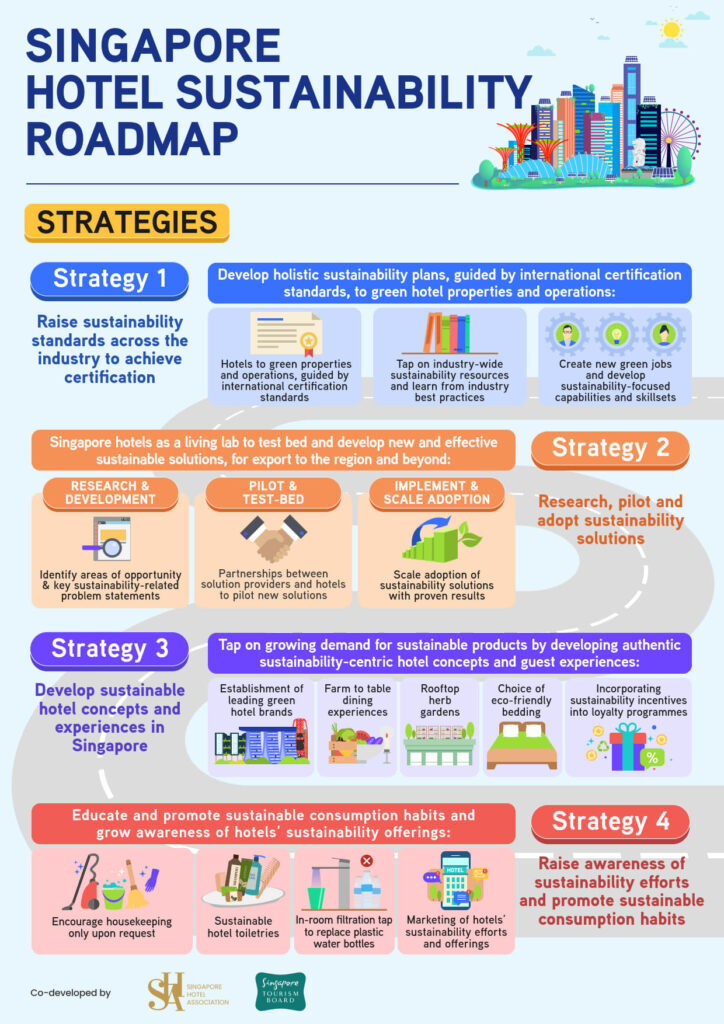
The Hotel Sustainability Roadmap provides a structured framework to guide hotels in integrating sustainability across their operations, planning, and guest engagement. It is built on four strategic pillars:
1.Develop holistic sustainability plans, guided by internationally recognised certification standards, to green hotel properties and operations
Hotels are encouraged to align their operations and properties with internationally recognised sustainability certification standards. This includes leveraging industry-wide sustainability resources, adopting best practices, and supporting the creation of green jobs. Emphasis is also placed on strengthening sustainability-related capabilities and skillsets within the workforce.
2. Position Singapore hotels as a living laboratory to test and develop effective sustainability solutions for export to the region and beyond
The roadmap emphasises research and development to identify sustainability-related opportunities and priority challenges. Hotels serve as testbeds for piloting innovative sustainability solutions in partnership with solution providers. Successful pilots are then scaled and adopted across the wider industry.
3. Respond to growing demand for sustainable products by developing authentic sustainability-focused hotel concepts and guest experiences
Hotels are encouraged to establish distinctive green brands that offer authentic, sustainability-focused experiences. Examples include farm-to-table dining, rooftop herb gardens, eco-friendly bedding, and the integration of sustainability incentives into loyalty programmes. By aligning with evolving consumer preferences for sustainable travel, hotels can attract a growing segment of environmentally conscious visitors.
4. Educate and promote sustainable consumption habits, and strengthen awareness of hotel sustainability efforts
Hotels are encouraged to implement sustainable practices such as providing housekeeping services only upon guest request, using sustainable hotel toiletries, and replacing plastic water bottles with in-room filtration taps. Marketing efforts should emphasise the hotel’s sustainability initiatives and offerings so as to raise awareness among guests and encourage responsible consumption.
By 2025, 60% of hotel rooms in Singapore were targeted to achieve internationally recognised sustainability certification. Hotels are also required to track emissions, reduce them by 2030, and aim to achieve net-zero emissions by 2050. As of 31 December 2025, more than 70% of hotel room stock had achieved internationally recognised sustainability certification, exceeding the original target.
MICE Sustainability Roadmap: Three Strategic Directions
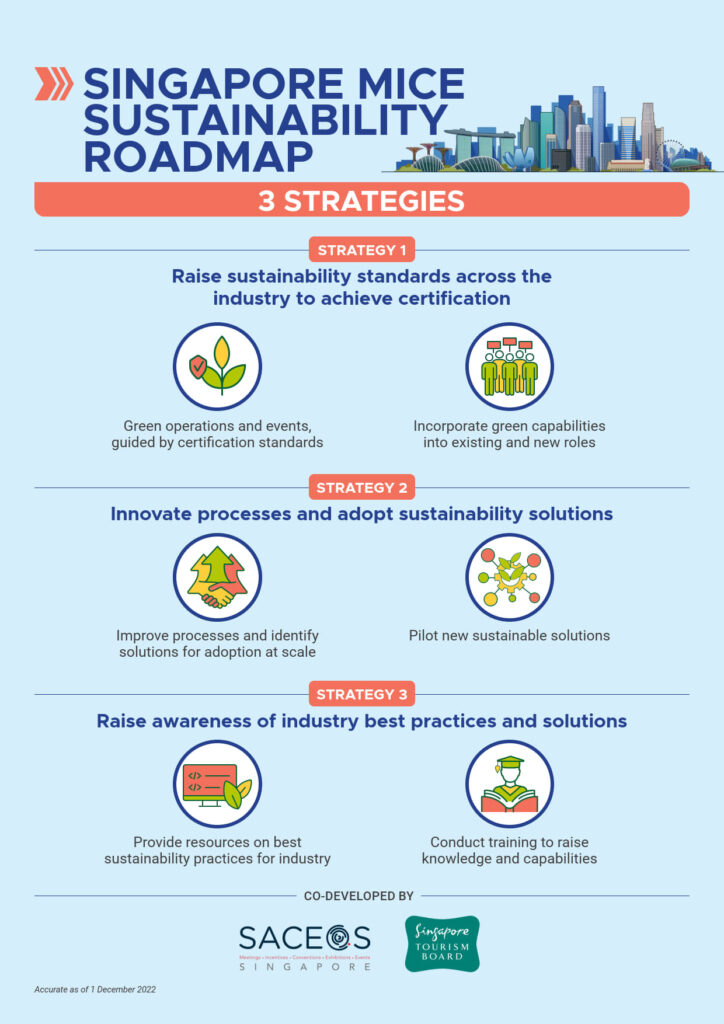
The MICE Sustainability Roadmap addresses the complex operations of the meetings, incentives, conferences, and exhibitions (MICE) sector through three focused strategies:
1. Raise sustainability standards across the industry to achieve certification
The roadmap promotes the integration of sustainable practices into both operations and events, guided by recognised certification standards. This includes embedding sustainability capabilities into existing and emerging roles within the MICE sector to ensure consistent implementation across the industry.
2. Innovate processes and adopt sustainability solutions
MICE organisers and venues are encouraged to strengthen operational processes by identifying and implementing scalable sustainability solutions. This includes piloting initiatives that support waste reduction, emissions tracking, and low-carbon event design, enabling proven solutions to be adopted more widely across the sector.
3. Raise awareness of industry best practices and solutions
To enhance sector-wide capabilities, the roadmap provides platforms and resources to share best practices, and supports training programmes that build knowledge and professional competencies within the MICE industry. By strengthening awareness and encouraging collaboration, the roadmap seeks to accelerate the adoption of effective sustainability solutions.
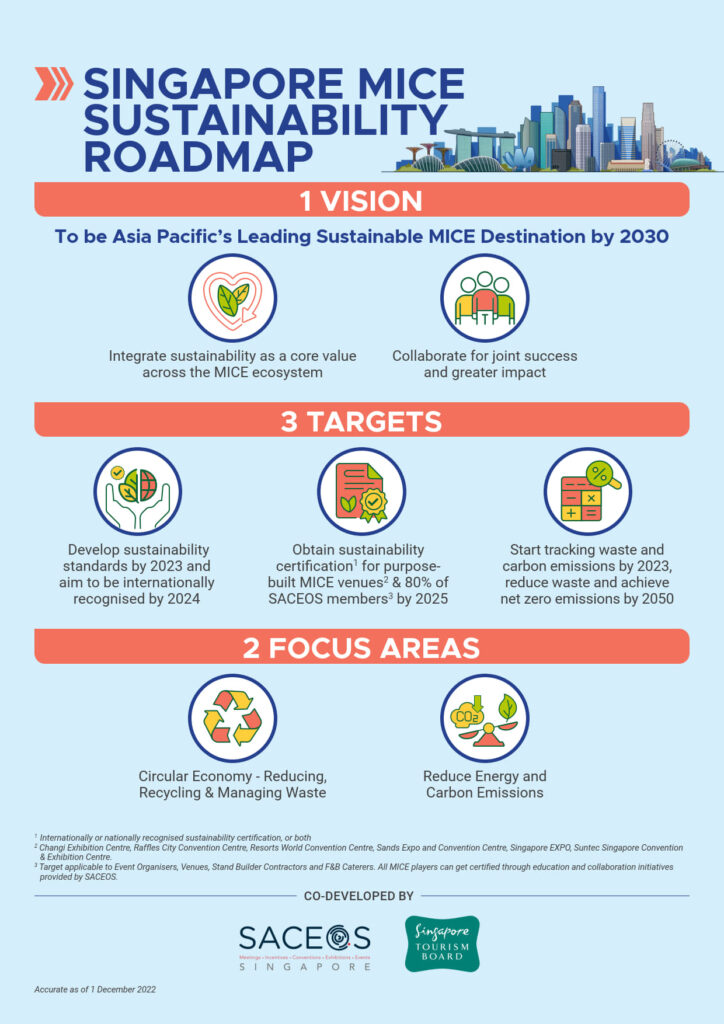
By 2025, all purpose-built MICE venues and 80% of SACEOS members were expected to achieve sustainability certification. As of 31 December 2025, this target had been met, with all six purpose-built MICE venues internationally or nationally certified, and more than 80% of SACEOS members having achieved certification. National baselines for waste and carbon emissions have also been established. The MICE Sustainability Roadmap further aims to achieve net-zero emissions by 2050.
Attractions Sustainability Roadmap: Three Strategies
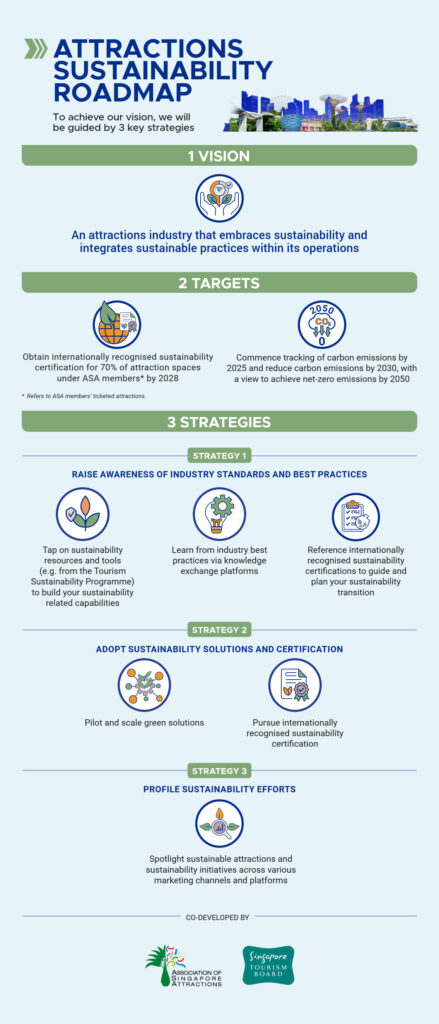
The Attractions Sustainability Roadmap seeks to strengthen an attractions industry that embraces sustainability and integrates sustainable practices into its operations through three strategic priorities:
1. Raise awareness of industry standards and best practices
This includes leveraging sustainability resources and tools to build sector-specific capabilities. Attractions are encouraged to learn from industry best practices through knowledge-exchange platforms, and to reference internationally recognised sustainability certifications to guide and plan their sustainability transition.
2. Adopt sustainability solutions and certification
Attractions are encouraged to pilot and scale green solutions, and to pursue internationally recognised certification to strengthen their sustainability performance and operational standards.
3. Raise awareness of industry standards and best practicesA Transformation of Well-Being
The roadmap also emphasises the importance of showcasing sustainable attractions and initiatives across relevant marketing channels and platforms to strengthen visibility and sector-wide awareness.
By 2028, the aim is for 70% of attraction spaces under ASA members* to obtain internationally recognised sustainability certification. As of 2025, the attractions industry had commenced carbon emissions tracking, with a view to achieving net-zero emissions by 2050.
* Refers to ASA members’ ticketed attractions
Digital Transformation as an Enabler
STB works closely with industry associations and cross-sector committees to co-create industry roadmaps, support certification efforts, and strengthen workforce capabilities. Grants and support schemes enable businesses to pilot sustainability solutions and invest in digital systems for tracking emissions and waste.
One such initiative is the Singapore Tourism Accelerator (STA), where sustainability is identified as a key challenge area. Based on industry-defined use cases, the programme supports the development and piloting of sustainable technology solutions that help tourism businesses address environmental challenges and improve operational efficiency.
For example, STA piloted an AI-powered, data-driven solution that enables businesses to measure, monitor, and manage waste and recycling processes more effectively. The solution was tested with an integrated resort and attraction, supporting improved waste management and a reduced environmental footprint. Another pilot involving a hotel and attraction focused on automating ESG data collection and carbon emissions analysis to streamline sustainability reporting. In addition, STA piloted smart bin technology that tracks real-time waste data to optimise waste segregation for tourism businesses, including hotels. Through these pilots, STA supports tourism businesses in exploring and adopting environmentally sustainable technologies that reduce operational impact while enhancing overall visitor experience.
Shared Lessons for Global Sustainability
Singapore’s experience demonstrates how clear roadmaps, measurable targets, and inclusive partnerships can advance sustainable tourism. The initiative presents a collaborative model that combines policy leadership with industry empowerment, innovation, and international credibility, supporting destinations in progressing collectively towards a more sustainable future.